Summary

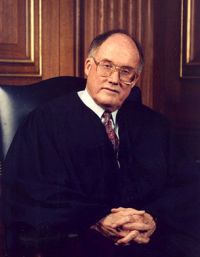
Portrait of William Rehnquist William Rehnquist Fogerty v. Fantasy, Inc. — Opinion of the Court

The purpose of an award of counsel fees to a plaintiff is to deter copyright infringement. . . . In the case of a prevailing defendant, however, prevention of infringement is obviously not a factor; and if an award is to be made at all, it represents a penalty imposed upon the plaintiff for institution of a baseless, frivolous, or unreasonable suit, or one instituted in bad faith.
Source: Wikisource

Portrait of William Rehnquist William Rehnquist Fogerty v. Fantasy, Inc. — Opinion of the Court

Because copyright law ultimately serves the purpose of enriching the general public through access to creative works, it is peculiarly important that the boundaries of copyright law be demarcated as clearly as possible. To that end, defendants who seek to advance a variety of meritorious copyright defenses should be encouraged to litigate them to the same extent that plaintiffs are encouraged to litigate meritorious claims of infringement.
Source: Wikisource

Portrait of William Rehnquist William Rehnquist Fogerty v. Fantasy, Inc. — Opinion of the Court

Oftentimes, in the civil rights context, impecunious "private attorney general" plaintiffs can ill afford to litigate their claims against defendants with more resources. Congress sought to redress this balance in part, and to provide incentives for the bringing of meritorious lawsuits, by treating successful plaintiffs more favorably than successful defendants in terms of the award of attorney's fees. The primary objective of the Copyright Act is to encourage the production of original literary, artistic, and musical expression for the good of the public.
Source: Wikisource

Get perspective with Kwize: daily news enlightened by great literature