André Masséna de Soult

Definition and stakes

R. P. Dunn-Pattison,  Napoleon's Marshals

“ To this Soult replied: "With bayonets and men who know how to use them, one lacks nothing," and in spite of every effort of the enemy, with the "white arm" alone he cut his way into Genoa. During the siege he was Masséna's right hand, ever ready with shrewd advice, the soul of every sortie, till unluckily he was wounded at the combat of Monte Cretto, [96] and captured by the Austrians, whose prisoner he remained till after Marengo. ”
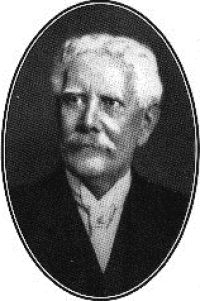
Source: Gutenberg

1911 Encyclopædia Britannica, Volume 17… (1911)

“ In private life indolent, greedy, rapacious, ill-educated and morose, in war Masséna was, like Napoleon, the incarnation of battle. Only his indolence and his consequent lack of far-ranging imagination prevented him being as great in strategy as in tactics. His genius needed the presence of the enemy to stimulate it, but once it sprang to life Masséna became an ideal leader, absolutely brave, resourceful, unrelenting and indefatigable. ”
Source: Wikisource

C. S. Forester,  Napoleon and his court (1924)

“ Masséna, held up at Torres Vedras by Wellington, with his army starving and disorganized, appealed to Soult for help. It was grudgingly given—too late. By the time Soult was ready to move upon the Tagus Masséna had already fallen back, utterly ruined. Soult was eventually stirred to action by Beresford’s siege of Badajoz, but he met with an unexpected reverse at Albuera (which, characteristically, he claimed as a victory) , and after that he was content to hold on to Andalusia until at last Wellington’s victory at Salamanca and capture of Madrid compelled him to abandon his conquests. ”
Source: Gutenberg

Get perspective with Kwize: daily news enlightened by great literature