Anglo-Egyptian Sudan

Project Gutenberg,  The Project Gutenberg Encyclopedia…

“ Long and fruitless negotiations ensued. The king at length (1904) sought to force a settlement by sending armed forces into the province. Diplomatic representations having failed to secure the withdrawal of these forces, the Sudan government issued a proclamation which had the effect of cutting off the Congo stations from communication with the Nile, and finally King Leopold consented to an agreement, signed in London on the 9th of May 1906, whereby the 1894 lease was formally annulled. The Bahr-el-Ghazal thenceforth became undisputedly an integral part of the Anglo-Egyptian Sudan. ”
Source: Gutenberg

The Anglo-Egyptian Sudan: a compendium prepared by officers of the Sudan government…

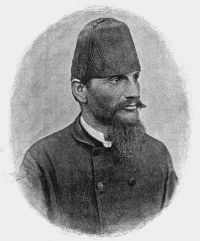
“ In 1853 the most southern Egyptian settlement was about 120 miles south of Khartoum, but in that year the first trading voyage to the Upper Nile was started by Mr. Petherick, the English Consul for the Sudan. He was soon followed by other traders, who established posts far up country, and organised armed bands under the command of Arabs. It was soon found that slave hunting paid even better than ivory, and raids were made on the surrounding tribes. ”
Source: Gutenberg

1911 Encyclopædia Britannica, Volume 20… (1911)

“ The Khalifa's house (a two-storeyed building) , the mosque, the Beit el Amana (arsenal) and other houses famed in the history of the town also face the central square. A high wall runs behind these buildings parallel with the Nile. Omdurman is the headquarters of the native traders in the Anglo-Egyptian Sudan, the chief articles of commerce being ivory, ostrich feathers and gum arabic from Darfur and Kordofan. There is also an important camel and cattle market. Nearly every tribe in the Sudan is represented in the population of the city. ”
Source: Wikisource

Get perspective with Kwize: daily news enlightened by great literature