Antioch College

Definition and stakes

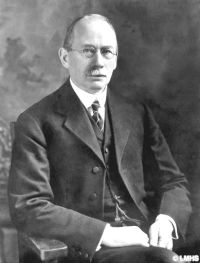
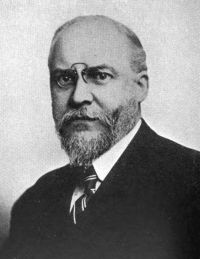
Portrait of James Kendall Hosmer James Kendall Hosmer,  The Last Leaf

“ I shall not dispute here whether or not he chose wisely; much less, how far a lame outcome at Antioch was due to his human limitations, and how far to the inevitable conditions. He was a potent and unselfish striver for the betterment of men, and his words and example still remain an inspiration.
My father in these years was a trustee of Antioch College, and this brought our household into touch with the illustrious figure of whom all men spoke. My memory holds more than a film of him, rather a vivid picture, his stately height dominating my boyish inches, as I stood in his presence.
”
Source: Gutenberg

Levi Seeley,  History of Education

“ At the age of fifty-six he accepted the presidency of Antioch College at Yellow Springs, Ohio, a position which he held until his death in 1859. He closed his last address to the graduating class at Antioch with these noble words: "Be ashamed to die until you have won some victory for humanity." He himself had won many great victories for humanity,—in the improvement of the common school systems of his native country; in the establishment of free schools; in the founding of normal schools where teachers might be trained; in the adoption of milder means of discipline ”
Source: Gutenberg

J. N. Larned,  History for ready reference, Volume 1…

“ The West is committed to co-education, excepting only the Roman Catholic, the Lutheran, and the Protestant Episcopal sects,--which are not yet, as sects, committed to the collegiate education of women at all,--and the Presbyterian sect, whose support, in the West, of 14 co-educational colleges against 4 for the separate education of young men, almost commits it to the co-educational idea. ... In 1853, Antioch College was opened at Yellow Springs, Ohio. It was the first endeavor in the West to found a college under Christian but non-sectarian auspices. ”
Source: Gutenberg

Get perspective with Kwize: daily news enlightened by great literature