Bamangwato

Definition and stakes

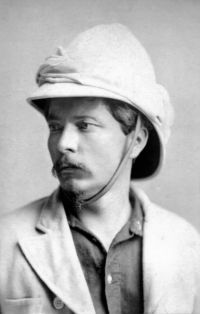
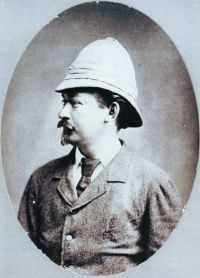
Portrait of Emil Holub Emil Holub,  Seven Years in South Africa (1881)

“ The spot where he was buried is now regarded by the Bamangwatos with much veneration.
The most upright of the seven Bamangwato kings whose names have been handed down was Khari; of him it is reported that he was bold and warlike and prudent in council, governing his dependents the Makalahari, the Madenassanas, and the Masarwas with a gentle rule. So respected was he by the neighbouring tribes, that several of them, such as the Makalakas and some of the more eastern Mashonas paid him voluntary tribute.
”
Source: Wikisource

Portrait of Emil Holub Emil Holub,  Seven Years in South Africa (1881)

“ As the result of all this the Bamangwatos rose in importance. They were manifestly establishing their superiority over the Matabele, hitherto regarded as the stoutest and most invincible of warriors, and the consequence was that numbers of Makalalas, Batalowtas, Mapaleng, Maownatlalas, and Baharutse, came as fugitives from the Matabele district and craved permission to settle on the Bamangwato heights. ”
Source: Wikisource

Portrait of Emil Holub Emil Holub,  Seven Years in South Africa (1881)

“ A journey of an hour and a half on the 6th brought us to the Bamangwato district, and into the wide, but shallow valley of a river, of which, in the rainy season, the Shoshon is an affluent. This valley divides the Bamangwato heights into two distinct parts, the most southerly of which is characterized by several ridges separated by transverse passes; the northern part consists of an interesting network of hills intersected by valleys running some parallel, some crosswise, in the most important of which are the Shoshong and Unicorn Rivers. ”
Source: Wikisource

Get perspective with Kwize: daily news enlightened by great literature