Battle of Almeida

Definition and stakes

Charles Cooper King,  The Story of the British Army

“ But Massena neither raised the siege of Almeida, nor advanced farther into Portugal. It is rather in personal incidents that this “soldiers’ battle” is noteworthy. Here it was that the tactical192 conditions of artillery were reversed, and the guns charged through a French column. “A great commotion was observed in their main body; men and horses were seen to close, with confusion and tumult, towards one point, where a thick dust and loud cries, and the sparkling of blades and the flashing of pistols, indicated some extraordinary occurrence. ”
Source: Gutenberg

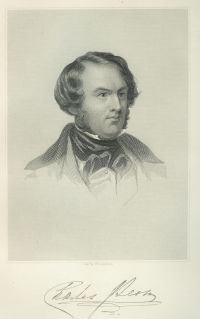
Portrait of Charles James Lever Charles James Lever,  Charles O'Malley, The Irish Dragoon…

“ Both sides laid claim to the victory; the French, because, having taken the village of Poço Velho, they had pierced the British line, and compelled them to fall back and assume a new position; the British, because the attack upon Fuentes d’Onoro has been successfully resisted, and the blockade of Almeida—the real object of the battle—maintained. The loss to each was tremendous; fifteen hundred men and officers, of whom three hundred were prisoners, were lost by the allies, and a far greater number fell among the forces of the enemy. ”
Source: Gutenberg

W. H. Maxwell,  The Victories of Wellington and the British Armies

“ But the object for which the battle was fought was unattained—he failed in succouring the beleaguered city—and Almeida was left to its fate.
199 In a close and sanguinary contest, like that of Fuentes d’Onoro, the loss on both sides must necessarily be immense. The British had two hundred killed, one thousand and twenty-eight wounded, and two hundred and ninety-four missing. The French suffered much more heavily; and it was computed that nearly five thousand of Massena’s army were rendered hors de combat. In the lower village of Fuentes alone, two hundred dead bodies were reckoned.
”
Source: Gutenberg

Get perspective with Kwize: daily news enlightened by great literature