Battle of Trenton

Definition and stakes

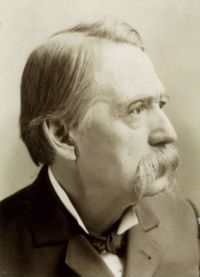
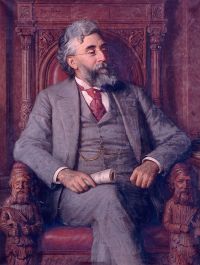
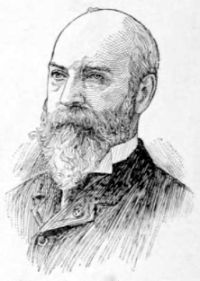
Portrait of Samuel Adams Drake Samuel Adams Drake The Campaign of Trenton 1776-77

It was now the Americans who attacked. Trenton had taught them the lesson that, man for man, they had nothing to fear from their vaunted adversaries; and that lesson, learned at the point of the bayonet, is the only one that can ever make men soldiers. The enemy could well afford to lose a town, but this rise of a new spirit was quite a different thing. Therefore, though a little battle, Trenton was a great fact, nowhere more fully confessed than in the British camp, where it was now gloomily spoken of as the tragedy of Trenton.
Source: Gutenberg

Various Graham's Magazine, Vol. XXXV, No…

Aware of the general incredulity, Washington hastened to dispatch his prisoners to Philadelphia, where, on the day succeeding the battle, they were paraded through the streets, to the amazement, not less than to the delight of the inhabitants. The effect of the victory on the country was electric. The charm of British invincibility was broken forever. Men no longer regarded the cause of the Colonies as hopeless, but, encouraged by this decisive success, looked forward confidently to a glorious issue. In a word, the battle of Trenton changed the wavering into friends
Source: Gutenberg

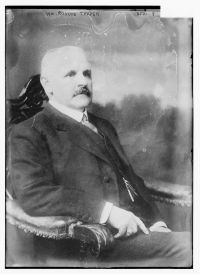
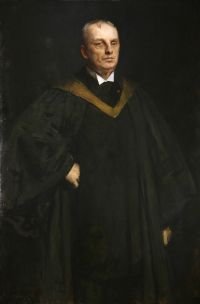
Portrait of William Roscoe Thayer William Roscoe Thayer George Washington

The night was stormy and the crossing was much interrupted by floating cakes of ice; in spite of which he landed his troops safely on the eastern shore. They had to march nine miles before they reached Trenton, taking Colonel Rall and his garrison of Hessians by surprise. More than a thousand surrendered and were quickly carried back over the river into captivity.
The prestige of the Battle of Trenton was enormous. For the first time in six months Washington had beaten the superior forces of the British and beaten them in a fortified town of their own choosing.
Source: Gutenberg

Get perspective with Kwize: daily news enlightened by great literature