“ The youth of Bernardo O'Higgins was far more chequered than that which falls to the lot of most young men. Owing to the peculiar circumstances of his birth—his father, as a high official under the Spanish rule, had not dared perform the marriage ceremony with his colonial lady-love, Bernardo's mother—his childhood had been somewhat neglected, and his early youth largely deprived of a normal share of paternal affection. ”
Bernardo O'Higgins
Definition and stakes
The theme of “Bernardo O'Higgins” has been addressed by authors such as Frances Jenkins Olcott, active 1803-1825 William Bennet Stevenson, W. H. Koebel, L. E. Elliott Joyce and J. A. Hammerton. It is often associated with terms like Chile, Spaniards, fire, José and church.
Quotes about “Bernardo O'Higgins”
Frances Jenkins Olcott, Good stories for great birthdays
“ It is seldom that a genius such as Ambrose O’Higgins the father, the greatest Viceroy of royalist Spanish America, bears a man such as Bernardo O’Higgins the son, first chief of the new Republic which sprang up from the ashes of his dead father’s Government. ”
active 1803-1825 William Bennet Stevenson, Historical and descriptive narrative of twenty years' residence in South America…
“ Don Bernardo O'Higgins, the supreme director of Chile, possesses a considerable share of real courage; is resolute in executing a determination, but tardy in forming it; diffident of [Pg 276] his own abilities, he is willing to take advice from any one, but always inclined to consider the last as the best. ”
Frances Jenkins Olcott, Good stories for great birthdays
“ So with provisions for many days, with armament, munitions, baggage, and great herds of cattle for food, the Army followed the trails that led through the barren foothills toward the high Andes.The lofty central ranges of the gloomy mountains frowned down upon the soldiers, while the dark passes seemed yawning pitilessly to devour them. But nothing daunted, they courageously continued to climb the foothills toward the mountains.Bernardo O’Higgins, the Chilean Patriot, led one of the divisions; for Chile had now joined forces with Argentina against Spain. ”
active 1803-1825 William Bennet Stevenson, Historical and descriptive narrative of twenty years' residence in South America…
“ Being the son of an Irishman, Don Ambrose Higgins, who died in the high situation of Viceroy of Peru, he was passionately fond of the countrymen of his father, and I believe an Irishman was never deceived in his expectations of support and protection in O'Higgins. In short, the character which a Chilean gave to me conveys a very accurate summary of his general outline. "There is too much wax, and too little steel in his composition; however, there are few better, and many worse men than Don Bernardo." ”
Frances Jenkins Olcott, Good stories for great birthdays
“ So he and his soldiers retreated in safety to Santiago.But that city was doomed. The Spanish marched upon it and took it. All was terror. Many people fled from the city. Patriots who remained were seized by the Spanish, and imprisoned or murdered. A number of men, some quite old, were banished to the lonely island of{400} Juan Fernandez—Robinson Crusoe’s desert island.As for Bernardo O’Higgins, he barely escaped with his life. He led a party of miserable shivering refugees, men and women, across the Andes into Argentina. ”
Frances Jenkins Olcott, Good stories for great birthdays
“ His arsenal had produced bullets by the hundreds of thousands. Friar Beltran’s carriages for artillery, specially designed for mountain-passes, stood waiting. The guns themselves were to be carried on the backs of mules. Slings had been prepared to hoist the mules over dangerous places; also sleds of rawhide in which the guns might be hauled up inclines too steep for heavily laden mules to climb.The women of Mendoza, led by Bernardo O’Higgins’s mother and sister who were exiles from Chile, had prepared a store of bandages and medicines, and had made uniforms for the soldiers. ”
L. E. Elliott Joyce, Chile today and tomorrow
“ Statues of these leaders stand all over Latin America, and it is but just that tributes should be paid. But the day of blind homage is past. Critics have dared to arise, and the skies have not fallen upon their blasphemy.The formation of the “Gran Reunion Americana,” with definite aims towards self-government of the Spanish American colonies, was one result. Inaugurated in Buenos Aires, it spread “lodges” all over South America, following freemasonry in its terminology. One of the most influential of these branches was “Lautaro Lodge,” at Concepción, with Bernardo O’Higgins as a member. ”
J. A. Hammerton, The real Argentine: Notes and Impressions of a Year in the Argentine and Uruguay
“ The Irishman is well-known for the part he has played in the development of South America. In that wonderful statesman and governor, Ambrosio O’Higgins, and his no less brilliant son Bernardo, the liberator and first President of Chili, did not Ould Ireland give to South America two of the noblest men of action whose lives illumine its history? In the Argentine also, the Hibernian has played no mean rôle in the development of the young nation. ”
D.D. James Thomson, Letters on the Moral and Religious State of South America (1827)
“ The Director, Don Bernardo O’Higgins, manifested a sincere desire to extend education throughout the country over which he was placed, and was ready to listen to any improvements in the manner of communicating knowledge, which might be brought before him. The principal Secretary of State, Don Rafael Echevarria, was also much interested in the subject. Three schools were established in Santiago, the capital, one in Valparaiso, and one in Coquimbo. Some months before I left Chile, Mr. ”
The New International Encyclopædia…
“ He was completely successful in driving out the Spaniards from Chile; but the aristocratic party distrusted his republican leanings and his attempts to introduce a liberal constitution. Under the followers of Carrera, they rebelled and deposed him in 1823. O'Higgins went to Lima, where he spent his remaining years. ”
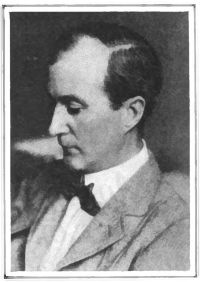 Harvey J. O'Higgins,
../../../
(1908)
“ Yes He is an old man. It will be bad. He may die. Perhaps. He is a relative—related to you. You must beware of animals. One will do you an injury. You will never be rich—but comfortable. The best of your life is comin'. You will have your wish." She had finished, but Mrs. Cregan did not move. She had drawn back in her chair. Her mouth had loosened; her hand lay limp on the table; all her intelligence seemed to have concentrated in her eyes in an expression of guilty and horrified surprise. She said faintly: "Is 't Cregan?" Madame Wampa shrugged one shoulder in her red kimono. ”
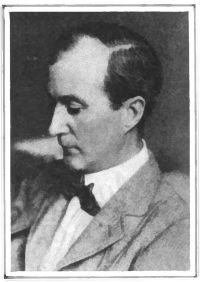 Harvey Jerrold O'Higgins,
Old Clinkers: A Story of the New York Fire Department
“ The men crouched behind the bulwarks, their eyes smarting, their throats parched, silent except for a feeble complaint from “Shine” that they would be “spittin’ black buttons fer a month.” Moran clung to his standpipe. Lieutenant Moore struggled against the kick of a pipe which he had turned on the burning pier at the stern of the boat. Keighley’s voice came to them all, thin and far, “To yer [Pg 139] left, Moore. Higher up there, chief. Stick to it, boys!”There is, in such men, an ideal of self-subordination as strong as the instinct of liberty itself. ”
Harvey J. O'Higgins,
From the Life — W. T.
(1919)
“ Feeble nothin'! He works 's good 's the best o' them—where he knows how." "He won't chop the wood," she said. The whole village had discovered his aversion to the use of an ax. "No," he reflected. "He's a bit queer about that. He ain't strong in his top story. But he's harmless, girl. An' we've treated him like a dog—leavin' him live in that swamp—" "He wouldn't let you do anything else." "That's so. That's right. Well, I'll make him come if I have to move the shack to do it." The captain's house was a relic of the ante-railroad, days of Port Derby's prosperity. ”
Harvey O'Higgins, The Bystander (1908)
“ He was not old enough to have acquired any heavy-waisted dignity, but the arid monotony of his clerical work in a railroad freight-office had somewhat dried up his youthfulness, forming upon him that exterior crust which grows in solitude like a shell on the spirit and a mask on the face. A woman pelted him with confetti, and surprised him into a laugh. A trio of girls, who followed, had the faces of young bacchantes, their innocent eyes at once daring and timorous, giving the invitation to license only to flee from it. ”
Harvey J. O'Higgins,
His Mother
(1909)
“ She herself had clung to the old, even when Larry had wished to be rid of them. ("There's nothin' so comfort'ble to set in as an ol' chair," she would say, "unless. 'tis an ol' boot.") She was old herself. Well, he would soon learn whether the new was better! She shook her head prophetically. He would soon learn whether the new was better.II That mood passed, and a more characteristic one succeeded it.She knew the girl would be some "gumchewin' young gadabout with no more than brains enough to dress herself like a fool." ”
Harvey J. O'Higgins,
../../../
(1908)
“ It is impossible to tell much for a quarter. I give a full trance readin', with names, dates, and all questions answered——" Mrs. Cregan "blessed" herself,—with the sign of the cross,—gasped, "God forgi' me!" and blundered out into the room. Mrs. Byrne cried: "What's wrong?" Mrs. Cregan did not hear. She stampeded to the door in the ponderous fright of a panic-stricken elephant. Her one thought was to find a place where she might get on her knees.... Cregan! It was himself! It was Dinny! Killed, maybe! She had blasphemed against the Church and Father Dumphy, and she must pray. ”
Harvey J. O'Higgins,
Don-A-Dreams
(1906)
“ Down among the tenements the streets were brimful of muddy slush; the trestles of the elevated railroad dripped a fluid grime; the street lights struggled against the fog with the feebleness of guttered candles; the damp air freshened the evil odours of the quarter to a pungency that seemed to Don to reach his palate. He shivered, with his collar to his ears, hugging his bundle of Christmas papers under his arm, trying to convince himself that all this doubled ugliness of wet filth and poverty would aid him in his attack on Conroy. ”
Harvey J. O'Higgins,
The Rag Doll
(1907)
“ Who's to put her arms around you and go to sleep on your shoulder? There's nothing but the pain now to sleep with.” She rocked herself from side to side, hugging herself in her bony arms. “Hish, hish! Will you never stop tearing at me?” She rose from her stool and began to pace up and down the little shop, swaying drunkenly and crooning a delirious lullaby to herself, her face distorted, her eyes glassed. Johnny, weak from nervous shock, in a cold fear of remaining shut in alone with a woman of such an aspect, wiped the perspiration from his face with his forearm and the back of his hand. ”
Harvey J. O'Higgins,
From the Life — Hon. Benjamin P. Divins
(1919)
“ Their progress had put the Point between them and the landing. The Honorable Benjamin, seeing that he was hidden from the man on the wharf, crouched, half risen from his seat, grasping the thwarts. "G— damn it!" he cursed in a fierce undertone, "aren't you good for anything? Won't you even save yourself and all the rest of us from the poorhouse now that you've got the chance? That man's come here to arrest me! Matt! Hide it! Hide it!" Matt did not move. Ben looked back over his shoulder at the lake, reached one hand toward the money, and then said to himself, desperately, "It 'd float!" ”
Harvey J. O'Higgins,
../../../
(1908)
“ He's talkin' like an anarchist! An' that's why he smashed me dish. He'll have no one say 'No' to 'im.... Ah, Mrs. Byrne, niver marry a man older than yersilf." "Thank yuh," Mrs. Byrne replied with hoarse sarcasm. "I'm not likely to, at my age." She added, consolingly: "Cregan's young fer his years. Drivin' a Fift' Avenah bus is fine, preservin', outdoor work." "It is that!" And Mrs. Cregan's tone remarked that the fact was the more to be deplored. "He'll be crankier an' crabbeder the older he grows." ”
Harvey J. O'Higgins,
Don-A-Dreams
(1906)
“ She was younger than Miss Arden, who was a woman of thirty-five, at least, and already puffy under the eyes and hollow in the cheeks where she might have been, at some time, dimpled. And yet Miss Arden seemed younger in heart, chattered more spiritedly and laughed with less reserve. When they made an excursion in the street-car to Fort George, on a Sunday afternoon, she was gaily juvenile beside Miss Morris's staid sobriety; and, with Walter Pittsey, she made the life of the party, while Don and Miss Morris listened, watched and smiled. ”
Harvey J. O'Higgins,
Don-A-Dreams
(1906)
“ The machine shot forward into an opening between, the two streams of carriages; the man, still staring, disappeared with a backward jerk of the head that brought his hand up to the brim of his hat. Don said: "He thought he knew me!" But as soon as he had said it, he saw that it had been she at whom the stare had been directed; and he saw, too, that the recognition had not been welcome. He scrutinized the memory of the man's face—a clean-shaven plump face with protruding eyeballs that were round under skinny eyelids, like a bird's. ”
Harvey J. O'Higgins,
From the Life — Hon. Benjamin P. Divins
(1919)
“ You're getting too old to work. I'll see that you don't have to. ... They can't touch me. I'll get out of it, I guess. But they'll pluck me to the last cent. I want you to keep this for me. Take it! Take it!" Matt sat motionless, his eyes on the money, as if he did not hear. The water lapped and chuckled along the side of the punt maliciously as a puff of wind hurried them toward the shore. "Say! Say, Matt. Look here. For God's sake! It's all we have. Everything's gone to smash. They've been watching me while they—they've been going over the books. That's one of them at the landing. ”
Harvey J. O'Higgins,
Don-A-Dreams
(1906)
“ She can get me a place in the Saint Katherine's School for Girls, teaching music." She added bitterly: "And deportment!" "Don't go." "What else can I do?" she cried, facing him with the accusation of her tears. "I can't stay here. You—no one——" "I will," he pleaded. "Don't go. Give me a chance. Come and see Kidder with me. Take anything—until we find out. This sort of thing can't be done in a day. Take it until we can get something better." "Take what?" "The 'extra' work—like Miss Morris. It'll only be five or six dollars a week, but it'll help pay expenses until—I have lots of money. ”
Harvey J. O'Higgins,
Don-A-Dreams
(1906)
“ Mr. Gregg sprang the next question like a trap: "Who is the young woman?" Don did not answer. "Is it Miss Morris?" He flushed resentfully. "Do you think she would sooner have you on the stage than in some honest employment? . . . Do you think she would be happier here than in Coulton? . . . Do you?" Don put down his pipe and stood up to face his father. "What's the use?" he said wildly. "What's the use of all this? I couldn't make you understand if we were to keep this up forever. You don't—— The things that are important to you, to Coulton, I don't care that for." ”
Harvey J. O'Higgins,
Don-A-Dreams
(1906)
“ Don ran after the car, alarmed, and saw Conroy alighting at a street corner. They met in the middle of a block. Conroy drew him into a doorway. "They—they wouldn't cash it," he gasped. "He telegraphed them to stop payment. He must know. They must have written—from the University. He'll be coming himself. What'll I do?" Don wiped his forehead; the walking and the running had made him hot, and this new catastrophe brought the perspiration out on him like a fear. "I can buy the tickets," he said faintly. "You'd better go and stay with Pittsey. He'll not find you there." ”
Harvey J. O'Higgins,
Silent Sam and Other Stories of Our Day
(1914)
“ She shook her bowed head, the slow tears running down her wrinkles. "I thought to meet him—on th' other side—with all the boys an' gurls." Her hands clung together in a shaking grip. "Don't tell 'm yeh seen me, sur. The—the shame of it—'t would be as hard fer him." She reached out to the bundle of washing and began to untie it distractedly. "God ease the sin of it," she wept, "but I was happier when yeh tol' me he was shot in the head.... Don't tell him now. Let 'm leave me be. I can finish be mesilf." ”
Harvey J. O'Higgins,
Don-A-Dreams
(1906)
“ She brought her hand up, as if to brush back a straying hair from her forehead, shutting her eyes for the instant that her hand covered them. "No," she said; "it's you." "How is it?" he argued. "What have I done? I'm what I always have been. . . . I can't change. I can't be untrue—to myself. ”
Harvey O'Higgins, The Bystander (1908)
“ III The morning came to Broadway like daylight to the room of an all-night debauch; and Fasken descended the front steps of his hotel, with a cheap, yellow suit-case in his hand, dusty to the knees, his bat jammed down on his eyebrows, as dull-faced as the day. He walked to the corner slowly, and saw the confetti blown with the dust into the gutters; the pavements strewn with papers and feathers, with broken horns, torn banners, and the wreck of a stuffed effigy scattered in rags. The early workers, hurrying to the Elevated Railroad, passed him without a glance. ”
