Brussels lace

Definition and stakes

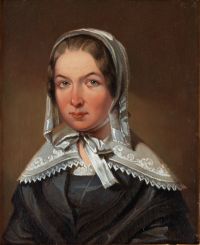
Portrait of Fredrika Bremer Fredrika Bremer,  Life in the Old World (1860)

“ Brussels sits like a holiday-attired princess, proud and elegant, on the table-land of Brabant, gazing out freely, on all sides, over flourishing, fertile fields. The new portion of the city, with its royal palace, its beautiful park and tree-planted boulevards, broad streets, large market-place, handsome, well-built houses, produced the most cheerful effect. Cleanliness and elegance prevail everywhere. Wealth and elegance are united with a certain character of permanence and strength. We are in the head-quarters of Brussels lace. ”
Source: Wikisource

Mrs. Bury Palliser,  History of Lace

“ The finest Brussels lace can only be made in the city itself. Antwerp, Ghent, and other localities have in vain tried to compete with the capital. The little town of Binche, long of lace-making celebrity, has been the most successful. Binche, however, now only makes pillow flowers (point plat) , and those of an inferior quality.
When, in 1756, Mrs. Calderwood visited the Béguinage at Brussels, she wrote to a friend describing the lace-making. "A part of their work is grounding lace; the manufacture is very curious. One person works the flowers.
”
Source: Gutenberg

Eliza Ann Youmans,  Popular Science Monthly (1875)

“ The master prepares the pattern, selects the ground, and chooses the thread, and hands all over to the workman, who has no responsibility in these matters. "The lace industry of Brussels is now divided into two branches, the making of sprigs, either point or pillow, for application upon the net-ground, and the modern point gaze. The first is the Brussels lace, par excellence, and more of it is produced than of any other kind. Of late years it has been greatly improved by mixing point and pillow-made flowers. ”
Source: Wikisource

Get perspective with Kwize: daily news enlightened by great literature