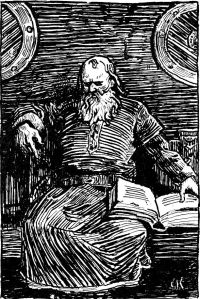
Canute the Great, an 11th-century Scandinavian ruler who governed Denmark, Norway, and England, exemplifies the intricacies of medieval kingship through his political aspirations, religious diplomacy, and enduring symbolic influence. Historians such as Laurence Marcellus Larson highlight his expansionist ambitions, pointing to his unification of diverse regions and calculated partnerships with the Church, while Oscar Wilde’s critique of Michael Field’s work underscores Canute’s inner conflict between his Viking roots and his Christian persona.
Writers like John H. Haaren have preserved the memory of his famous “tide” moment, emphasizing the boundaries of power, whereas Larson’s studies illuminate his practical leadership and the precarious nature of his vast empire. These viewpoints together depict Canute as both a unifier and a leader navigating the tensions of his time, leaving a legacy that connects Norse traditions with medieval Christian Europe.