Cape Horn

Definition and stakes

Walter McRoberts Rounding Cape Horn, and Other Sea Stories

Chapter II.
“Come on deck if you want to see Cape Horn!” called out Captain Meade to the passengers in the cabin, who instantly hurried on deck, for one can’t see the famous Cape every day.
The captain silently pointed his finger, and there, looming up out of the morning mist, the passengers saw Cape Horn. It was nearly twenty miles off, but so deceptive are distances at sea that it seemed not half that distance away. Who can behold without a feeling of awe, that black and naked rock, rising precipitously from a low islet to a height of five hundred feet!
Source: Gutenberg

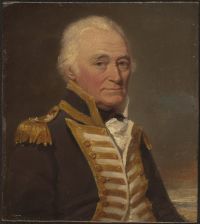
Portrait of William Henry Giles Kingston William Henry Giles Kingston Taking Tales: Instructive and Entertaining Reading

The big ship just seemed nothing among them, as she now sunk down in the hollow, and then rose to the top of the smooth hill of water. To our right was seen Cape Horn itself; it is a high head of land, sticking out into the sea, all by itself. Very few people have ever been on shore there, and no one lives there, as there is no ground to grow anything, and the climate is cold and bleak. You know that the two ends of the earth, or poles, as they are called, the north and south, are very cold; ice and snow all the year round, and Cape Horn is near the south end.
Source: Gutenberg

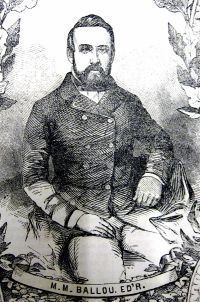
Portrait of Maturin M. Ballou Maturin M. Ballou Equatorial America

This division makes Cape Horn belong to Chili, not a specially desirable possession, to be sure, but it is an indelible landmark.
The sail along the coast northward after leaving the Pacific mouth of the strait affords very little variety of scenery; the dull hue of the barren shore is without change of color for hundreds of miles, until the eye becomes weary of watching it, as we speed onward through the long, indolent ocean swell.
Source: Gutenberg

Get perspective with Kwize: daily news enlightened by great literature