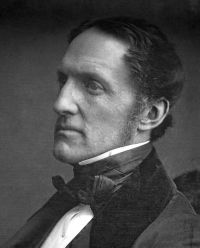
Charles III of Spain

Definition and stakes

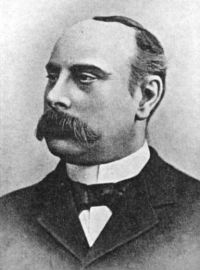
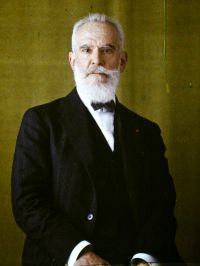
Portrait of Rafael Altamira Rafael Altamira A History of Spain

It appears, therefore, that the empire was more a matter of show than of strength, and that Spain, who already had a surfeit of responsibility, what with her conquests in Italy, Africa, and the Americas, must bear the burden for all. The reign of Charles would seem to be the parting of the ways for Spain. If she could have restricted herself to her purely Spanish inheritance, even with the incubus of her Italian possessions, she might have prolonged her existence as a great power indefinitely.
Source: Gutenberg

Anonymous Roman Catholicism in Spain

About the middle of the eighteenth century, all the enlightened men of Europe exclaimed against that company, and ardently desired its extermination; and, although many works were published against it, and the voices of many religious orders were raised in denouncing it to the pontifical throne and to the public, such was the power and dexterity with which it neutralised these hostile dispositions, that nobody dared to attack its front, until a king of Spain, the illustrious Charles III., undertook that great work, and carried it on to its consummation with as much resolution as ability.
Source: Gutenberg

A. H. Johnson Europe in the Sixteenth Century…

Since the resignation of the Austrian lands to Ferdinand in 1521, he had looked on Spain as the centre of his rule, and had identified himself with Spanish interests in Church and State. It was Spain that had chiefly supported him in his European struggles, and he now came, rather as King of Spain and Emperor of the West, than as a German prince, to re-establish the unity of the Empire and of the ancient Church. Charles, however, was too good a statesman to ruin his cause by over haste.
Source: Gutenberg

Get perspective with Kwize: daily news enlightened by great literature