Charles-Maurice de Talleyrand-Napoleon

Definition and stakes

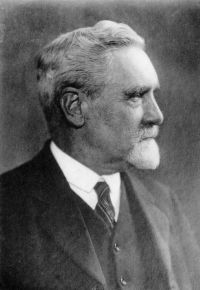
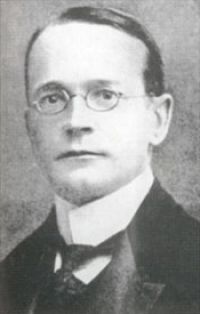
Portrait of J. Holland Rose J. Holland Rose,  The Life of Napoleon I (Volume 1 of 2…

“ Bonaparte was now the sole plenipotentiary of France. The final negotiations with Austria and the resulting treaty of Campo Formio may therefore be considered as almost entirely his handiwork.
And yet, at this very time, the head of the Foreign Office at Paris was a man destined to achieve the greatest diplomatic reputation of the age. Charles Maurice de Talleyrand seemed destined for the task of uniting the society of the old régime with the France of the Revolution. To review his life would be to review the Revolution.
”
Source: Gutenberg

Comte de Auguste Louis Charles La Garde-Chambonas,  Anecdotal Recollections of the Congress of Vienna

“ Never was there a more difficult rôle than his. He was, as it were, the buffer betwixt the government he represented and France, whose interest he wished to save, and the inimical Powers, which confounded in the self-same ban Napoleon and the country which once more had welcomed him. I was not in Paris at the time of the first Restoration; Talleyrand’s conduct, therefore, only came to me through contemporary accounts, not always to be depended on for their veracity. ”
Source: Gutenberg

Portrait of J. Holland Rose J. Holland Rose,  The Life of Napoleon I (Volume 1 of 2…

“ These facts were correct: but the manner in which he stated them clearly revealed his annoyance that the Czar would not wholly espouse the French cause. Talleyrand's views on this question may be seen in his letter to Bonaparte, when he assures his chief that he has now reaped from his noble advance to the Russian Emperor the sole possible advantage—"that of proving to Europe by a grand act of frankness your love of peace and to throw upon England the whole blame for the war." It is not often that a diplomatist so clearly reveals the secrets of his chief's policy. ”
Source: Gutenberg

Get perspective with Kwize: daily news enlightened by great literature