Charles de Ligne

Definition and stakes

Apolonia Helena Massalska,  Memoirs of the Princesse de Ligne… (1887)

“ It seemed as though he had waited Ligne’s departure before deciding on the attack, and his jealous character justifies the supposition. The winter was peacefully spent at Vienna, and Prince Charles, absorbed in his new passion, did not seem afflicted at his wife’s absence.
In the spring of 1789 the two Princes joined Marshal Laudon’s army. General de Ligne commanded the right wing, and played an important part at the siege of Belgrade, during which he displayed an indefatigable energy. “I was all on fire myself,” he writes, “urged on by that being, [76] who is more like a god than a man.
”
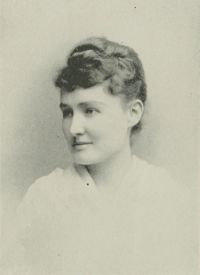
Source: Gutenberg

Apolonia Helena Massalska,  Memoirs of the Princesse de Ligne… (1887)

“ At nine o’clock his Highness the Prince Charles de Ligne left his hotel in a coach drawn by six horses and preceded by a detachment of dragoons, by the members of the order of the nobility, each one in a coach drawn by two horses, and by a herald-at-arms on horseback, named O’Kelly, bearing his coat-of-arms, and the cap and wand of his office. The guards and officers of his house closed the procession. On reaching the theatre his Highness seated himself on an arm-chair under a canopy, above which was placed a portrait of his Majesty. ”
Source: Gutenberg

Comte de Auguste Louis Charles La Garde-Chambonas,  Anecdotal Recollections of the Congress of Vienna

“ He in every respect justified the saying of Maupertuis: ‘The body is a green fruit; it only becomes ripe at the moment of death.’
The Prince de Ligne was a field-marshal, the proprietor of a regiment of infantry (raised and subsequently maintained at his own expense) , captain of the trabans and the guards of the Imperial Palace, a member of most of the European Orders, and a Knight of the Golden Fleece.
”
Source: Gutenberg

Get perspective with Kwize: daily news enlightened by great literature