
“ Orso, quite dumfounded, gazed at his sister with an admiration not unmixed with alarm. “My sweet Colomba,” he said, as he rose from the table, “I really am afraid you are the very devil. But make your mind easy. If I don’t succeed in getting the Barricini hanged, I’ll contrive to get the better of them in some other fashion. ‘Hot bullet or cold steel’—you see I haven’t forgotten my Corsican.” “The sooner the better,” said Colomba, with a sigh. “What horse will you ride to-morrow, Ors’ Anton’?” ”
Quotes about “Colomba”
“ Miss Nevil made a gesture of astonishment. “I got out of Pietranera without being noticed,” continued Colomba, “because I was with you, otherwise I should have been followed. To be so close to him, and not to see him! Why shouldn’t you come with me to see my poor brother? You would make him so happy!” “But, Colomba—That wouldn’t be at all proper on my part——” “I see. With you women who live in towns, your great anxiety is to be proper. We village women only think of what is kind.” ”
“ Why, you’d never be strong enough even to lift it! . . . Is there no man about who can do it?” “I’m not so weak as you think!” said Colomba, turning up her sleeves, and displaying a pair of round white arms, perfect in shape, but looking more than ordinarily strong. “Here, Saveria,” said she to the servant; “come and help me!” She was already lifting the trunk alone, when Orso came hastily to her assistance. “There is something for you in this trunk, my dear Colomba,” said he. “You must excuse the modesty of my gifts. A lieutenant on half-pay hasn’t a very well-lined purse!” ”
“ In spite of the double load, the animal, urged by a brace of hearty kicks, started off nimbly, and galloped headlong down a steep declivity on which anything but a Corsican steed would have broken its neck a dozen times. Then Colomba retraced her steps, calling Miss Nevil at the top of her voice; but no answering cry was heard. After walking hither and thither for some time, trying to recover the path, she stumbled on two riflemen, who shouted, “Who goes there?” “Well, gentlemen,” cried Colomba jeeringly, “here’s a pretty racket! How many of you are killed?” ”
“ One morning, after breakfast, Colomba left the room for a moment, and instead of returning as usual, with a book and some sheets of paper, reappeared with her mezzaro on her head. The expression of her countenance was even more serious than it generally was. “Brother,” she said, “I want you to come out with me.” “Where do you want me to go with you?” said Orso, holding out his arm. “I don’t want your arm, brother, but take your gun and your cartridge-pouch. A man should never go abroad without his arms.” ”
“ Colomba had seated herself behind Orso. She raised him carefully so that his head might rest on her lap. She put her arms round his neck and signed to Miss Lydia to come near him. “Closer! closer!” she said. “A sick man mustn’t talk too loud.” And when Miss Lydia hesitated, she caught her hand and forced her to sit down so close to Orso that her dress touched him, and her hand, still in Colomba’s grasp, lay on the wounded man’s shoulder. “Now he’s very comfortable!” said Colomba cheerily. “Isn’t it good to lie out in the maquis on such a lovely night? Eh, Orso?” ”
“ Orso chose the canto of the Inferno, containing the episode of Francesca da Rimini, and began to read, as impressively as he was able, the glorious tiercets which so admirably express the risk run by two young persons who venture to read a love-story together. As he read on Colomba drew nearer to the table, and raised her head, which she had kept lowered. Her wide-open eyes, shone with extraordinary fire, she grew red and pale by turns, and stirred convulsively in her chair. How admirable is the Italian organization, which can understand poetry without needing a pedant to explain its beauties! ”
“ The first man who dares to say anything more about killing or burning, will quite possibly get a scorching at my hands! Be off! Saddle me the gray horse!” “What’s this, Orso?” said Colomba, drawing him apart. “You allow these people to insult us? No Barricini would have dared to mutilate any beast of ours in my father’s time.” ”
“ And Miss Nevil, dagger in hand, made a gesture of stabbing from above, as actors do on the stage. “Yes,” said Colomba, in her soft, musical voice, “if I had to do it to protect myself or my friends. But you must not hold it like that, you might wound yourself if the person you were going to stab were to draw back.” Then, sitting up in bed, “See,” she added, “you must strike like this—upward! If you do so, the thrust is sure to kill, they say. Happy are they who never need such weapons.” ”
“ At the same time the prefect threw himself between the combatants. “We shall soon meet, Ors’ Anton’!” shouted Orlanduccio, and slamming the door of the room violently, he turned the key in the lock, so as to insure himself time to retreat. For a full quarter of an hour Orso and the prefect kept their places in dead silence, at opposite ends of the room. Colomba, the pride of triumph shining on her brow, gazed first at one and then at the other, as she leaned on the gun that had turned the scale of victory. “What a country! Oh, what a country!” ”
“ Your sister may have to give an account of the strange relations in which she lives with a set of bandits.” “Signor Prefetto!” cried Colomba, “I beseech you to listen to what this man has to say! You are here to do justice to everybody, and it is your duty to search out the truth. Speak, Giocanto Castriconi!” “Don’t listen to him,” chorused the three Barricini. “If everybody talks at once,” remarked the bandit, with a smile, “nobody can contrive to hear what anybody says. Well, in the prison at Bastia I had as my companion—not as my friend—this very man, Tomaso. ”
“ My readers will imagine Colomba’s radiant face, her companion’s confusion, the prefect’s surprise, the colonel’s astonishment and joy. The public prosecutor permitted himself the mischievous entertainment of obliging poor Lydia to undergo a kind of cross-examination, which did not conclude until he had quite put her out of countenance. “It seems to me,” said the prefect, “that we may release everybody. These young ladies went out for a walk—nothing is more natural in fine weather. They happened to meet a charming young man, who has been lately wounded—nothing could be more natural, again.” ”
“ These were the first words to fall on Orso’s ear as he entered the room. At the sight of him the circle parted, and a low murmur of curiosity betrayed the expectation roused in the gathering by the voceratrice’s presence. Colomba embraced the widow, took one of her hands, and stood for some moments wrapped in meditation, with her eyelids dropped. Then she threw back her mezzaro, gazed fixedly at the corpse, and bending over it, her face almost as waxen as that of the dead man, she began thus: “Carlo-Battista! May Christ receive thy soul! . . . To live is to suffer! Thou goest to a place . ”
“ Colomba heaved a sigh, looked fixedly for a moment, first at the table-cloth, and then at the rafters of the ceiling; at last, covering her eyes with her hand like those birds that gather courage, and fancy they are not seen when they no longer see themselves, she sang, or rather declaimed, in an unsteady voice, the following serenata: “THE MAIDEN AND THE TURTLE-DOVE “In the valley, far away among the mountains, the sun only shines for an hour every day. In the valley there stands a gloomy house, and grass grows on its threshold. Doors and windows are always shut. ”
 Walter Pater,
Miscellaneous Studies; a series of essays
Walter Pater,
Miscellaneous Studies; a series of essays
“ Colomba, that strange, fanatic being, who has a code of action, of self-respect, a conscience, all to herself, who with all her virginal charm only does not make you hate her, is, in truth, the type of a sort of humanity Mérimée found it pleasant to dream of—a humanity as alien as the animals, with whose moral affinities to man his imaginative work is often directly concerned. ”
“ After many windings through the narrow paths in the maquis they were met by two men, armed to the teeth. “Is that you, Brandolaccio?” inquired Colomba. “Where is my brother?” “Just over there,” replied the bandit. “But go quietly. He’s asleep, and for the first time since his accident. Zounds, it’s clear that where the devil gets through, a woman will get through too!” The two girls moved forward cautiously, and beside a fire, the blaze of which was carefully concealed by a little wall of stones built round it, they beheld Orso, lying on a pile of heather, and covered with a pilone. ”
Walter Pater,
Miscellaneous Studies; a series of essays
“ The supremacy of that passion is well indicated by the cry, put into the mouth of a young man in the presence of the corpse of his father deceased in the course of nature—a young man meant to be commonplace. "Ah! Would thou hadst died malamorte—by violence! We might have avenged thee!" In Colomba, Mérimée's best known creation, it is united to a singularly wholesome type of personal beauty, a natural grace of manner which is irresistible, a cunning intellect patiently diverting every circumstance to its design; and presents itself as a kind of genius, allied to fatal disease of mind. ”
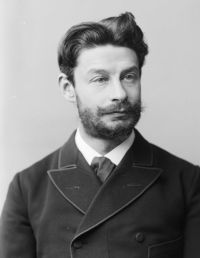 Georg Brandes,
Main Currents in Nineteenth Century Literature - 5…
Georg Brandes,
Main Currents in Nineteenth Century Literature - 5…
“ Not without reason has Colomba been compared to Elektra. Like Elektra, she broods, to the exclusion of every other thought, on the unavenged death of her father; like Elektra, she incites her brother to take a bloody revenge; and she is even less of the stereotyped tragedy heroine than Sophocles' young girl, for, clad though she is in the steel panoply of appalling prejudices, she bears herself simply and lovably. She is at once bloodthirsty and childlike, hard-hearted and girlish; a fierce grace is her characteristic trait. ”
“ Orso and his wife went down into the ancient building, pulled out their pencils, and began to sketch the mural paintings. But the colonel and Colomba, who neither of them cared much for archaeology, left them to themselves, and walked about in the neighbourhood. “My dear Colomba,” said the colonel, “we shall never get back to Pisa in time for lunch. Aren’t you hungry? There are Orso and his wife buried in their antiquities; when once they begin sketching together, it lasts forever!” ”
“ I don’t at all like my sister to perform in public in this way.” “Orso,” replied Colomba, “every country pays honour to its dead after its own fashion. The ballata has come down to us from our forefathers, and we must respect it as an ancient custom. Maddalena does not possess the ‘gift,’ and old Fiordispina, the best voceratrice in the country, is ill. They must have somebody for the ballata.” “Do you believe Carlo-Battista won’t find his way safely into the next world unless somebody sings bad poetry over his bier? Go if you choose, Colomba—I’ll go with you, if you think I ought. ”
“ Colomba came to his side, led him into a window, and spoke to him for a moment in an undertone, showing him something she held under her mezzaro. “Mademoiselle,” said Orso to Miss Nevil, “my sister is anxious to give you a very odd present, but we Corsicans have not much to offer—except our affection—which time never wipes out. My sister tells me you have looked with some curiosity at this dagger. It is an ancient possession in our family. It probably hung, once upon a time, at the belt of one of those corporals, to whom I owe the honour of your acquaintance. ”
“ Colomba shook her head. She had recovered all her usual composure, and her burning eyes were fixed on the prefect. “M. Barricini,” the prefect continued, “is exceedingly anxious to put an end to the sort of enmity . . . or rather, the condition of uncertainty, existing between yourself and him. . . . On my part, I should be delighted to see you both in those relations of friendly intercourse appropriate to people who certainly ought to esteem each other.” “Monsieur,” replied Orso in a shaking voice, “I have never charged Barricini with my father’s murder. ”
“ Terrified by the firing, checked at every step by the thick growth of the maquis, Miss Nevil had soon lost sight of the fugitives, and been left all alone in a state of the most cruel alarm. “She has been left behind,” said Brandolaccio, “but she’ll not be lost—women always turn up again. Do listen to the row the Padre is making with your gun, Ors’ Anton’! Unluckily, it’s as black as pitch, and nobody takes much harm from being shot at in the dark.” “Hush!” cried Colomba. “I hear a horse. We’re saved!” ”
“ It is in obedience to the precept of Horace that I have begun by plunging in media res. Now that every one is asleep—the beautiful Colomba, the colonel, and his daughter—I will seize the opportunity to acquaint my reader with certain details of which he must not be ignorant, if he desires to follow the further course of this veracious history. He is already aware that Colonel della Rebbia, Orso’s father, had been assassinated. Now, in Corsica, people are not murdered, as they are in France, by the first escaped convict who can devise no better means of relieving a man of his silver-plate. ”
“ Miss Lydia, naturally very inquisitive, and as slow as every Englishwoman is about undressing herself, moved over to the table, pretended she was looking for a pin, lifted up the mezzaro, and saw a long stiletto—curiously mounted in silver and mother-of-pearl. The workmanship was remarkably fine. It was an ancient weapon, and just the sort of one an amateur would have prized very highly. “Is it the custom here,” inquired Miss Nevil, with a smile, “for young ladies to wear such little instruments as these in their bodices?” “It is,” answered Colomba, with a sigh. ”
“ Fall to, if you please, and don’t you forget my friend Brusco.” “You spoil Brusco, Mademoiselle Colomba. But he’s a grateful dog. You shall see. Here, Brusco,” and he held out his gun horizontally, “jump for the Barricini!” The dog stood motionless, licking his chops, and staring at his master. “Jump for the della Rebbia!” And he leaped two feet higher than he need have done. “Look here, my friends,” said Orso, “you’re plying a bad trade; and even if you don’t end your career on that square below us, [*] the best you can look for is to die in the maquis by some gendarme’s bullet.” ”
“ Nevertheless, Colomba della Rebbia, who had been summoned by the magistrate, asked leave to examine the note-book. After turning the leaves for a few moments, she stretched out her hand toward the mayor and cried, “There stands the murderer!” Then with a precision and a clearness which were astonishing, considering the passion of sorrow that shook her, she related that, a few days previously, her father had received a letter from his son, which he had burned, but that before doing so he had written Orso’s address (he had just changed his garrison) in the note-book with his pencil. ”
“ These English people are so odd. The very last night I slept in her room she told me she would be sorry to leave Corsica without having seen a good vendetta. If you choose, Orso, you might let her see an assault on our enemies’ house.” “Do you know, Colomba,” said Orso, “Nature blundered when she made you a woman. You’d have made a first-rate soldier.” ”
