Dieri people

Definition and stakes

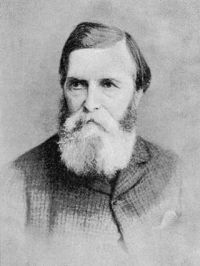
H. J. Nieboer,  Slavery as an industrial system

“ Among the Dieri the oldest man of the clan is chief, but has not always most power. A chief has real power only when, besides his age, he has other valued qualities, such as bravery, eloquence, or a large family. Great warriors, orators and sorcerers have most influence. In the Moore River District there is no government, a perfect equality prevails. The natives of Port Lincoln have no government; old people are held in high esteem. ”
Source: Gutenberg

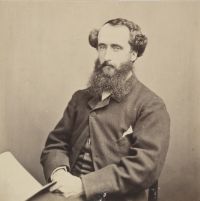
Portrait of Northcote Whitridge Thomas Northcote Whitridge Thomas,  Kinship Organisations and Group Marriage in Australia

“ We have seen above that the Dieri rule is precisely parallel to that of the eight-class tribes in practice; it is however expressed, not by a class system, but by enacting that people standing in a certain degree of kinship or consanguinity shall marry. If Dr Durkheim's theory of the origin of the eight-class system is correct, it should also apply to the Dieri. Now the rule that a man must marry his maternal great-uncle's daughter clearly prevents intermarriage with one of the mother's totem; but this cannot be the object of the rule, for it is prevented already by the phratry system. ”
Source: Gutenberg

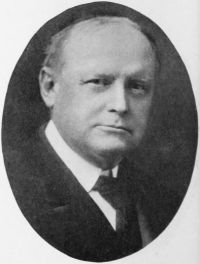
Portrait of Andrew Lang Andrew Lang,  The Secret of the Totem

“ They have phratries, totem kins, apparently no matrimonial classes (some of their rules are imperfectly ascertained) , and they reckon descent in the female line. But, like the Dieri (and unlike the tribes of the south and east) , they practise subincision; they have, or are said to have, no belief in "a supernatural anthropomorphic great Being"; they believe in "old semi-human ancestors," who scattered about spirits, which are perpetually reincarnated in new members of the tribe; they practise totemic magic; and they cultivate the Dieri custom of allotting paramours. ”
Source: Gutenberg

Get perspective with Kwize: daily news enlightened by great literature