East Siberia

Definition and stakes

Pierre Leroy-Beaulieu,  The Awakening of the East: Siberia…

“ Siberia resembles Russia not only in the matter of its immensity, its loneliness, the duration of its winters, monotonous expanse of its plains and enormous forest lands, but also in the leading characteristics of its peasantry; but in Asia and Russia these seem accentuated, possibly by reason of the peculiarity of the surroundings among which they are compelled to live. Even more than in Russia is this class of the people essentially rural; the exploitation of the gold-mines is the only other industry of any importance, and it employs relatively few people in comparison with its yield. ”
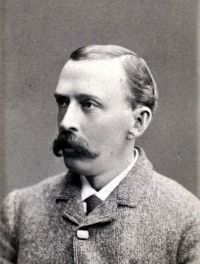
Source: Gutenberg

Pierre Leroy-Beaulieu,  The Awakening of the East: Siberia…

“ We may, therefore, conclude that, from the ethnological point of view, as well as from the geographical, Siberia is merely a prolongation of Russian Europe, or of what is known as Greater Russia. It is true that a few heterogeneous elements exist of the same sort as those to be met with in Russia itself: Poles and Germans from the Baltic provinces, and the descendants of exiles, or even exiles themselves; and thus it comes to pass that in all the larger towns, at Tomsk, Krasnoyarsk and Irkutsk, Catholic and Lutheran churches abound. ”
Source: Gutenberg

Pierre Leroy-Beaulieu,  The Awakening of the East: Siberia…

“ For all that, I have never seen in Siberia any of those miserable hovels to be found in Russia, but undoubtedly the manners and customs of the Siberian peasants are even more primitive than those of the Russians. They possess less knowledge of hygiene and cleanliness, and are absolutely ignorant of everything calculated to render life in the least degree agreeable or rational. ”
Source: Gutenberg

Get perspective with Kwize: daily news enlightened by great literature