Elisabeth of Austria

Definition and stakes

Great Men and Famous Women. Vol…

She was looking forward to the birth of her eldest son, when, at the age of twenty-three, October 20, 1740, she was proclaimed by the heralds Sovereign Archduchess of Austria, Queen of Hungary and Bohemia, for her father lay dead in Vienna, and all the cares and anxieties of government had fallen upon her shoulders. Austria was not one nation, but composed of many differing and scattered peoples jealous of their ancient rights, among whom there could be no sense of unity, and in his many disastrous wars her father had lost several of its possessions.
Source: Gutenberg

Carl Küchler Elizabeth, Empress of Austria and Queen of Hungary

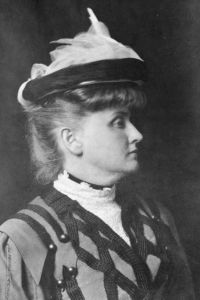
The story of the life of Elizabeth of Bavaria, Empress of Austria and Queen of Hungary, is one of the saddest in the history of royalty, and in some respects recalls the story of the life of Marie Antoinette. Both their lives were sorrowful, both ended tragically, the one at the hands of an assassin, the other upon the guillotine. Elizabeth will not be remembered in history as a sovereign, for everything connected with the throne and with court life was distasteful to her, but rather as the beautiful, sorrowful daughter of the Wittelsbachs.
Source: Gutenberg

Carl Küchler Elizabeth, Empress of Austria and Queen of Hungary

Misfortune had overtaken Austria: the war of 1866 had driven the Hapsburgs from Italy and Germany, and Elizabeth, roused to sympathy, turned her face homeward, feeling that her place was with the Emperor and his people. Though still young in years her sorrows and trials had robbed her of her youth, and she came back a woman strong and self-reliant, caring little for court life, but devoting herself to hospital work among the wounded soldiers with an energy and self-sacrifice that earned her the reverence of all.
Source: Gutenberg

Get perspective with Kwize: daily news enlightened by great literature