Epsom Downs Race Course

Definition and stakes

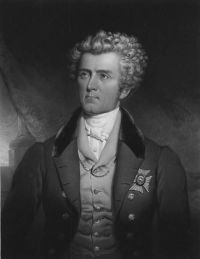
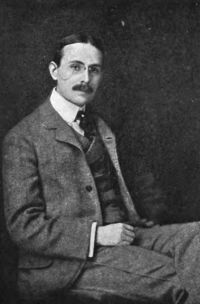
Portrait of James Glass Bertram James Glass Bertram,  A Mirror of the Turf; Or, The Machinery of Horse-Racing Revealed…

“ Very few of the many thousands who annually assemble on the breezy downs of Epsom to gaze upon the fierce contest which takes place for the "Blue Ribbon" of the turf, or who witness the Cup races at Ascot, have even a rudimentary idea of the "business," the real "work," in fact, which is incidental to horse-racing. They have never been behind the scenes, and have had no opportunity of becoming acquainted with the economy of a racing stable, or the labour and anxiety which pertain to training race-horses ”
Source: Gutenberg

Henry A. Murray,  Lands of the Slave and the Free…

“ The race-course is a two-mile distance, perfectly level, on a smooth and stoneless road, and forming a complete circle—light trotting waggons are driving about in the centre, taking it easy at sixteen miles an hour; outside are groups of "rowdies." making their hooks and looking out for greenhorns—an article not so readily found at Long Island as at Epsom.
The race is to be "under the saddle," and the long list of competitors which had been announced has dwindled down to the old and far-famed Lady Suffolk and the young and unfamed Tacony.
”
Source: Gutenberg

Racehorses in Australia (1922)

“ The breeder of the winner receives 250 sovereigns.
The Spring Stakes, a weight-for-age event, 11⁄2 miles, involving 2,500 sovereigns, is another important race of this day, as well as the Epsom Handicap, 1 mile, of 3,000 sovereigns. A considerable amount of ante-post wagering in connection with this race and the Metropolitan is indulged in prior to the meeting. The second day’s programme includes the latter race, a handicap worth 6,000 sovereigns to the winner plus a sweepstake of 30 sovereigns for starters, the distance of which is one mile and five furlongs.
”
Source: Gutenberg

Get perspective with Kwize: daily news enlightened by great literature