Faxian

Definition and stakes

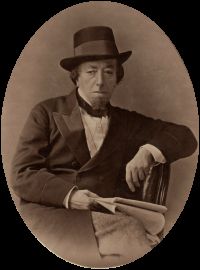
Portrait of Faxian Faxian,  A Record of Buddhistic Kingdoms

“ The king thought that his virtue in the past was not yet sufficient to give him possession of the bowl.
(8) The text is simply “those in white clothes.” This may mean “the laity,” or the “upasakas;” but it is better to take the characters in their common Chinese acceptation, as meaning “commoners,” “men who have no rank.” See in Williams’ Dictionary under {.}.
(9) I do not wonder that Rémusat should give for this—“et s’en retournent apres.” But Fâ-Hien’s use of {.} in the sense of “in the same way” is uniform throughout the narrative.
(10) Hardy’s M. B., p.
”
Source: Gutenberg

Portrait of Faxian Faxian,  A Record of Buddhistic Kingdoms

“ Bunyiu Nanjio’s ‘Catalogue of the Chinese Translation of the Buddhist tripiṭaka,’ Sûtra Piṭaka, Nos. 399, 446. It was the former of these that came on this occasion to the thoughts and memory of Fâ-hien.
6 In a note (p. lx) to his revised version of our author, Mr. Beal says, ‘There is a full account of this perilous visit of Fâ-hien, and how he was attacked by tigers, in the “History of the High Priests.”’ But ‘the high priests’ merely means distinguished monks, ‘eminent monks,’ as Mr. Nanjio exactly renders the adjectival character. Nor was Fâ-hien ‘attacked by tigers’ on the peak.
”
Source: Gutenberg

Get perspective with Kwize: daily news enlightened by great literature