“ From above in the spangled heavens the silver moon was shedding her softened beams upon the expiring camp fires; and along the range of hills, the bugle notes rang out, above the murmur of the camp, the order, "All lights out;" the signal for the wearied army to seek forgetfulness and repose in sleep.Away to the left, from the burning village of Wagram flames ever and anon shot up, lighting the country round and casting a ruddy glow upon a tent pitched on a mound round which the French army was encamped. ”
French camp
Definition and stakes
The theme of “French camp” has been addressed by authors such as Mary Hazel Snuff, Harold W. Picton, Stewart Edward White, Jean Martin and Francis Parkman. It is often associated with terms like war, prisoner, tent, military and France.
Quotes about “French camp”
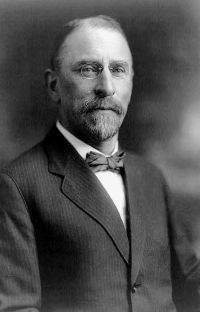 Henry Morgenthau,
Secrets of the Bosphorus
Henry Morgenthau,
Secrets of the Bosphorus
“ An internment camp is a distressing place under the most favourable circumstances, but who, except a German or a Turk, ever conceived of establishing one right in the field of battle? Let us suppose that the English and the French should assemble all their enemy aliens, march them to the front, and place them in a camp in No Man’s Land, directly in the fire of both armies. ”
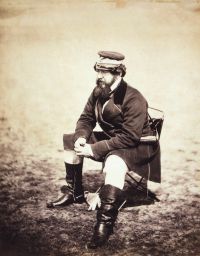 Sir William Howard Russell,
The British Expedition to the Crimea
Sir William Howard Russell,
The British Expedition to the Crimea
“ No one who has not tried it can fancy what work it is to find one's way through widely-spread camps in a pitch-dark night. Each camp is so much like its fellow that it is impossible to discriminate between one and the other; and landmarks, familiar in the day-time, are lost in one dead level of blackness. So my two companions and myself, after stumbling into Turkish and French lines, into holes and out of them, found ourselves, after three hours' ride, very far indeed from our destination in the front, and glad to stop till dawn, wet and tired, at the head-quarters' camp. ”
Jean Martin, Captivity and Escape
“ The position—an immense clearing in the centre of a pine-forest—is healthy. Nothing will be wanting: there is abundance of water, electric light will be installed, large windows will give light and air to the huts, the roofs will be thick and the walls made of bricks lined with wood.Later, when the camp is on the point of being finished, the General who commands the district will let neutral notabilities and journalists visit it, and will present it to them as the future residence of those poor French prisoners over which Germany watches with a mother’s love. ”
Harold W. Picton, The Better Germany in War Time…
“ Sleeping accommodation extraordinary: beds made from boughs by prisoners and superposed in two or three tiers. The ceilings and windows are falling in ruins.... Wishes of the prisoners—to have more to eat.... A very poor camp (dépôt très médiocre) , but well governed by a good and conscientious commandant who is badly seconded by his officers. It is a difficult task to render habitable premises that are falling into ruins.” I am quite sure that none of us would impute ill intent to the French authorities. ”
Posteritas, The Siege of London (1885)
“ This bold and original mode of carrying on warfare cost the French many lives both in officers and private soldiers, while the cavalry and artillery horses, taking fright at the smoke and the flaming carts, broke into a stampede, and added to the general horror and confusion, so that the camp was for a time completely disorganised. ”
Charlotte Biggs, A Residence in France During the Years 1792…
“ Arras, September 14, 1792. The camp of Maulde is broken up, and we deferred our journey, that we might pass a day at Douay with M. de ____'s son. The road within some miles of that place is covered with corn and forage, the immediate environs are begun to be inundated, and every thing wears the appearance of impending hostility. The town is so full of troops, that without the interest of our military friends we should scarcely have procured a lodging. All was bustle and confusion, the enemy are very near, and the French are preparing to form a camp under the walls. ”
Sir William Howard Russell,
The British Expedition to the Crimea
“ The huge swarm of camp-followers, who, to the number of some ten thousand, hovered about the canteens and round Balaklava, Kadikoi, and the fairs, also felt the effects of this weather.There were not less than 25,000 camp followers, including those of the French, Sardinians, and English, belonging to the Allied army, or hanging on their skirts. In the pursuit of gain, most of these people exposed themselves to considerable hardships and privations. ”
Jack O'Brien, Into the Jaws of Death
“ In between these fences there is a line of German guards, each one having his own beat. The centre of the camp is divided into small blocks, each with its fourteen-foot fence of poisoned wire; there are six huts in each block and about fifty prisoners quartered in each hut. When I was there the camp contained about three thousand prisoners—French, Russian, English, and a few Canadians. But, to go back to my arrival. As we were marched into the camp we were a pretty sorry-looking lot. The old prisoners saw us coming, and rushed back to their huts and brought us out some food. ”
John Patrick Le Poer, A Modern Legionary
“ Remember that we were foreigners in the French service, that many of ours had had good reason to flee from justice in their own countries, that we all had a bad reputation with our officers and our French comrades, and, above all, that recent events—the fight at Three Fountains and the morbidly suggestive mound at the east side of the camp there; the ugly fear of a horrible desert station and the intolerable heat of the Red Sea—had made many men think anxiously, constantly, longingly of getting away, at a stroke as it were, from ugly [Pg 104] memories and gloomy forebodings begotten of them. ”
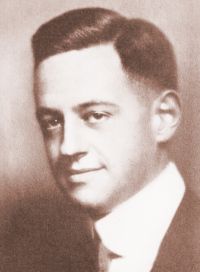 Eric Fisher Wood,
The Note-Book of an Attaché: Seven Months in the War Zone
Eric Fisher Wood,
The Note-Book of an Attaché: Seven Months in the War Zone
“ I have seen great numbers of wounded Territorials in France, and many Territorial prisoners in the prison camps in Germany. When I visited the prison camp at Zossen (near Berlin) where there are said to be 20,000 French prisoners, a large percentage (perhaps as much as 50 per cent.) of the prisoners I saw were Territorials.The Germans have very well-developed and well-organized systems of relays for their men at the front. The infantry stay in the trenches for about a month at a time and are then given a vacation, usually being sent home to their garrison town. ”
Anonymous, The French Army from Within
“ When the men are in their tents and the rain is driving down outside, the interminable songs of the army may be heard from the interiors of the tents. Even in a standing camp—that is to say, a camp located in one position for a period of several days—the men are made to undergo a certain number of parades in order to keep them in health, for continued idleness in camp almost certainly means disease, and, as has already been remarked, the authorities of the French Army are fully alive to the necessity for preserving the health of the men. ”
Harold W. Picton, The Better Germany in War Time…
“ The races have now been separated. The men all stated that they had the two blankets and the other requisites provided in the German rules, and I heard but one complaint about overcrowding. Most of the English and French receive clothes from home. All the prisoners who do not, are furnished from the camp supply; the men stated that this was carried out according to the rules.No complaints whatever were made regarding the Commandant, the non-commissioned officers, or the general government of the camp. ”
Various, Trial of the Major War Criminals Before the International Military Tribunal…
“ On Page 179, the paragraph before the last of the French text: “The SS told us there was only one exit—the chimney.” On Page 174, the last paragraph before the heading “Gassing and Cremation”: “The essential purpose of this camp was the extermination of the greatest possible number of men. ”
 George A. Birmingham,
A Padre in France
George A. Birmingham,
A Padre in France
“ The day closes early in these great camps. At half-past eight the recreation huts close their doors. Concerts and entertainments are over. The men stream back to their tents along muddy roads, laughing, chatting, singing. Lights appear in the tents, and a glow, red or white, shines through the canvas. One after another these are extinguished. The “Last Post” sounds from a dozen bugles. The multitudinous noises of camp life die away. The rifle-fire which has crackled all day on the ranges has long ceased. The spluttering of machine guns in the training camps vexes the ear no more. ”
Livy, From the Founding of the City… (1905)
“ A camp is a resting-place for the victor, a shelter for the vanquished. How many armies to whom the fortune of battle has proved unkindly have been driven inside their ramparts and then at their own time, sometimes almost immediately, have made a sortie and repulsed their victorious foe? Here is the soldier's second fatherland, here is his abode, with the rampart for its walls; here each finds in his tent, his home and his household gods. Ought we to have fought as homeless wanderers with no place to receive us after our victory? ”
Charles Morris, Historic Tales: The Romance of Reality…
“ Early in the morning of Wednesday, the 12th of April, without the stirring drum or the bugle call of old, the camp awoke to the new life. Whether or not they had a country, these soldiers did not know. Home to many, when they reached it, was graves and ashes. At any rate, there must be, somewhere on earth, a better place than a muddy, smoky camp in a piece of scrubby pines;347 better company than gloomy, hungry comrades and inquisitive enemies, and something in the future more exciting, if not more hopeful, than nothing to eat, nowhere to sleep, nothing to do, and nowhere to go. ”
Sir William Howard Russell,
The Civil War in America
“ The white tents crouching close to the shade of the pines, the parade alive with groups and colors as various as those of Joseph’s coat, arms stacked here and there, and occasionally the march of a double file in green, or in mazarine blue, up an alley from the interior of the wood, to be dismissed in the open camp, resembles a militia muster, or a holiday experiment at soldiering, rather than the dark shadow of forthcoming battle. The cordon of sentinels suffer no Volunteer to leave the precincts of the camp, even to bathe, without a pass or the word. ”
L. March Phillipps, With Rimington
“ I have seen prints in shop windows of farms and soldiers, bits of country life and war mixed, a party of Lancers or Uhlans calling at some old homestead, watering their horses or bivouacking in the garden. Often what I see now makes me think of these subjects. A large camp is hideous and depressing; dirty and worn, the ground trampled deep in dust; filth and refuse lying about; the entrails and skins of animals, flies, beastly smells, and no excitement or animation. But these outlying scenes, scouts, pickets, &c., have a peculiar interest. ”
William Ross King, Campaigning in Kaffirland; Or, Scenes and Adventures in the Kaffir War of 1851-52
“ Our camp, with two others consisting of Europeans and Fingoe Levies, was on a green level plain, between the fort and the River Chumie, beyond which rose a fine range of lofty mountains.Anything more miserable in the shape of barrack accommodation than the officers' quarters in the fort can hardly be conceived; uneven floors of dried cow-dung, bending walls of "wattle and daub," smoke-blackened rafters and thatch, crazy doors, and ill-fitting windows, which exclude the light and admit in turn, wind, rain, and clouds of sand, are the characteristics of the best. ”
Livy, From the Founding of the City… (1905)
“ Had we nothing which we could call our own except the bare ground on which to fight?' Your ancestors looked upon a camp as a safe haven for the army against every mischance, from which they went out to battle, where, after being tossed in the storm of battle, they could find a safe retreat. ”
Sir Charles Alexander Gordon, Recollections of Thirty-nine Years in the Army
“ The arrangement of the camp itself, including tents, matériel, conveniences and necessities, slovenly and untidy.In its immediate vicinity the Seine was a washtub for the troops, many of whom were occupied in beating, scrubbing, and otherwise cleansing articles of their clothing in the edge of the stream. I lean over the parapet and observe the process. I am grasped by a soldier;275 others hurry to his aid; I am captured, a prisoner. The spy mania is rampant. ”
Helen Miller Moyes, Women and War Work
“ At the Training Camps, in France, in every field of war, we have the Y.M.C.A., and there is no soldier in these days and no civilian who does not know the Red Triangle. There are over 1,000 huts in Britain and over 150 in France. It is the sign that means something to eat and something warm to drink, somewhere cozy and warm out of the cold and chill and damp of winter camp and trench, somewhere to write a letter, somewhere to read and talk, somewhere that brings all of "Blighty" that can come to the field of war. In our Y.M.C.A. huts, 30,000 women work. ”
W. H. Newlin, An Account of the Escape of Six Federal Soldiers from Prison at Danville…
“ We then located a camp, got roasting-ears from a field to our right, an iron pot, and water at a house to our left, and in due time feasted, chatted, and retired for the night, not knowing how near we might be to enemies, or how far from friends. After midnight a terrible racket, to our front, awakened and frightened us. Imagining the commotion was produced by a dash of the enemy's cavalry, we arose in great haste, scattered our fire, gathered our traps, and hied us away to the brush. ”
Benjamin Muse, The Memoirs of a Swine in the Land of Kultur… (1919)
“ In arriving in camp I was fortunate enough to meet a friend, a Frenchman, with three years service in captivity and an ample stock of provisions. He “adopted” me. The fate of my eight hundred comrades, however, was pitiful. Finding practically nothing in the Help Committee’s stores and being as yet without help from England, they were forced to subsist on the German ration which was scarcely enough to keep a man on his feet. The usual results of hunger set in, and I saw these poor fellows sink into shabby, hungry, begging wanderers about the camp. ”
Charles Amory Beach, Air Service boys flying for France (1919)
“ Perhaps in the gray of early dawn they would return to the camp, the men tired, and almost frozen; but with glowing accounts of the immense damage they had managed to inflict on the concentration camps of the enemy. ”
J. N. Larned, History for ready reference, Volume 2…
“ They here constructed entrenchments of earth and wood, and established an extensive armed station, which took the name of the Camp of Refuge. The foreigners at first hesitated to attack them amidst their rushes and willows, and thus gave them time to transmit messages in every direction, at home and abroad, to the friends of old England. ”
Rupert Sargent Holland, Historic Adventures: Tales from American History
“ At four o'clock in the morning the sentinels who were on guard waked the camp by shots from their rifles, the emigrants crept from their canvas-covered wagons or tents built against the side of the wagons, and soon the smoke of camp-fires began to rise in the air. Sixty men, whose duty it was to look after the cattle, would start out from the corral, or enclosed space, spreading through the horses and cattle, who had found pasturage over night in a great semicircle about the camp. ”
 Alfred John Church,
Stories From Livy
Alfred John Church,
Stories From Livy
“ Nevertheless, the tents of the Consuls were set up, and the tools for fortifying the camp got ready, though it seemed an idle thing for men that were in such plight to fortify a camp; but because they would not make their trouble worse by neglect they addressed themselves to work, and, without bidding or command from any man, fortified a camp ”
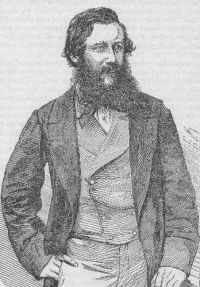 John Hanning Speke,
The Discovery of the Source of the Nile
John Hanning Speke,
The Discovery of the Source of the Nile
“ Crack, bang, went their carbines, and in another instant crack, bang, was heard from the northerners' camp, when, like a swarms of bees, every height and other conspicuous place was covered with men. Our hearts leapt with an excitement of joy only known to those who have escaped from long-continued banishment among barbarians, once more to meet with civilised people, and join old friends. Every minute increased this excitement. We saw three large red flags heading a military procession, which marched out of the camp with drums and fifes playing. ”
Francis William Reitz, A Century of Wrong — Appendix B. The Annexation of the Diamond Fields (1900)
“ Day after day, and night after night, the one or other part of the camp is entertained by the edifying spectacle of natives being thrashed, tents being burnt, and white people surrounded by ferocious crowds who can scarcely be kept back from carrying out their desire for vengeance by a small truncheon and a thick thong. ”
 Max Pemberton,
The Great White Army
Max Pemberton,
The Great White Army
“ From every camp fire now, from the shelter of puny huts and caves dug out of the earth, from wagons and tents, there appeared a stream of men and women, too, camp followers who mingled with the soldiery and cursed or entreated as the mood dictated. ”
Related terms
Authors who wrote about “French camp”
Mary Hazel SnuffHarold W. Picton Stewart Edward WhiteJean Martin
 Francis ParkmanEric Fisher WoodAugustus MeyersPosteritasSir William Howard RussellLivyJenkins Lloyd JonesGerald Featherstone KnightReginald Brodie Dyke AclandCharles Morris
 Mayne ReidJohn Alan Lyde CaunterBaron Robert Stephenson Smyth Baden-Powell Baden-Powell of GilwellWilliam Ross King
 Buffalo Bill
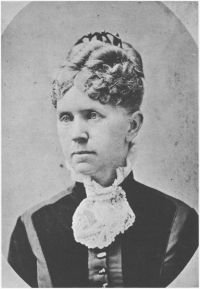 Frances Fuller Victor
Stewart Edward WhiteJean MartinFrancis ParkmanEric Fisher WoodAugustus MeyersPosteritasSir William Howard RussellLivyJenkins Lloyd JonesGerald Featherstone KnightReginald Brodie Dyke AclandCharles MorrisMayne ReidJohn Alan Lyde CaunterBaron Robert Stephenson Smyth Baden-Powell Baden-Powell of GilwellWilliam Ross KingBuffalo BillFrances Fuller Victor