Gaston de Foix

Definition and stakes

1911 Encyclopædia Britannica, Volume 10… (1911)

“ Gaston III., who was surnamed Phoebus on account of his beauty, was the most famous member of the old Foix family. Like his father he assisted France in her struggle against England, being entrusted with the defence of the frontiers of Gascony; but when the French king, John II., showed a marked preference for the count of Armagnac, Gaston left his service and went to fight against the heathen in Prussia. Returning to France about 1357 he delivered some noble ladies from the attacks of the adherents of the Jacquerie at Meaux, and was soon at war with the count of Armagnac. ”
Source: Wikisource

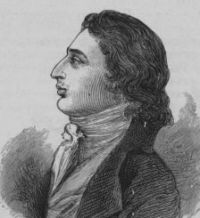
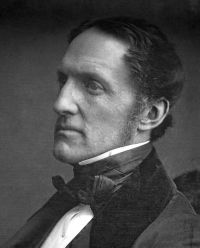
Portrait of William Hickling Prescott William Hickling Prescott,  The History of the Reign of Ferdinand and Isabella the Catholic…

“ Early in 1512, France, by great exertions, and without a single confederate out of Italy, save the false and fluctuating emperor, got an army into the field superior to that of the allies in point of numbers, and still more so in the character of its commander. This was Gaston de Foix, duke de Nemours, and brother of the queen of Aragon. Though a boy in years, for he was but twenty-two, he was ripe in understanding, and possessed consummate military talents. He introduced a severer discipline into his army, and an entirely new system of tactics. ”
Source: Gutenberg

Thomas Hodgkin, Thomas Ashby, and Charles Francis Atkinson,  1911 Encyclopædia Britannica (1911)

“ It arose out of the attempt of the Spanish and Italian forces to relieve Ravenna, besieged by Gaston de Foix, duke of Nemours. The most celebrated captains of these wars were present on either side—under Gaston de Foix were Bayard, Yves d'Allègre, La Palisse; and under Cardona the Spanish Viceroy of Naples, Pedro Navarro the great engineer, and Pescara the originator of the Spanish tactical system. After some preliminary manœuvres the two armies drew up face to face on the left bank of the Roneo, the Spanish left and the French right resting on this river. ”
Source: Wikisource

Get perspective with Kwize: daily news enlightened by great literature