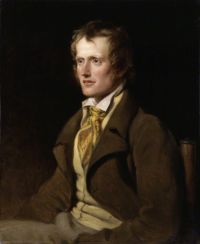
Gilbert de Clare

Definition and stakes

Thomas Andrew Archer,  Dictionary of National Biography… (1887)

“ Gilbert de Clare was the most powerful English noble of his day. Besides his immense estates in Wales and Ireland, he possessed lands in twenty-two English counties (Escheat Rolls, i. 131) . In his early years he appears to have been very fickle in his political attachments, and want of loyalty to his leaders was strikingly exemplified in his conduct towards Simon de Montfort and Prince Edward. There was something chivalrous, however, in his attitude towards the disinherited barons, and in his care to secure the safety of his adherents among the London citizens. ”
Source: Wikisource

Thomas Andrew Archer,  Dictionary of National Biography… (1887)

“ According to Dugdale his father died in 1206; but this is evidently a mistake, as both 'Richard, earl of Clare, and his son Gilbert' appear in the patent rolls of 14 John (ed. Hardy, p. 192) ; while the Earl of Clare and Gilbert de Clare are to be found among the twenty-five barons appointed to carry out the great charter in June 1215, and were both excommunicated by Innocent III in the beginning of 1216 (Matt. Paris, ii. 605, 643) . ”
Source: Wikisource

Portrait of Thomas Gray Thomas Gray,  Poetical Works of Johnson, Parnell…

“ She was the foundress of Pembroke College or Hall, under the name of Aula Marias de Valentia.]
[Footnote 4; 'Clare:' Elizabeth de Burg, Countess of Clare, was wife of John de Burg, son and heir of the Earl of Ulster, and daughter of Gilbert de Clare, Earl of Gloucester, by Joan of Acres, daughter of Edward I.; hence the poet gives her the epithet of 'princely.' She founded Clare Hall.]
[Footnote 5: 'Anjou's heroine:' Margaret of Anjou, wife of Henry VI., foundress of Queen's College.]
”
Source: Gutenberg

Get perspective with Kwize: daily news enlightened by great literature