Gran Canaria

Definition and stakes

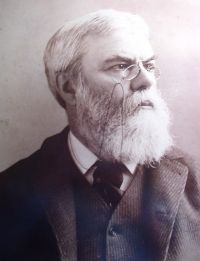
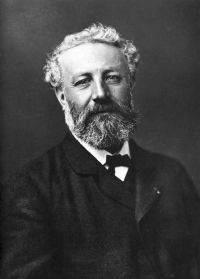
Portrait of Jules Verne Jules Verne,  Celebrated Travels and Travellers…

“ During this voyage from the coast of Africa to Gran Canaria, the three vessels were separated in stormy weather, one going to Palma, and another to Fortaventura, but finally they all reached Gran Canaria. This island is sixty miles long and thirty-six miles broad; at the northern end it is flat, but very hilly towards the south. Firs, dragon-trees, olive, fig, and date-trees form large forests, and sheep, goats, and wild dogs are found here in large numbers. The soil is very fertile, and produces two crops of corn every year, and that without any means of improving it. ”
Source: Gutenberg

Karl Baedeker,  The Mediterranean (1911)

“ Las Palmas, a town of 28,600 inhab., of a S. Spanish type like Santa Cruz (comp. p. 35) , the seat of the bishop of Gran Canaria, situated in 28° 6′ N. lat. and 15° 12′ W. long., is the busiest and wealthiest town in the whole archipelago. The houses of the well-to-do townspeople, built of pale-grey tufa or blue lava-basalt, often enclose beautiful patios filled with plants, which are watered by means of pipes conducted from the roofs. On the hills at the back of the town, which have been fortified since the Spanish and American war, are sprinkled many gaily painted country-houses. ”
Source: Gutenberg

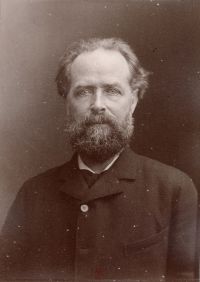
Portrait of Élisée Reclus Élisée Reclus,  Africa by Élisée Reclus/Volume 3 (1892)

“ Like Teguise in Lanzarote, Betancnria in Fuerteventura has lost the rank of capital given to it by its founder, the conqueror of the island. The present capital is Puerto dc Cabran, the chief centre of population, on the side facing the African mainland. But the largest towns, such as Casillas del Angel, Ampiiyenta, Antigua, and Tuimje, are grouped in the fertile plains of the central districts, bounded by the steep cliffs and lava-fields of the " Mai pais." Gran Canaria. ”
Source: Wikisource

Get perspective with Kwize: daily news enlightened by great literature