Great Falls, Montana

Definition and stakes

Harold W. Fairbanks,  The Western United States: A Geographical Reader

“ The city of Great Falls, Montana, in the Missouri River basin, is destined to become a great industrial centre, because of the presence of unlimited water-power afforded by the Great Falls of the Missouri River. No other reason would lead to the growth of a settlement at this particular spot, for boundless plains extend about it in every direction. ”
Source: Gutenberg

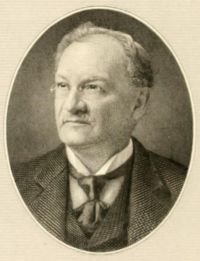
Portrait of Joel Cook Joel Cook,  America, Volume 6 (of 6)

“ The flourishing town of Great Falls gets its prosperity from these cataracts and is a prominent locality for copper-smelting, having fifteen thousand people. At the head of river navigation, some distance farther down, is the military post of Fort Benton. The river then flows eastward through Montana, receives the Yellowstone at Fort Buford and turns southeast in North Dakota, passing Bismarck, the capital, and flowing south and southeast it becomes the boundary between Nebraska and Kansas on the west, and South Dakota, Iowa and Missouri on the northeast. ”
Source: Gutenberg

1911 Encyclopædia Britannica (1911)

“ The Missouri is navigable for small boats to Fort Benton in Chouteau county, but farther upstream near Great Falls, Cascade county, to which it is navigable at high water, it falls 512 ft. in 10 m. The Yellowstone is navigable for about 300 m. The principal rivers west of the Main Divide of the Rockies are the Clark Fork of the Columbia and its principal tributary, the Flathead, which rises in British Columbia. Montana has a few mineral springs, the best known being the Lissner Springs at Helena. Small lakes and waterfalls, the result of glacial action, are numerous in the mountains. ”
Source: Wikisource

Get perspective with Kwize: daily news enlightened by great literature