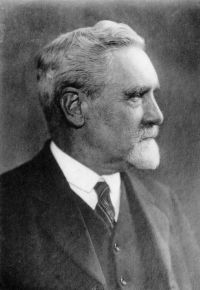
Henry Dundas

Definition and stakes

George Fisher Russell Barker,  Dictionary of National Biography… (1888)

“ Dundas then attempted to prevail on Pitt to accept the office of prime minister, but after a long ministerial interregnum the coalition government came into power in April 1783, and Dundas was succeeded as treasurer of the navy by Charles Townshend. The office of lord advocate Dundas continued to hold for some time longer, but in spite of his boast that ‘no man in Scotland will venture to take my place,’ he was at length displaced by Fox in August 1783 in favour of Henry Erskine. ”
Source: Wikisource

Baron George Gordon Byron Byron,  The Works of Lord Byron: Letters and Journals…

“ Byron
.
Footnote 1:
Henry Dundas (1742-1811) , created Viscount Melville in 1802, Lord Advocate (1775-83) , made himself useful to Lord North's Government as a shrewd, hard-working man of business, a ready speaker — in broad Scotch, and a consummate election agent. For twenty years he was the right-hand man of Pitt —
"Too proud from pilfered greatness to descend,
Too humble not to call Dundas his friend."
Not only was he Pitt's political colleague, but in private life his boon companion. A well-known epigram commemorates in a dialogue their convivial habits —
Pitt.
”
Source: Gutenberg

John Andrew Hamilton,  Dictionary of National Biography… (1888)

“ Dundas married, first, in 1712, Elizabeth, eldest daughter of Robert Watson of Muirhouse, who, with four of his children, died in January 1734 of small-pox, and by her he had a son, Robert, afterwards lord president [see Dundas, Robert, of Arniston, the younger] , and other children; and, secondly, on 3 June 1734, Anne, daughter of Sir William Gordon, bart., of Invergordon, by whom he had five sons and a daughter. One of these sons, Henry, treasurer of the navy and first viscount Melville, is separately noticed. ”
Source: Wikisource

Get perspective with Kwize: daily news enlightened by great literature