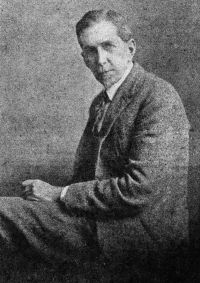
James Dewar

Definition and stakes

James Dewar,  1911 Encyclopædia Britannica, Volume 16… (1911)

“ In 1892 it occurred to Dewar that the principle of an arrangement he had used nearly twenty years before for some calorimetric experiments on the physical constants of hydrogenium, which was a natural deduction from the work of Dulong and Petit on radiation, might be employed with advantage as well to protect cold substances from heat as hot ones from cold. He therefore tried the effect of surrounding his liquefied gas with a highly exhausted space. ”
Source: Wikisource

James Dewar,  1911 Encyclopædia Britannica, Volume 16… (1911)

“ Density of Solids and Coefficients of Expansion at Low Temperatures.—The facility with which liquid gases, like oxygen or nitrogen, can be guarded from evaporation by the proper use of vacuum vessels (now called Dewar vessels) , naturally suggests that the specific gravities of solid bodies can be got by direct weighing when immersed in such fluids. If the density of the liquid gas is accurately known, then the loss of weight by fluid displacement gives the specific gravity compared to water. The metals and alloys, or substances that can be got in large crystals, are the easiest to manipulate. ”
Source: Wikisource

James Dewar,  1911 Encyclopædia Britannica, Volume 16… (1911)

“ It is remarkable that the same absorption bands occur in the compressed gas. Dewar gives the melting-point as 38° absolute, and the density at the boiling-point of hydrogen as 1.4526. The refractive index of the liquid for the D sodium ray is 1.2236.
Ozone.—This gas is easily liquefied by the use of liquid air. The liquid obtained is intensely blue, and on allowing the temperature to rise, boils and explodes about −120° C. About this temperature it may be dissolved in bisulphide of carbon to a faint blue solution. The liquid ozone seems to be more magnetic than liquid oxygen.
”
Source: Wikisource

Get perspective with Kwize: daily news enlightened by great literature