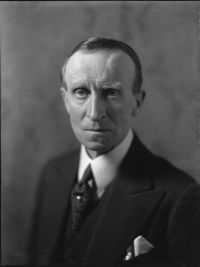
James Edward Oglethorpe

Definition and stakes

Sophie Lee Foster,  Revolutionary Reader: Reminiscences and Indian Legends

“ James Edward Oglethorpe was born in 1696, and died in 1785—two years after the Revolutionary war. He planted the Colony of Georgia, in which the oppressed found refuge. He had served in the army of Prince Eugene of Savoy in the war with the Turks. He founded the city of Savannah, Georgia. He exported to England the first silk made in the colonies, of which the queen had a dress made. King George II gave him a seal representing a family of silk worms, with their motto: "Not for ourselves but for others." ”
Source: Gutenberg

1911 Encyclopædia Britannica (1911)

“ Sir Theophilus Oglethorpe, the father, had four sons and four daughters, James Edward being the youngest son, and another James (b. 1688) having died in infancy. Of the daughters, Anne Henrietta (b. 1680–1683) , Eleanor (b. 1684) and Frances Charlotte (Bolingbroke’s “Fanny Oglethorpe”) may be specified as having played rather curious parts in the Jacobitism of the time; their careers are described in the essay on “Queen Oglethorpe” by Miss A. Shield and A. Lang, in the latter’s Historical Mysteries (1904) . ”
Source: Wikisource

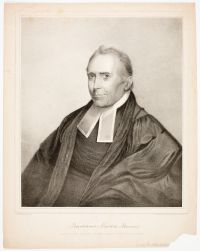
Portrait of Thaddeus Mason Harris Thaddeus Mason Harris,  Biographical Memorials of James Oglethorpe

“ From them we have, likewise, yearly, large quantities of goods. We ought not to raise one colony upon the destruction of another. Much less ought we to grant a favor to any particular set of people which may prove to be against the public good of the nation in general."
To these, and other matters of general moment, Oglethorpe devoted his time, his talents, and his influence while in Parliament.
”
Source: Gutenberg

Get perspective with Kwize: daily news enlightened by great literature