“ The Jacobitism of later days did not mean any discontent with revolution principles, but dislike to the revolution dynasty. The Whig indeed argued with true party logic, that every Tory must be a Jacobite, and every Jacobite a lover of arbitrary rule. In truth a man might wish to restore the Stuarts without wishing to restore the principles for which the Stuarts had been expelled: he might be a Jacobite without being a lover of arbitrary rule; and still more easily might he be a Tory without being a Jacobite. ”
Jacobitism
Definition and stakes
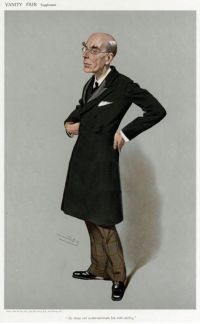
Jacobitism, the political and emotional movement advocating the restoration of the Stuart dynasty in Britain, emerged as a complex interplay of loyalty, ideology, and cultural identity. Authors like Dr. Doran framed it as a hereditary Tory sentiment in England, rooted in divine right and opposition to Whig principles, while Leslie Stephen clarified that Jacobitism often diverged from revolutionary ideals, focusing instead on dynastic succession.
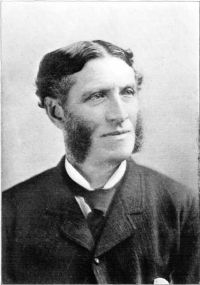
Matthew Arnold linked Jacobinism (a related but distinct concept) to resistance against progressive culture, and Gustave Le Bon critiqued its rhetoric as empty verbiage. Meanwhile, Scottish contexts revealed deeper, more fervent attachments, as noted in The Red True Story Book. These varied perspectives underscore Jacobitism’s dual role as both a political stance and a symbolic anchor for historical grievances.
Quotes about “Jacobitism”
Dr. Doran, London in the Jacobite Times (1877)
“ Johnson’s Jacobitism had become a ‘sentiment,’ in 1783. He could then indignantly denounce the factious opposition to Government, and yet account for it on Jacobite principles. He imputed it to the Revolution. One night, at Mrs. Thrale’s house in Argyle Street, where the conversation turned on this subject, ‘Sir,’ said he, in a low voice, having come nearer to me, while his old prejudices seemed to be fermenting in his mind, ‘the Hanoverian family is isolée here. They have no friends. ”
“ But in the fifty years that had passed since the Revolution, men had got used to peace and the blessings of a settled government. Jacobitism in England was a sentiment, hereditary in certain Tory families; it was not a passion to stir the hearts of the people and engage them in civil strife. It was very different with the Scots. ”