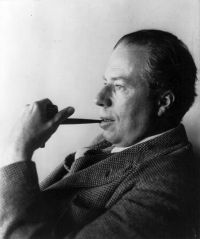
“ To any reader of the books of Joseph Conrad it must be at once plain that his immediate experiences and impressions of life have gone very directly to the making of his art. It may happen often enough that an author's artistic life is of no importance to the critic and that his dealing with it is merely a personal impertinence and curiosity, but with the life of Joseph Conrad the critic has something to do, because, again and again, this writer deliberately evokes the power of personal reminiscence, charging it with the burden of his philosophy and the creation of his characters. ”
Joseph Conrad
Definition and stakes
Joseph Conrad, a Polish-British novelist (1857–1924), is celebrated as a master of English prose who infused the language with a non-English sensibility, exploring crises of human individuality amid an indifferent world. His works, often set at sea, delve into moral uncertainty and the inner self, blending impressionism with modernist innovation. Authors like Hugh Walpole noted Conrad’s fusion of personal experience and philosophy, while his own texts—such as Victory and The Shadow Line—portray flawed protagonists navigating existential struggles.
Conrad’s narratives, rooted in his Polish heritage and maritime life, reflect imperial tensions and the fragility of human determination, leaving a legacy that bridges 19th-century realism and modernist introspection. His focus on unequal conflicts and the resilience of ordinary individuals synthesizes his unique vision of humanity’s precarious existence.
Quotes about “Joseph Conrad”
 Joseph Conrad,
Victory — Part Four, Chapter Twelve
(1915)
Joseph Conrad,
Victory — Part Four, Chapter Twelve
(1915)
“ They make a convenience of people like you and me. A gentleman is better than an employer, but an equal partnership against all the 'yporcrits is the thing for you and me. We'll go on wandering the world over, you and I both free and both true. You are no cage bird. We'll rove together, for we are of them that have no homes. We are born rovers!"She listened to him with the utmost attention, as if any unexpected word might give her some sort of opening to get that dagger, that awful knife--to disarm murder itself, pleading for her love at her feet. ”
“ If we turn to the themes that engage Joseph Conrad’s attention we shall see that 55in almost every case his subjects are concerned with unequal combats—unequal to his own far-seeing vision, but never to the human souls engaged in them, and it is this consciousness of the blindness that renders men’s honesty and heroism of so little account that gives occasion for his irony. He chooses, in almost every case, the most solid and unimaginative of human beings for his heroes, and it seems that it is these men alone whom he can admire. ”