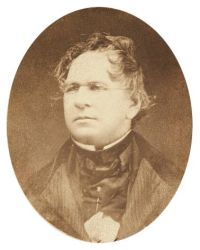
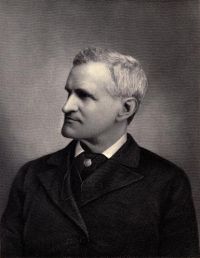
“ As you know, I am by no means the only Virginian, and they are heroes, the others, if you like!—real, old-line heroes, brave as the warriors in Homer, and a long sight better men! I am happy to report to his kinsmen here that General Joseph E. Johnston is in health—still loving astronomy, still reading du Guesclin, still studying the Art of War. He's a soldier's soldier, and that, in its way, is as fine a thing as a poet's poet! I see men before me who are of the blood of the Lees. Out there by the Rio Grande is a Colonel Robert E. Lee, of whom Virginia may well be proud! ”
Joseph E. Johnston
Definition and stakes
Joseph E. Johnston (1807–1891) was a prominent Confederate general during the American Civil War, recognized for his strategic insight and intricate relationship with Confederate President Jefferson Davis. Authors such as Mary Johnston emphasize his unwavering character and similarities to Robert E. Lee, while Clement Anselm Evans outlines his tactical roles in campaigns like Manassas.
Julian Street draws comparisons between his defensive strategies and those of World War I generals, highlighting his flexibility. Postwar analyses, including his own Narrative of Military Operations, portray a reflective figure critical of Confederate leadership. Johnston’s legacy combines military practicality with lasting respect for his opponents, encapsulating the dual nature of his service and the controversies of his time.
Quotes about “Joseph E. Johnston”
 Clement Anselm Evans,
Confederate Military History
(1899)
Clement Anselm Evans,
Confederate Military History
(1899)
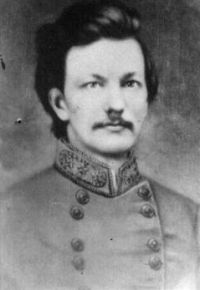
“ Joseph E. Johnston, in command of the department of Northern Virginia, had assigned him, and established his headquarters at Winchester. Although forming the left wing of Johnston's army, the main body of which was in the vicinity of Manassas Junction, Jackson's command was, in some respects, an independent one, as he had assigned to him not only the protection of the lower valley of the Shenandoah, but also the extensive Appalachian country to the northwest that drained into the Potomac, and along the northeastern border of which ran the Baltimore & Ohio railroad. ”
 Julian Street,
American Adventures: A Second Trip 'Abroad at home'
Julian Street,
American Adventures: A Second Trip 'Abroad at home'
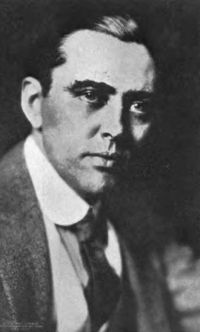
“ After the defeat of the Confederate forces at Chattanooga, General Joseph E. Johnston's army fell back slowly on Atlanta, much as the French fell back on Paris at the beginning of the European War, shortening their own lines of communication while those of the advancing Germans were being continually attenuated. As the Germans kept after the French, Sherman kept after Johnston; and as Joffre was beginning to be criticized for failing to make a stand against the enemy, so was Johnston criticized as he continued to retire without giving battle. ”