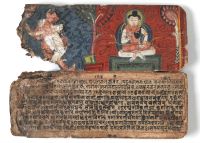
Kama Sutra

Definition and stakes

Portrait of Vātsyāyana Vātsyāyana,  The Kama Sutra of Vatsyayana

“ The ingredient in this is a peculiar contact between the organ of sense and its object, and the consciousness of pleasure which arises from that contact is called Kama.
[18] Kama is to be learnt from the Kama Sutra (aphorisms on love) and from the practice of citizens.
When all the three, viz., Dharma, Artha, and Kama come together, the former is better than the one which follows it, i.e., Dharma is better than Artha, and Artha is better than Kama. But Artha should be always first practised by the king, for the livelihood of men is to be obtained from it only.
”
Source: Gutenberg

Portrait of Vātsyāyana Vātsyāyana,  Kama Sutra (1883)

“ Even by day, and in a place of public resort, when her lover shows her any mark that she may have inflicted on his body, she should smile at the sight of it, and turning her face as if she were going to chide him, she should show him with an angry look the marks on her own body that have been made by him. Thus if men and women act according to each other's liking, their love for each other will not be lessened even in one hundred years. ”
Source: Wikisource

Portrait of Vātsyāyana Vātsyāyana,  Kama Sutra (1883)

“ The whole subject of embracing is of such a nature that men who ask questions about it, or who hear about it, or who talk about it, acquire thereby a desire for enjoyment. Even those embraces that are not mentioned in the Kama Shastra should be practised at the time of sexual enjoyment, if they are in any way conducive to the increase of love or passion. The rules of the Shastra apply so long as the passion of man is middling, but when the wheel of love is once set in motion, there is then no Shastra and no order. ”
Source: Wikisource

Get perspective with Kwize: daily news enlightened by great literature