
“ I don't know why it should have suddenly occurred to me, apropos of nothing, that Billy Kemper was unusually handsome. Or why I should have turned and looked at the pretty waitress—except that she was, perhaps, worth gazing upon from a purely non-scientific point of view. In fact, to a man not entirely absorbed in scientific research and not passionately and irrevocably wedded to his profession, her violet-blue eyes and rather sweet mouth might have proved disturbing. ”
Kemper
Definition and stakes
The theme of “Kemper” has been addressed by authors such as Robert W. Chambers, John Alexander Logan, Charles Heber Clark, Benjamin Griffith Brawley and Abner Doubleday. It is often associated with terms like Kemp, Thomas, man, John and invisible.
Quotes about “Kemper”
“ Besides, I had all I could do to manoeuvre the tiller and prevent Evelyn Grey from falling off backward into the bayou. Besides, it is not customary to converse with the man at the helm.After a while—during which I seemed to distinguish in Kemper's voice a quality that rhymes with his name—his tones varied through phases all the way from irony to exasperation. After a while he gave it up and took to singing. ”
John Alexander Logan, The Great Conspiracy, Complete
“ But it is not in human nature to continue that advance in the teeth of the withering fire from Jackson's batteries, strengthened, as they are, by Pelham's and Kemper's. The gallant fellows fall back, rally again, advance once more, retire again, and at last,—the heroic Cameron being mortally wounded,—fall back, in confusion, under the cover of the hill. ”
 Charles Heber Clark,
Out of the Hurly-Burly; Or, Life in an Odd Corner
Charles Heber Clark,
Out of the Hurly-Burly; Or, Life in an Odd Corner
“ Gunn, and he is decidedly the most enterprising and indefatigable of the fraternity of which he is a member. He has already bored everybody in the county nearly to death, and it is easy to imagine the delight he feels when a new victim comes within his reach. The Kempers were hardly fixed in their new home when Gunn, who had been awaiting with impatience a chance to attack them, one morning called for the purpose of ascertaining if he could induce Mr. Kemper to take out a policy of insurance upon his life. In response to his summons Mrs. Kemper came into the parlor to see him. ”
“ It was, in fact, such a pretty spectacle that I was going over to sit beside her while she did it, but Kemper started just when I was going to, and I turned away. Some men invariably do the wrong thing. But a handsome man doesn't last long with a pretty girl.I was thinking of this as I stood contemplating an alligator slide, when Grue came back saying that the shore on which we had landed was the termination of a shell-mound, and that it was the only dry place he had found. ”
 Benjamin Griffith Brawley,
The Negro in Literature and Art in the United States
Benjamin Griffith Brawley,
The Negro in Literature and Art in the United States
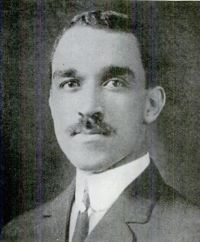
“ Foremost is Clarence Cameron White, of Boston. Prominent also for some years has been Joseph Douglass, of Washington. Felix Weir, of Washington and New York, has given unusual promise; and Kemper Harreld, of Chicago and Atlanta, also deserves mention. In this general sketch of those who have added to the musical achievement of the race there is a name that must not be overlooked. "Blind Tom," who attracted so much attention a generation ago, deserves notice as a prodigy rather than as a musician of solid accomplishment. ”
 Abner Doubleday,
Chancellorsville and Gettysburg
Abner Doubleday,
Chancellorsville and Gettysburg
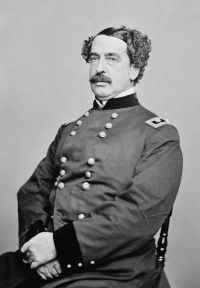
“ In cases of this kind, when struck directly on the flank, troops are more or less unable to defend themselves, and Kemper's brigade crowded in toward the centre in order to avoid Stannard's energetic and deadly attack. They were closely followed up by Gates' command, who continued to fire into them at close range. This caused many to surrender, others to retreat outright, and others simply to crowd together. Simultaneously with Stannard's attack, the 8th Ohio, which was on picket, overlapping the rebel left, closed in on that flank with great effect. ”
1911 Encyclopædia Britannica, Volume 4… (1911)
“ It is served by the Missouri Pacific, and the Missouri, Kansas & Texas railways. The city lies along a bluff about 100 ft. above the river. It is the seat of the Missouri training school for boys (1889) , and of the Kemper military school (1844) . Among its manufactures are earthenware, tobacco, vinegar, flour, farm-gates (iron) , sash and doors, marble and granite monuments, carriages and bricks. Iron, zinc and lead are found in the vicinity, and some coal is mined. ”
“ Because I don't wish to risk your reputation as a scientist unless you choose to risk it yourself."He regarded me curiously, then his eyes strayed toward the palm-tree which Evelyn Grey was now approaching."All right," he said briefly, "let's hear what's up."So we moved forward to rejoin the girl, who had already seated herself under the tree.She looked very attractive in her neat cuffs, tiny cap, and pink print gown, as we approached her."Why does she dress that way?" asked Kemper, uneasily."Economy. ”
Sidney Lee, Dictionary of National Biography… (1892)
“ Kemp combined shrewdness with his rough humour, and, with a view to extending his reputation and his profits, he announced in 1599 his intention of dancing a morris-dance from London to Norwich. According to a common custom, he ‘put out’ a sum of money before his departure, on condition of receiving thrice the amount on his safe return. He left the lord mayor's dwelling in London on the first Monday in Lent, accompanied by Thomas Slye, ‘taberer,’ William Bee, his servant, and George Sprat, his ‘overseer.’ His route lay through Romford, Chelmsford, Sudbury, Bury, Rockland, and Burford Bridge. ”
 Walter De la Mare,
Mr. Kempe
(1925)
Walter De la Mare,
Mr. Kempe
(1925)
“ Kempe had been something of a pioneer in this inquest. He had not spared himself. He could not live by faith, it seemed. He must indeed again and again have come uncommonly near dying in pursuit of it. He had fasted moreover, and was now little more than a mere frame of bones within his outlandish clothes. Those boots of his—they kept forcing themselves on the attention: a worse fit than any worn by some poor desperate Tommy clambering 'over the top' in the Great War. ”
 H. G. Wells,
The Invisible Man: A Grotesque Romance
H. G. Wells,
The Invisible Man: A Grotesque Romance
“ Hit him from behind with a stool that stood on the landing. He went downstairs like a bag of old boots.” “But—I say! The common conventions of humanity—” “Are all very well for common people. But the point was, Kemp, that I had to get out of that house in a disguise without his seeing me. I couldn’t think of any other way of doing it. And then I gagged him with a Louis Quatorze vest and tied him up in a sheet.” ”
H. G. Wells,
The Invisible Man: A Grotesque Romance
“ Then he had an odd impression that he had heard a low voice say, “Good Heavens!—Kemp!” But Dr. Kemp was no believer in voices. He stood staring at the tumbled sheets. Was that really a voice? He looked about again, but noticed nothing further than the disordered and blood-stained bed. Then he distinctly heard a movement across the room, near the wash-hand stand. All men, however highly educated, retain some superstitious inklings. The feeling that is called “eerie” came upon him. He closed the door of the room, came forward to the dressing-table, and put down his burdens. ”
1911 Encyclopædia Britannica, Volume 15… (1911)
“ The town is well built, has many spacious squares and attractive public grounds, and contains a castle, a handsome town-hall, a gymnasium, &c. The old palace of the abbots of Kempten, dating from the end of the 17th century, is now partly used as barracks, and near to it is the fine abbey church. The industries include wool-spinning and weaving and the manufacture of paper, beer, machines, hosiery and matches. As the commercial centre of the Algäu, Kempten carries on active trade in timber and dairy produce. ”
H. G. Wells,
The Invisible Man: A Grotesque Romance
“ For the first time in his life Kemp discovered that the hill-road was indescribably vast and desolate, and that the beginnings of the town far below at the hill foot were strangely remote. Never had there been a slower or more painful method of progression than running. All the gaunt villas, sleeping in the afternoon sun, looked locked and barred; no doubt they were locked and barred—by his own orders. But at any rate they might have kept a lookout for an eventuality like this! The town was rising up now, the sea had dropped out of sight behind it, and people down below were stirring. ”
 Emma Wolf,
Other Things Being Equal
Emma Wolf,
Other Things Being Equal
“ She ran lightly up the steps, and as he turned her key in the door for her, she raised a pair of starry eyes to his. “Dr. Kemp,” she said, “I have had an exceptionally lovely evening. I shall not soon forget it.” “Nor I,” he returned, raising his hat; holding it in his hand, he gently raised her gloved hand to his lips. Herbert Kemp was a gentleman of the old school in his manner of showing reverence to women. “My brave young friend!” he said; and the next minute his firm footfall was crunching the gravel of the walk. ”
H. G. Wells,
The Invisible Man: A Grotesque Romance
“ The game begins. Death starts. Help him not, my people, lest Death fall upon you also. To-day Kemp is to die.” Kemp read this letter twice, “It’s no hoax,” he said. “That’s his voice! And he means it.” He turned the folded sheet over and saw on the addressed side of it the postmark Hintondean, and the prosaic detail “2d. to pay.” He got up slowly, leaving his lunch unfinished—the letter had come by the one o’clock post—and went into his study. He rang for his housekeeper, and told her to go round the house at once, examine all the fastenings of the windows, and close all the shutters. ”
H. G. Wells,
The Invisible Man: A Grotesque Romance
“ His throat was gripped by invisible fingers, and he left his hold on the handle to defend himself. He was forced back, tripped and pitched heavily into the corner of the landing. The empty dressing-gown was flung on the top of him. Halfway up the staircase was Colonel Adye, the recipient of Kemp’s letter, the chief of the Burdock police. He was staring aghast at the sudden appearance of Kemp, followed by the extraordinary sight of clothing tossing empty in the air. He saw Kemp felled, and struggling to his feet. He saw him rush forward, and go down again, felled like an ox. ”
H. G. Wells,
The Invisible Man
(1897)
“ Nothing can stop him. He is going out now—furious!""He must be caught," said Adye. "That is certain.""But how?" cried Kemp, and suddenly became full of ideas. "You must begin at once. You must set every available man to work; you must prevent his leaving this district. Once he gets away, he may go through the countryside as he wills, killing and maiming. He dreams of a reign of terror! A reign of terror, I tell you. You must set a watch on trains and roads and shipping. The garrison must help. You must wire for help. ”
active 1600 William Kemp, Kemps Nine Daies Wonder: Performed in a Daunce from London to Norwich
“ I am somewhat hard of study, and like your honor, but if they well inuent any extemporall meriment, ile put out the small sacke of witte I ha’ left in venture with them.“S. Ant. They shall not deny ’t. Signior Harlaken, he is content. I pray thee question him.Whisper.“Kemp. Now, Signior, how many are you in companie?“Harl. None but my wife and my selfe, sir. “Kemp. Your wife! why, hearke you; wil your wife do tricks in publike?“Harl. My wife can play.“Kemp. The honest woman, I make no question; but how if we cast a whores part or a courtisan?“Harl. Oh, my wife is excellent at that ”
H. G. Wells,
The Invisible Man
(1897)
“ Suddenly a man appeared beside her, helping her,—Dr. Kemp! In another moment the window was open, and the housemaid was struggling out; she pitched forward and vanished among the shrubs. Mr. Heelas stood up, exclaiming vaguely and vehemently at all these wonderful things. He saw Kemp stand on the sill, spring from the window, and reappear almost instantaneously running along a path in the shrubbery and stooping as he ran, like a man who evades observation. ”
H. G. Wells,
The Invisible Man
(1897)
“ He sat listening. He heard the servant answer the door, and waited for her feet on the staircase, but she did not come. "Wonder what that was," said Doctor Kemp. He tried to resume his work, failed, got up, went downstairs from his study to the landing, rang, and called over the balustrade to the housemaid as she appeared in the hall below. "Was that a letter?" he asked. "Only a runaway ring, sir," she answered. "I'm restless to-night," he said to himself. He went back to his study, and this time attacked his work resolutely. ”
H. G. Wells,
The Works of H. G. Wells
(1924)
“ Kemp had hurried upstairs after letting Adye out, and now crouching among the broken glass and peering cautiously over the edge of the study window sill, he saw Adye stand parleying with the Unseen. "Why doesn't he fire?" whispered Kemp to himself. Then the revolver moved a little and the glint of the sunlight flashed in Kemp's eyes. He shaded his eyes and tried to see the source of the blinding beam. "Surely!" he said, "Adye has given up the revolver." "Promise not to rush the door," Adye was saying. "Don't push a winning game too far. Give a man a chance." ”
Louisa M. Middleton, Dictionary of National Biography… (1892)
“ In 1810, at the Russell Institution, Great Coram Street, Russell Square, London, Kemp began a series of lectures on musical education, in which he advocated the teaching of music in classes and the playing of exercises by pupils in concert. On account of failing health he returned with his wife and family to his native city, and resided there until 1824, with the interruption of a visit to France in 1818–21. He had founded a musical college at Exeter in 1814. A journey to London in April 1824 proved too fatiguing for Kemp, then in a weak state of health, and he died in his lodgings on 22 May. ”
H. G. Wells,
The Works of H. G. Wells
(1924)
“ Kemp made no answer for a space, simply stared at the bandage. "Invisible Man," he said. "I'm an Invisible Man," repeated the Voice. The story he had been active to ridicule only that morning rushed through Kemp's brain. He does not appear to have been either very much frightened or very greatly surprised at the moment. Realisation came later. "I thought it was all a lie," he said. The thought uppermost in his mind was the reiterated arguments of the morning. "Have you a bandage on?" he asked. "Yes," said the Invisible Man. "Oh!" said Kemp, and then roused himself. "I say!" he said. ”
H. G. Wells,
The Invisible Man
(1897)
“ Kemp closed the door softly behind him, and the key was turned upon him forthwith. Then, as he stood with an expression of passive amazement on his face, the rapid feet came to the door of the dressing-room and that too was locked. Kemp slapped his brow with his hand. "Am I dreaming? Has the world gone mad—or have I?" He laughed, and put his hand to the locked door. "Barred out of my own bedroom, by a flagrant absurdity!" he said. ”
H. G. Wells,
The Works of H. G. Wells
(1924)
“ Kemp struggled for another moment and then lay still. "If you shout I'll smash your face," said the Invisible Man, relieving his mouth. "I'm an Invisible Man. It's no foolishness, and no magic. I really am an Invisible Man. And I want your help. I don't want to hurt you, but if you behave like a frantic rustic, I must. Don't you remember me, Kemp?—Griffin, of University College?" ”
H. G. Wells,
The Works of H. G. Wells
(1924)
“ He has found an axe———" Suddenly the house was full of the Invisible Man's resounding blows on the kitchen door. The girl stared towards the kitchen, shuddered, and retreated into the dining-room. Kemp tried to explain in broken sentences. They heard the kitchen door give. "This way," cried Kemp, starting into activity, and bundled the policemen into the dining-room doorway. "Poker," said Kemp, and rushed to the fender. He handed a poker to each policeman. He suddenly flung himself backward. ”
Charles Lethbridge Kingsford, 1911 Encyclopædia Britannica, Volume 15… (1911)
“ KEMPE, JOHN (c. 1380–1454) , English cardinal, archbishop of Canterbury, and chancellor, was son of Thomas Kempe, a gentleman of Ollantigh, in the parish of Wye near Ashford, Kent. He was born about 1380 and educated at Merton College, Oxford. He practised as an ecclesiastical lawyer, was an assessor at the trial of Oldcastle, and in 1415 was made dean of the Court of Arches. Then he passed into the royal service, and being employed in the administration of Normandy was eventually made chancellor of the duchy. ”
H. G. Wells,
The Works of H. G. Wells
(1924)
“ For a minute perhaps he sat, pen in mouth, admiring the rich golden colour above the crest, and then his attention was attracted by the little figure of a man, inky black, running over the hill-brow towards him. He was a shortish little man, and he wore a high hat, and he was running so fast that his legs verily twinkled. "Another of those fools," said Doctor Kemp. "Like that ass who ran into me this morning round a corner, with his ''Visible Man a-coming, sir!' I can't imagine what possesses people. One might think we were in the thirteenth century." ”
