Kingdom of Aragon

Definition and stakes

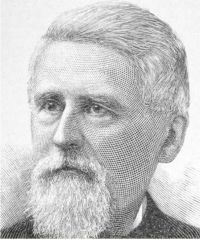
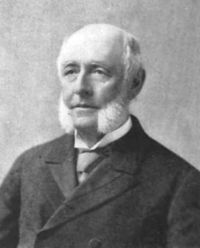
Portrait of Rafael Altamira Rafael Altamira A History of Spain

In institutions, Aragon proper must be distinguished, throughout this period, from the Catalonian region of the greater kingdom of Aragon. Social differences were much more marked than in León and Castile, for there was an excessively privileged feudal nobility, which had a despotic power over the servile classes; the movement for emancipation from slavery and serfdom belongs to a much later time. Lords had a right even to kill their serfs.
Source: Gutenberg

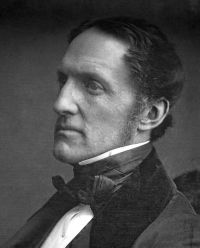
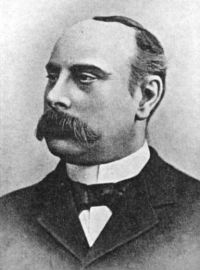
Sir Clements R. Markham The Story of Majorca and Minorca

The little kingdom of Navarre was founded by Garcia Jimenes as early as 758, and Louis, the son of Charlemagne, drove the Moors out of Barcelona and established a Christian country there about fifty years afterwards. At length the kingdom of Aragon was founded by Ramiro I., a son of the King of Navarre, and Buesca was taken from the Moors and became the first capital of Aragon. Then the great Alonso, surnamed ‘El Batallador,’ having firmly established his power in the plains, drove the Moors out of Zaragoza in 1118, which was thenceforth the capital of Aragon.
Source: Gutenberg

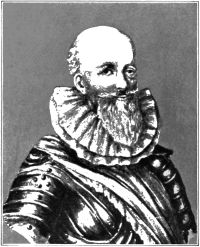
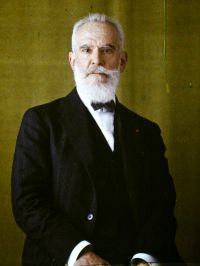
A. E. Houghton, Alfred Morel-Fatio, David Hannay, Francis Haverfield, James Fitzmaurice-Kelly, Kingsley Jayne & W. A. Phillips 1911 Encyclopædia Britannica, Volume 25… (1911)

Historic kingdom of Aragon:—
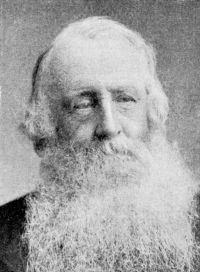
The Early Counts of Barcelona
In the last years of the 8th and beginning of the 9th century, Charlemagne and Louis the Pius began conquering the north-east of Spain, which the Arabs had occupied as early as 713. By 811 the Franks had conquered as far as Tortosa and Tarragona. The territory gained was called the Marca Hispanica, and was governed by counts of Roussillon, Ampurias, Besaltu, Barcelona, Cerdena, Pallars and Urgell. They became independent during the decadence of the Carolingians.
Source: Wikisource

Get perspective with Kwize: daily news enlightened by great literature