“ Beggar women, rag-pickers, ladies of wealth, cankerous old men, merchants, city sports, lawyers--Saragossa is the one city of Spain where even men go to church--every grade and variety of Aragonese pressed close upon the heels one of another, each bowing down as he passed to kiss the hole deeper into the pillar. At bottom the difference is slight indeed between the religion of the Spaniard and that of the Hindu. ”
Aragonese
Definition and stakes
The theme of “Aragonese” has been addressed by authors such as David McDowall Hannay, William Hickling Prescott, Nathaniel Armstrong Wells, Élisée Reclus and John Addington Symonds. It is often associated with terms like Aragon, Moors, Spain, Valencia and Castile.
Quotes about “Aragonese”
 Rafael Sabatini,
The Historical Nights' Entertainment…
Rafael Sabatini,
The Historical Nights' Entertainment…
“ You know the ancient privileges enjoyed by Aragon, privileges of which the Aragonese are so jealous that a King of Castile may not assume the title of King of Aragon until, bareheaded, he shall have received from the Grand Justiciary of Aragon the following admonition: “We, who are of equal worth and greater power than you, constitute you our king on the condition that you respect our privileges, and not otherwise.” ”
Nathaniel Armstrong Wells, The Picturesque Antiquities of Spain
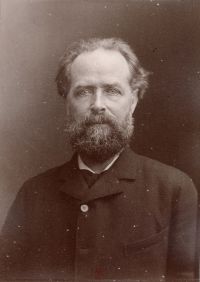
“ These qualities are not, however, carried so far as to silence the continual chatter of the interior of a Spanish diligence. Spanish travelling opens the sluices of communicativeness even of an Aragonese, as it would those of the denizens of a first class vehicle of a Great Western train, were they exposed during a short time to its vicissitudes. ”
 Élisée Reclus,
The Earth and its inhabitants, Volume 1…
Élisée Reclus,
The Earth and its inhabitants, Volume 1…
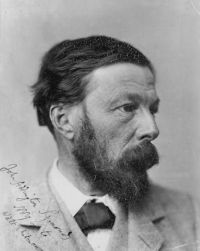
“ For several centuries the Aragonese struggled with the Moors, and the kings, dependent as they were upon the support of the people, felt constrained to submit to a considerable limitation of their power. ”
 John Addington Symonds,
Renaissance in Italy, Volumes 6 and 7…
John Addington Symonds,
Renaissance in Italy, Volumes 6 and 7…
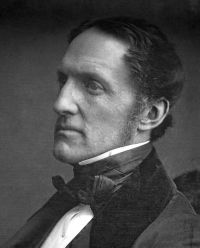
“ The bastard Aragonese dynasty was Italian in its tastes and interests, though unpopular both with the barons of the realm and with the people, who in their restlessness were ready to welcome any foreign deliverer from its oppressive yoke. This state of general discontent rendered the revival of the old Angevine party, and their resort to French aid, a source of peril to the monarchy. It also served as a convenient fulcrum for the ambitious schemes of conquest which the princes of the House of Aragon in Spain began to entertain. ”
 William Hickling Prescott,
The History of the Reign of Ferdinand and Isabella the Catholic…
William Hickling Prescott,
The History of the Reign of Ferdinand and Isabella the Catholic…
“ And, although the social history of Aragon, like that of other countries in this rude age, is too often stained with deeds of violence and personal feuds, yet the state at large, under the steady operation of its laws, probably enjoyed a more uninterrupted tranquillity than fell to the lot of any other nation in Europe.The Aragonese cortes was composed of four branches, or arms; [28] the ricos hombres, or great barons; the lesser nobles, comprehending the knights; the clergy, and the commons. The nobility of every denomination were entitled to a seat in the legislature. ”
 Giacomo Casanova,
The Memoirs of Jacques Casanova de Seingalt…
Giacomo Casanova,
The Memoirs of Jacques Casanova de Seingalt…
“ My stay lasted for a fortnight, during which time I was able to examine the manners and customs of the Aragonese, who were not subject to the ordinances of the Marquis of Aranda, as long cloaks and low hats were to be seen at every corner. They looked like dark phantoms more than men, for the cloak covered up at least half the face. Underneath the cloak was carried el Spadino, a sword of enormous length. Persons who wore this costume were treated with great respect, though they were mostly arrant rogues; still they might possibly be powerful noblemen in disguise. ”
Various, Blackwood's Edinburgh Magazine - Volume 55…
“ This alludes to a dispute between the Spanish government and the Aragonese, which had continued from the days of Charles V. The Aragonese claimed either that the king himself should reside among them, or be represented by some person of the royal blood. Charles V. appointed, as viceroy of Aragon, his uncle, the Archbishop of Zaragoza, and then Don Fernando de Aragon, his cousin. Philip II. appointed a Castilian to that dignity. ”
A. E. Houghton, Alfred Morel-Fatio, David Hannay, Francis Haverfield, James Fitzmaurice-Kelly, Kingsley Jayne & W. A. Phillips, 1911 Encyclopædia Britannica, Volume 25… (1911)
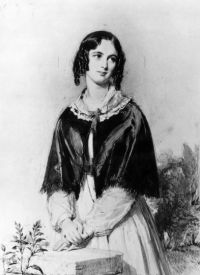
“ Navarrese-Aragonese makes use of the adverb en as a pronoun: no les en daren pas, no'n hi ha. Andalusian.—The word “dialect” is still more appropriately applied to Andalusian than either to Asturian or Navarrese-Aragonese. Many peculiarities of pronunciation, however, are commonly called Andalusian which are far from being confined to Andalusia proper, but are met with in the vulgar speech of many parts of the Castilian domain, both in Europe and in America. Of these but a few occur only there, or at least have not yet been observed elsewhere than in that great province of southern Spain. ”
 Charlotte M. Yonge,
History of Christian names
(1884)
Charlotte M. Yonge,
History of Christian names
(1884)
“ Aragon and Portugal had variations from the Castillian standard of language; and Portugal now claims to have a distinct tongue, chiefly distinguished by the absence of the Moorish guttural; and in nomenclature, by the close adherence to classic spelling, and by the terminations which would in Spanish be in on, or un, being in aŏ, the contraction of nho. Aragonese has been absorbed in Castillian, and Catalan is only considered as a dialect. ”
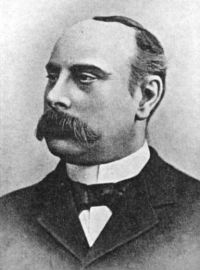 Martin A. S. Hume,
Philip II. of Spain
Martin A. S. Hume,
Philip II. of Spain
“ The few refugee nobles and Perez thereupon prevailed upon Henry IV. to send a body of Béarnais troops into{236} Aragon, but the Aragonese joined with Philip’s troops to expel them, and nothing serious came of the attempt. Some of the higher nobles of Aragon died mysteriously in the dungeons, and seventy-nine citizens were condemned to be burnt alive in the market-place of Zaragoza. ”
The Great Events by Famous Historians…
“ The hardihood and spirit which the Aragonese, the Castilians, and the other nations of the peninsula had acquired during centuries of free institutions and successful war against the Moors had not yet become obliterated. ”
 George Borrow,
The Bible in Spain
George Borrow,
The Bible in Spain
“ Hail to you, beggars of La Mancha! men and women, who, wrapped in coarse blankets, demand charity indifferently at the gate of the palace or the prison. Hail to you, valets from the mountains, mayordomos and secretaries from Biscay and Guipuscoa, toreros from Andalusia, riposteros from Galicia, shopkeepers from Catalonia! Hail to ye, Castilians, Estremenians and Aragonese, of whatever calling! And lastly, genuine sons of the capital, rabble of Madrid, ye twenty thousand manolos, whose terrible knifes, on the second morning of May, worked such grim havoc amongst the legions of Murat! ”
Edmund G. Gardner, The Story of Florence
“ The bloodless mercenary conflicts of a century had reduced Italy to helplessness; the Aragonese resistance collapsed, and, sacking and slaughtering as they came, the French marched unopposed through Lunigiana upon Tuscany. Piero dei Medici, who had favoured the Aragonese in a half-hearted way, went to meet the French King, surrendered Sarzana and Pietrasanta, the fortresses which his father had won back for Florence, promised to cede Pisa and Leghorn, and made an absolute submission. ”
1911 Encyclopædia Britannica (1911)
“ Their, energies had been devoted to furthering the welfare of their people. Under the Aragonese monarchs the progress of the united province still continued, and Collioure, the port of Perpignan, became a centre of Mediterranean trade. But the country was destined to pay the penalty of its position on the frontiers of France and Spain in the long struggle for ascendancy between these two powers. ”
David McDowall Hannay, 1911 Encyclopædia Britannica (1911)
“ In 1284 Roger defeated the Angevine fleet in the Bay of Naples, taking prisoner the heir to the kingdom, Charles of Salerno, who remained a prisoner in the hands of the Aragonese in Sicily, and later in Spain, for years. In 1285 he fought on the coast of Catalonia one of the most brilliant campaigns in all naval history. The French king Philippe le Hardi had invaded Catalonia with a large army to which the pope gave the character of crusaders, in order to support his cousin of Anjou in his conflict with the Aragonese. ”
Elizabeth Boyle O'Reilly, Heroic Spain
“ The Aragonese is manly, enduring, and stubborn; the special laws of this independent province, the Fueros, are worth close study from those interested in the gradual steps of man's self-government; under an ostensible monarchy they gave republican institutions. This is an address to the King: "We, who count for as much as you and have more power than you, we elect you king in order that you may guard our privileges and liberties ”
William Hickling Prescott,
The History of the Reign of Ferdinand and Isabella the Catholic…
“ In this, as well as in the liberality of his religious sentiments, he may be compared favorably with his celebrated countryman Mariana, who, educated in the cloister, and at a period when the nation was schooled to maxims of despotism, exhibits few glimpses of the sound criticism and reflection, which are to be found in the writings of his Aragonese rival. ”
1911 Encyclopædia Britannica (1911)
“ The manufactures are less important than the agricultural interests. Since 1885, however, the Aragonese have bestirred themselves, especially since the extremely protectionist policy of 1890 gave great impetus to native industries all over Spain. ”
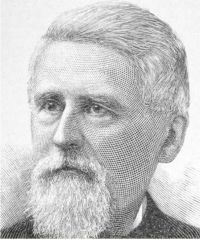 Henry Charles Lea,
A History of the Inquisition of Spain…
Henry Charles Lea,
A History of the Inquisition of Spain…
“ In these last Córtes the Aragonese prayed that the Inquisition should take cognizance of no cases save those of religion and said that they grieved greatly that it embraced infinite things as distant as possible from its jurisdiction and they presented many cases not pertaining in any way to its duties. In truth at present the Inquisition interposes in everything, without respect to any one of whatever rank or position, and we may say positively that this tribunal is the real master which rules and dominates all Spain. ”
David McDowall Hannay, 1911 Encyclopædia Britannica (1911)
“ Husband and wife quarrelled with the brutality of the age and came to open war. Alphonso had the support of one section of the nobles who found their account in the confusion. Being a much better soldier than any of his opponents he gained victories at Sepúlveda and Fuente de la Culebra, but his only trustworthy supporters were his Aragonese, who were not numerous enough to keep down Castile and Leon. The marriage of Alphonso and Urraca was declared null by the pope, as they were third cousins. ”
1911 Encyclopædia Britannica, Volume 17… (1911)
“ Under the will of Corradino a representative of the blood of Roger the Norman, Peter of Aragon claimed the succession, and it came to him by the revolution known as “the Sicilian Vespers” when 28,000 French were exterminated in Sicily. Charles held Malta for two years longer, when the Aragonese fleet met the French off Malta, and finally crushed them in the Grand Harbour. In 1427 the Turks raided Malta and Gozo, they carried many of the inhabitants into captivity, but gained no foothold. The Maltese joined the Spaniards in a disastrous raid against Gerbi on the African coast in 1432. ”
William Hickling Prescott,
The History of the Reign of Ferdinand and Isabella the Catholic…
“ Intellectual Culture.The political institutions of Aragon, although bearing a general resemblance to those of Castile, were sufficiently dissimilar to stamp a peculiar physiognomy on the character of the nation, which still continued after it had been incorporated with the great mass of the Spanish monarchy.—It was not until the expiration of nearly five centuries after the Saracen invasion, that the little district of Aragon, growing up under the shelter of the Pyrenees, was expanded into the dimensions of the province which now bears that name. ”
Sir Clements R. Markham, The Story of Majorca and Minorca
“ The little kingdom of Navarre was founded by Garcia Jimenes as early as 758, and Louis, the son of Charlemagne, drove the Moors out of Barcelona and established a Christian country there about fifty years afterwards. At length the kingdom of Aragon was founded by Ramiro I., a son of the King of Navarre, and Buesca was taken from the Moors and became the first capital of Aragon. Then the great Alonso, surnamed ‘El Batallador,’ having firmly established his power in the plains, drove the Moors out of Zaragoza in 1118, which was thenceforth the capital of Aragon. ”
Charles W. Wood, Glories of Spain
“ We passed out of the church, which now seemed laden with an atmosphere of human sorrow and suffering, glad to escape to the free air and pure skies of heaven. From the Cathedral Square we turned into the narrow streets with their great grey palaces and enormous courtyards all full of suggestions of the past centuries. But the mighty have fallen: Aragon has not escaped decline any more than the rest of Spain. ”
Henry Charles Lea,
A History of the Inquisition of Spain…
“ THE Crown of Aragon comprised the so-called kingdoms of Aragon and Valencia, the principality of Catalonia, the counties of Rosellon and Cerdana, and the Balearic Isles, with the outlying dependencies of Sicily, Sardinia and Corsica. Although marriage had united the sovereigns of Castile and Aragon, the particularism born of centuries of rivalry and frequent war kept the lands jealously apart as separate nations and Ferdinand ruled individually his ancestral dominions. ”
1911 Encyclopedia Britannica (1911)
“ ARAGON, or Arragon (in Span. Aragón) , a captaincy-general, and formerly a kingdom of Spain; bounded on the N. by the Pyrenees, which separate it from France, on the E. by Catalonia and Valencia, S. by Valencia, and W. by the two Castiles and Navarre. Pop. (1900) 912,711; area, 18,294 sq. m. Aragon was divided in 1833 into the provinces of Huesca, Teruel and Saragossa; an account of its modern condition is therefore given under these names, which have not, however, superseded the older designation in popular usage. Aragon consists of a central plain, edged by mountain ranges. ”
“ In the city swarms a hungry, ragged people, more often than not without shoes, yet one and all with the proverbial haughty pride and somber mood of Aragon in face and bearing, stiff-shouldered, bristling with a touch-me-not-with-a-pole expression. Here, too, may still be found, especially among the peasants from the further districts, the old provincial costume,--knee breeches, a jacket reaching barely to the waist, and a red cloth wound about the head. ”
Baron Edward Bulwer Lytton Lytton, Rienzi, the Last of the Roman Tribunes
“ Nobly born I am—ay, and from a stock to whose long descent from the patricians of ancient Rome the high line of Aragon itself would be of yesterday. Nay, I would not offend you, Monsignore; your greatness is not borrowed from pedigrees and tombstones—your greatness is your own achieving: would you speak honestly, my Lord, you would own that you are proud only of your own laurels, and that, in your heart, you laugh at the stately fools who trick themselves out in the mouldering finery of the dead! ”
Grace Stebbing, Gold and glory; or, Wild ways of other days… (1885)
“ The land of Aragon is so poor and barren, that perchance her sons and daughters might all long since have forsaken their churlish, niggard-handed mother, and finally renounced her, but that she gives them liberty. Even in our oath of allegiance we tender no slaves' submission to oppression. ”
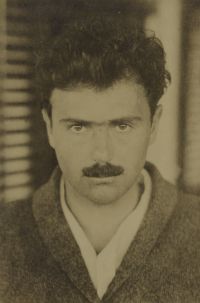 Waldo David Frank,
Virgin Spain
(1926)
Waldo David Frank,
Virgin Spain
(1926)
“ Valencia had been in Christian hands before: El Cid had won it rather by treachery than arms. But after the great freebooter’s death, the Moors came back. Now that Aragon sits down within its valleys, Valencia is Christian forever. It loses even its name of tributary kingdom. It becomes simply part of Aragon. Catalan blood has helped win it—for Aragon. Now Catalan, Valencian, and Castilian, led by the Great Captain of Córdoba, win Sicily and Naples—in the name of Aragon again. ”
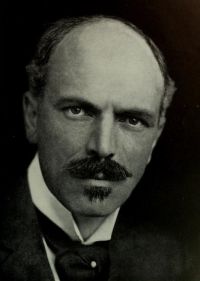 Maurice Hewlett,
The Spanish Jade
Maurice Hewlett,
The Spanish Jade
“ The bleak pride of the Castillano, the flint and steel of Aragon, the languor which veils Andalusian fire—travelling the lands which gave them birth, you find them scored in large over mountain and plain and riverbed, and bitten deep into the hearts of the indwellers. They are as seasonable there as the flowers of waste places, and will charm you as much. So Spanish travel is one of the restful relaxations, because nothing jars upon you. You feel that you are assisting a destiny, not breaking it. Not discovery is before you so much as realisation. ”
Waldo David Frank,
Virgin Spain
(1926)
“ Sere towns lie in the sere waste. The houses are clay. There are wooden doors, but windows of glass are still rare. The peasant chooses the desert bottom for his house. South and north rise the walls of the Sierras, naked as flint: and the winds sweep through his narrow passage, bringing the rigor of the rocks into the air he breathes.This low tier of the world of Aragon has no clement weather. It has no spring and no autumn. Winter is a rigid siege: summer is fire. When the weather shifts between the seasons, the winds make a runway of the valleys. Frost, flame, storm are the angry cycle. ”
