“ In the end Mary foolishly yielded; one wonders at the strength of that abnormal passion by which she was driven to accept a position so impossible for a decent and intelligent girl. Soon after this incident Cranstoun was summoned to Scotland, where his mother, Lady Cranstoun, was "extremely ill." "Good God!" cried this admirable son, "what shall I do? I have no money to carry me thither, and all my fortune is seized on but my half-pay!" For the third time Miss Blandy came to the rescue, even giving him back a miniature of his ugly countenance with which he had formerly presented her. ”
Quotes about “Lady Blandish”
“ Perhaps, Gentlemen, you will suppose I am guilty of a great deal of Vanity, in imagining myself capable of so grossly imposing on the Understanding of a Lady of such refined sense as Miss Blandy was acknowledged to be. In answer to which I can only say, that when Love has taken possession of the Heart, it leaves but very little Room for Reflection. That this was Miss Blandy's case, I will give you some few instances of the violence of her Passion, and then leave you to judge to what extravagant Lengths that might carry her. ”
Hamish Miles, The Oxford Circus: A Novel of Oxford and Youth
“ Why, yes! It was [214] none other than Lady Blandula Merris! And in their frenzied welcome the guests let their very aspic grow cold.“Bladge!”—so that was her name among the glittering few whom she counted as her intimates.... He must remember that. “BLADGE!” CAME THE UNANIMOUS CRY.Although the daughter of one of our lesser-known marquesses, Lady Blandula was certainly the foremost figure of British womanhood, more wryly chic than any but the most anglicized Parisiennes, more sought after than any Royalty, more daring than any Bohemian, more photographed than any race-horse. ”
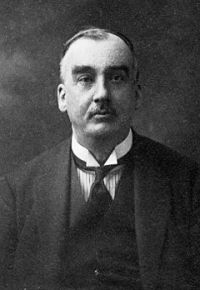 J. Meade Falkner,
The Nebuly Coat
(1903)
J. Meade Falkner,
The Nebuly Coat
(1903)
“ Lord Blandamer would think it so ungracious. Lady Blandamer, to be sure, counted for very little; it was ridiculous, in fact, to think of ringing the minster bells for a landlady's niece, but Lord Blandamer would certainly be offended."I call that clerk of the works a vain young upstart," Mrs Parkyn said to her husband. "I cannot think how you keep your temper with such a popinjay. I hope you will not allow yourself to be put upon again. You are so sweet-tempered and forbearing, that everyone takes advantage of you." ”
“ Blandy, come to town on business. "For God's sake, Mrs. Pocock, what do you with this rubbish?" cried the attorney, stopping the coach. "Rubbish!" quoth the lady, "Your wife, your daughter, and one who may be your son?" "Ay," replied the old man, "They are very well matched; 'tis a pity they should ever be asunder!" "God grant they never may," simpered the ugly lover; "don't you say amen, papa?" But amen, as appears, stuck in Mr. Blandy's throat: he declined Mrs. Pocock's invitation to join them, and shortly thereafter returned to Henley. ”
“ John Wilkes, writing from Bath to his daughter on 3rd January, 1779, regarding a lady of their acquaintance who proposed to keep house for a certain doctor, remarks "that he is sure it could not have lasted long, for she would have poisoned him, as Miss Blandy did her father, and forged a will in her own favour"; but Tate Wilkinson, in his Memoirs, observes, "Elizabeth Canning, Mary Squires, the gipsy, and Miss Blandy were such universal topics in 1752 that you would have supposed it the business of mankind to talk only of them ”
“ I am afraid it will be too weak to take off their rust, or at least it will take too long a time." As a further inducement to her to hasten the work in hand, he described the beauties of Scotland, and mentioned that his mother, Lady Cranstoun, was having an apartment specially fitted up at Lennel House for Mary's use. The text of this letter was quoted by Bathurst in his opening speech for the Crown, but the report of the trial does not bear that the document itself was produced, or that it was proved to be in Cranstoun's handwriting. ”
“ I believe if ever the devil picks a bone, it is one of theirs!" But the murderess of Walthamstow had somehow struck her fancy, and she wrote to her fellow-convict to express her sympathy. That young lady suitably replied, and the ensuing correspondence (7th January-19th March, 1752) , published under the title of Genuine Letters between Miss Blandy and Miss Jeffries, if we may believe the description, is highly remarkable. At first Elizabeth asserted her innocence as stoutly as did Mary herself, but afterwards she acknowledged her guilt. ”
“ To Mrs. Delany, writing the day after the execution, the popular heroine "appeared very guilty by her trial," but we learn that Lady Huntingdon had written a letter to Miss Blandy after her conviction. On 22nd April, 1752, Miss Talbot writes to Mrs. Carter, who thought Mary had been "too severely judged," that "her hardiness in guilt" was shocking to think of. "Let me tell you one fact that young Goosetree, the lawyer, told to the Bishop of Gloucester," she writes, with reference to Miss Blandy's repeated statement that she never believed her father a rich man. ”
Henry James, The Portrait of a Lady — Volume 1
“ Bantling, who was of rather a slow and a discursive habit, relished a prompt, keen, positive woman, who charmed him by the influence of a shining, challenging eye and a kind of bandbox freshness, and who kindled a perception of raciness in a mind to which the usual fare of life seemed unsalted. ”
George Daniel, Merrie England in the Olden Time…
“ By suspending the good lady's suspension till the end of vol. three (I don't cut her down to a single one) , the interest is never suffered to drop till it reaches the New one. Or, as I'm doing the Newgate Calendar, (I like to have two strings to my bow!) what say you, gents? if, in my fashionable novel of Miss Blandy (the Oxford lass, who popped off in her pumps for dosing—“poison in jest!”—her doting old dad,) St. Bartlemy and his conjurors were made to play first fiddle! ”
 Alexander Pope,
The Works of Alexander Pope, Volume 2…
Alexander Pope,
The Works of Alexander Pope, Volume 2…
“ The lines could not be meant for the unfortunate lady, for she was dead and forgotten—could not relate to Martha Blount, for he was not "condemned whole years in absence to deplore," and therefore they could be addressed only to Lady Mary; ”
“ What answer did she make?—She said, "I have put no powder into tea. I have put powder into water gruel, and if you are injured I am entirely innocent, for it was given me with another intent." What said Mr. Blandy to this?—My master turned himself in his bed and said to her, "Oh, such a villain! come to my house, ate of the best, and drank of the best that my house could afford, to take away my life and ruin my daughter." What else passed?—He said, "Oh, my dear! Thee must hate that man, thee must hate the ground he treads on, thee canst not help it." ”
 Anthony Trollope,
Can You Forgive Her?
Anthony Trollope,
Can You Forgive Her?
“ If he was dull as a statesman he was more dull in private life, and it may be imagined that such a woman as his wife would find some difficulty in making his society the source of her happiness. Their marriage, in a point of view regarding business, had been a complete success,—and a success, too, when on the one side, that of Lady Glencora, there had been terrible dangers of shipwreck, and when on his side also there had been some little fears of a mishap. ”
Lady Scott, A Marriage in High Life, Volume I (1828)
“ How strongly do such trifles sometimes affect us, and give us a deceitful feeling of their presence!Lady Saville had opened the door into Fitzhenry’s room, and Emmeline had gone in with the rest, when luckily, after Miss Selina had expressed her astonishment at Lord Fitzhenry’s sleeping in the little couch bed, and had enquired of Lady Saville whether it was not very droll—a book of French caricatures attracted and fixed the attention of the whole party, and Emmeline was thus left at liberty to look at every thing in the room, and indulge in her own reflections. ”
Lady Scott, A Marriage in High Life, Volume I (1828)
“ Lady Saville immediately went up to him. “Oh, Lord Fitzhenry! do second me; for I am trying to persuade your capricious, perverse wife, to give some more parties; 259for she says they don’t repay her for the trouble; that they exhaust her, and that she will have no more. Now have they not been particularly agreeable? and does she not play the part of lady of the revels to perfection?”Emmeline, who, on her husband’s entrance, had walked to the further end of the room, now began busying herself with a basket of flowers, forgetting that she could no longer have any excuse for the employment. ”
Henry James, The Portrait of a Lady (1881)
“ Bantling’s fellow tourist was simply the most vulgar of women, and he had also pronounced her the most abandoned. Against this latter clause of the verdict Isabel had appealed with an ardour that had made him wonder afresh at the oddity of some of his wife’s tastes. Isabel could explain it only by saying that she liked to know people who were as different as possible from herself. “Why then don’t you make the acquaintance of your washerwoman?” Osmond had enquired; to which Isabel had answered that she was afraid her washerwoman wouldn’t care for her. Now Henrietta cared so much. ”
A lady, The Englishwoman in Russia
“ Heaps of the dying and the dead, weeping women who were on their knees praying for the aid of Heaven, infants wildly clasped in the arms of their frantic mothers, wretched girls shrieking with terror or vainly begging for mercy, wounded children and bleeding patriots were presented to the sight of the savage soldiers in their career of glory! ”
Lady Scott, A Marriage in High Life, Volume II (1828)
“ No, Emmeline, I can hear no more, bear no more, I have long guessed how matters were between you and Lord Fitzhenry, and still I have forborne. I held my peace as long as I could; but my pride will not allow me to be any longer silent. I will not be trampled upon; I cannot endure to see the delight of my old age, my only child, destroyed by neglect and unkindness. Lord Fitzhenry presumes upon his superior rank. He thinks he may with impunity insult and break the heart of the humble banker’s daughter. But his lordship is mistaken ”
“ Had you ever directed any letter for her before?—I have, a great many. I used to direct her letters to Mr. Cranstoun. [He is shown a letter.] This is one. Did you put it into the post?—I did not. I opened it, having just before heard Mr. Blandy was poisoned by his own daughter. I transcribed it, and took it to Mr. Norton, the apothecary at Henley, and after that I showed it and read it to Mr. Blandy. What did he say?—He said very little. He smiled and said, "Poor, love-sick girl! What won't a girl do for a man she loves?" (or to that effect) . ”
A lady, The Englishwoman in Russia
“ Their closely-fitting burnished helmets with little scarlet ornament at the top, their steel veil falling over their necks, their shirt of linked mail, the plate-armour on their legs, and their barbed steeds, make us imagine them to be some ancient knights of high renown ready caparisoned for the tournament. ”
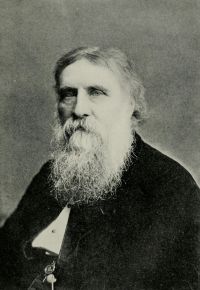 George MacDonald,
Littell's Living Age
(1877)
George MacDonald,
Littell's Living Age
(1877)
“ "It is not at all a fit place for you," said Clementina with a touch of indignation. "Softly, my lady, lest, without knowing it, your love should make you sin. Who set thee, I pray, for a guardian angel over my welfare? I could scarce have a lovelier, true; but where is thy brevet? No. my lady: it is a greater than thou that sets me the bounds of my habitation. Perhaps He may give me a palace one day. ”
Lady Scott, A Marriage in High Life, Volume I (1828)
“ You shall enjoy all the worldly advantages you have sought in your marriage with me—all the happiness which wealth—your own wealth—can bestow; and it shall be my endeavour, as far as I can, to make your life happy. You shall be completely mistress in your own house, and of all your actions. Your comfort shall ever be consulted; and I think can venture to say for myself, that you may depend on my kindness, and even on my friendship; but my affections as a lover, as a husband, while the same heart beats in my breast, can never be yours. ”
Lady Scott, A Marriage in High Life, Volume I (1828)
“ Lady Florence, who had early in life been married to a man whom she had never loved, and whose understanding and character she could not respect, had every allurement, every charm to captivate, except that of innocence. Such a deficiency one might have hoped would have preserved a refined mind like that 33of Fitzhenry’s from her chains; but, under the influence of passion, artfully excited, and the example of the society in which he lived, he fell completely into the snare purposely laid for him, and became the slave of an artful, bewitching, and violent woman. ”
 George Meredith,
Poems and Lyrics of the Joy of Earth
(1883)
George Meredith,
Poems and Lyrics of the Joy of Earth
(1883)
“ With little seamanship; and comes a gale, The world will laugh, the world has often laughed, Lady, to see how bold when skies are blue, When black winds churn the deeps how panic-pale, How swift to the old nest fly you! ”
“ To the last the dying woman clung to her belief in the good faith of her noble captain: "Mary has set her heart upon Cranstoun; when I am gone, let no one set you against the match," were her last words to her husband. He replied that they must wait till the "unhappy affair in Scotland" was decided. The complaint of which Mrs. Blandy died was, as appears, intestinal inflammation, but, as we shall see later, her daughter was popularly believed to have poisoned her. However wicked Mary Blandy may have been, she well knew that by her mother's death she and Cranstoun lost their best friend. ”
George Meredith,
The Adventures of Harry Richmond…
“ I had never before received a distinct intimation of my littleness of nature, and my first impulse was to fly from thought, and then, as if to prove myself justly accused, I caught myself regretting—no, not regretting, gazing, as it were, on a picture of regrets—that Ottilia was not a romantic little lady of semi-celestial rank, exquisitely rash, wilful, desperately enamoured, bearing as many flying hues and peeps of fancy as a love-ballad, and not more roughly brushing the root-emotions. ”
“ During one of their daily walks this singular lover informed his betrothed that he had a secret to communicate, to wit, that over and above the Scottish complication, "he had a daughter by one Miss Capel" a year before he met the present object of his desires. Miss Blandy, with much philosophy, replied that she hoped he now saw his follies and would not repeat them. "If I do," said Cranstoun, "I must be a villain; you alone can make me happy in this world ”
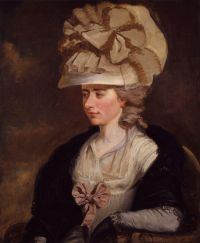 Fanny Burney,
Evelina, Or, the History of a Young Lady's Entrance into the World
Fanny Burney,
Evelina, Or, the History of a Young Lady's Entrance into the World
“ “No, my Lord,” answered she, “it would have been from mere shame, that, in an age so daring, you alone should be such a coward as to forbear to frighten women.” “O,” cried he, laughing, “when a man is in a fright for himself, the ladies cannot but be in security; for you have not had half the apprehension for the safety of your persons, that I have for that of my heart.” ”
Lady Scott, A Marriage in High Life, Volume I (1828)
“ Danvers, the purse-making young lady’s mother, who had just then entered the room—”I can’t bear to see you, Lady Fitzhenry, labouring at the pianoforte, do let me play who can do nothing else; and do you go and join the dancers.”—And she insisted on Emmeline resigning her post.189All were engaged: there was no one left to waltz with. Emmeline was young; by nature gay, she liked dancing as all gay young people do. The music, the sight of others dancing, all had revived her former love for the amusement, and, not liking to deprive any one else of her partner, she set off alone after the rest. ”
Lady Scott, A Marriage in High Life, Volume I (1828)
“ Misses are really sad nuisances in society, unless they sit quiet, and don’t trouble one; so take my advice Lady Fitzhenry. Good-nature is quite mauvais ton in London—it is a bad style to take up, and will never do. But it is impossible to sit still and moralize when Collinet is playing that waltz so delightfully; will you take a turn or two with me?”“I will resign the honour to Miss 288Danvers,” said Emmeline, laughing—”and luckily she is just coming this way; so do the thing handsomely, and ask the poor girl, for she knows nobody here, and is dying to dance.” ”
