Landsknecht

Definition and stakes

1911 Encyclopædia Britannica, Volume 16… (1911)

“ Though primarily a German force and always the mainstay of imperial armies, they served in organized bodies as mercenaries elsewhere in Europe; in France they fought for the League and for the Protestants indiscriminately. In fact landsknecht, and more particularly its French corruption lansquenet, became in western Europe a general term for mercenary foot-soldiers. ”
Source: Wikisource

Various,  Encyclopaedia Britannica, 11th Edition…

“ From these lands came the Landsknechts, whose order was as strong as, and far less unwieldy than, that of the Swiss, whose armament included a far greater proportion of firearms, and who established a regimental system that left a permanent mark on army organization. The Landsknecht was the prototype of the infantryman of the 16th and 17th centuries, but his right to indicate the line of evolution had to be wrung from many rivals. ”
Source: Gutenberg

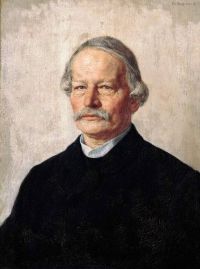
Portrait of Gustav Freytag Gustav Freytag,  Pictures of German Life in the XVth XVIth and XVIIth Centuries… (September 22, 2010 [EBook #33795] [Most recently updated December 31, 2022])

“ Hence arises the old quarrel between the fowls and geese and the Landsknechte, because the former can always sleep in feathers, whilst the latter must often lie in straw. There is another animal that clashes with the Landsknechte, that is the cat; as the soldiers know well how to pilfer, they are enemies to the cats, and friendly to the dogs. According to the old doggerel, a Landsknecht should always have with him a beautiful woman, a dog, and a young boy, a long spear, and a short sword; he is free to seek any master who will give him service. ”
Source: Gutenberg

Get perspective with Kwize: daily news enlightened by great literature