“ Launceston (14,310) , the ancient capital, is a municipal borough, market, and union town, and head of a county court [152] district. The town occupies a height, and above it towers the ancient castle, but a portion of the town, Newport, lies in the valley at the foot. Both the G.W.R. and the L. & S.W.R. have stations at Launceston. The church of granite is richly sculptured throughout; but in a debased Perpendicular style. It replaced an older church of which the tower alone remains. ”
Launceston
Definition and stakes
Launceston, an ancient capital of Cornwall, has long fascinated writers due to its historical and geographical importance. Sir Thomas Malory and Howard Pyle immortalized it in Arthurian legends, portraying its landscapes and castles as settings of chivalric drama. S. Baring-Gould’s historical account highlights its medieval architecture and administrative role, while A.
M. Williamson conjures its romantic scenery. The 1911 Encyclopædia Britannica emphasizes its legal and industrial heritage. These diverse viewpoints combine to portray Launceston as a crossroads of myth, history, and natural beauty, preserved through literary and archival storytelling.
Quotes about “Launceston”
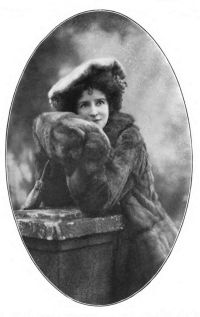 A. M. Williamson,
Set in Silver
A. M. Williamson,
Set in Silver
“ Heavens, how I did take it out of myself admiring his native land when we'd got across that ferry! Said the scenery was quite different from that of Devonshire, at the first go off; and I'm not sure there weren't differences. The road coming toward Launceston really was romantic; rock-walled part of the way, with a lot of pink and yellow lichen; and again, fine open spaces with distant blue downs against a sky which looked, as I remarked to Sir Lionel, as if the gods had poured a libation of golden wine over it. ”
1911 Encyclopædia Britannica (1911)
“ Launceston was the assize town until Earl Richard, having built a palace at Restormel, removed the assize to Lostwithiel. In 1386 Launceston regained the privilege by royal charter. From 1715 until 1837, eleven years only excepted, the assize was held alternately here and at Bodmin. Since that time Bodmin has enjoyed the distinction. Launceston has never had a staple industry. The manufacture of serge was considerable early in the 19th century. Its market on Saturdays is well attended, and an ancient fair on the Feast of St Thomas is among those which survive. ”

