“ It is the Llano Estacado.Drawing nearer, they get under the shadow of its beetling bluffs.They see that these are rugged, with promontories projecting far out over the plain, forming what Spanish Americans, in their expressive phraseology, call ceja.Into an embayment between two of the out-stretching spurs Barbato conducts them.Joyously they ride into it, like ships long storm-tossed entering a haven of safety; for at the inner end of the concavity there is a cleft in the precipitous wall, reaching from base to summit, out of which issues a stream whose waters are sweet! ”
Llano Estacado
Definition and stakes
The theme of “Llano Estacado” has been addressed by authors such as Mayne Reid, Andy Adams, James N. Gregory, John R. Cook and Aimé Bonpland. It is often associated with terms like Llanos, cattle, ranch, river and llanero.
Quotes about “Llano Estacado”
 Israel C. Russell,
North America
“ The almost total absence of water causes all animals to shun it; even the Indians do not venture to cross it, except at two or three points, where they find a few small pools of water." As will be shown below, the barrenness and desolation of this arid tract is not so great as it seemed to those who first invaded its primeval solitude.El Llano Estacado, or the Llano, as it is frequently termed, is about 500 miles across from north to south, and 280 miles wide from east to west. ”
Henry Inman, The Old Santa Fe Trail: The Story of a Great Highway
“ Every plains Indian firmly believed that the buffalo were produced in countless numbers in a country under ground; that every spring the surplus swarmed, like bees from a hive, out of the immense cave-like opening in the region of the great Llano Estacado, or Staked Plain of Texas. ”
“ It is the fourth day after forsaking the couch among the shin oaks, and the two fugitives are still travelling upon the Llano Estacado. They have made little more than sixty miles to the south-eastward, and have not yet struck any of the streams leading out to the lower level of the Texan plain.Their progress has been slow; for the wounded man, instead of recovering strength, has grown feebler. ”
 Andy Adams,
Reed Anthony, Cowman: An Autobiography
“ Holding our course contrary to the needle, we crossed the Double Mountain Fork, and after a week out from the ranch the brakes which form the border between the lowlands and the Llano Estacado were sighted. Within view of the foothills which form the approach of the famous plain, the Salt and Double Mountain forks of the Brazos are not over twelve miles apart. We traveled up the divide between these two rivers, and when within thirty miles of the low-browed borderland a halt was called and we went into camp. ”
“ For many hundred miles it courses through a wilderness rarely traversed by man, more rarely by men claiming to be civilised. Its banks are only trodden by the savage, and by him but when going to or returning from a raid. For this turbid stream is a true river of the desert, having on its left side the sterile tract of the Llano Estacado, on its right dry table plains that lead up to the Sierras, forming the “divide” between its waters and those of the Bravo del Norte.On the side of the Staked Plain the Pecos receives but few affluents, and these of insignificant character. ”
“ As they lie watching the blue film curling up among the branches of the black-jacks, as little do they reflect how fortunate for them it is not the smoke of a fire, nor visible at any great distance. Were it so, there would not be much likelihood of their ever reaching the Del Norte or leaving the Llano Estacado alive. ”
“ As next morning’s sun breaks over the Llano Estacado they descend its western slope into the valley of the Rio Pecos.Traversing its bottom, of no great breadth, they reach the crossing of the old Spanish trail, from Santa Fé to San Antonio de Bejar.Fording the stream, on its western bank, they discover signs which cause them to come to a halt, for some time perplexing them. Nothing more than the tracks of the troop they have been all the while pursuing, which entered the river on its left side. ”
John R. Cook, The Border and the Buffalo: An Untold Story of the Southwest Plains
“ After the supply camp was reached, we packed ten head of animals and we were off to the "Yarner," as the old Texans called the Staked Plains. Going to the head of White cañon we ran on to a Mexican meat-hunting outfit, and through our interpreter, Hosea, we told them to pull back to the Pecos, and for them to get word to all the Mexicans as soon as they could, to steer clear of the Llano Estacado during that summer. We gave them to understand that "a word to the wise" should be sufficient. ”
Edward Sylvester Ellis, Cowmen and Rustlers: A Story of the Wyoming Cattle Ranges
“ Jennie was right. The man was the veteran cowboy, Budd Hankinson, who had whirled the lasso on the arid plains of Arizona, the Llano Estacado of Texas and among the mountain ranges of Montana; who had fought Apaches in the southwest, Comanches in the south and Sioux in the north, and had undergone hardships, sufferings, wounds and privations before which many a younger man than he had succumbed. ”
 William T. Hornaday,
The Extermination of the American Bison
“ As a body, it had been utterly annihilated. The main body of the survivors, numbering about ten thousand head, fled southwest, and dispersed through that great tract of wild, desolate, and inhospitable country stretching southward from the Cimarron country across the “Public Land Strip,” the Pan-handle of Texas, and the Llano Estacado, or Staked Plain, to the Pecos River. ”
“ It extends longitudinally between the former Spanish provinces of New Mexico and Texas; their respective capitals, Santa Fé and San Antonia de Bejar, being on the opposite side of it. In the days of vice-royal rule, a military road ran across it, connecting the two provincial centres, and mule trains of traders passed to and fro between. As this road was only a trail, often obliterated by the drifting sands of the desert, tall stakes were set up at intervals to indicate the route. Hence the name “Llano Estacado”—literally, Staked Plain. ”
James N. Gregory, Fort Concho: Its Why and Wherefore
“ To get out north of El Paso would take you across the Llano Estacado which in those days was considered a vast treeless plain, unbroken by any topographic changes, and completely devoid of water holes.The accompanying map, published in 1856 in Yoakum’s History of Texas, shows clearly the political subdivisions and settlements of Texas in those times. A substantial part of the State, from the Panhandle to the upper Rio Grande, appears to be completely uninhabited and, therefore, politically unorganized. ”
 Mayne Reid,
The White Chief: A Legend of Northern Mexico
“ The Llano Estacado is now rarely travelled, except by the ciboleros, or Mexican buffalo-hunters, and “Comancheros,” or Indian traders. Parties of these cross it from the settlements of New Mexico, for the purpose of hunting the buffalo, and trafficking with the Indian tribes that roam over the plains to the east. Neither the hunt nor the traffic is of any great importance, but it satisfies a singular race of men, whom chance or inclination has led to the adopting it as a means of subsistence. ”
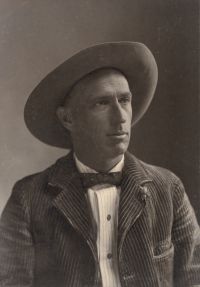 Charles Fletcher Lummis,
The Spanish Pioneers
“ By 1680 the Rio Grande valley in New Mexico was beaded with Spanish settlements from Santa Cruz to below Socorro, two hundred miles; and there were also colonies in the Taos valley, the extreme north of the Territory. From 1600 to 1680 there had been countless expeditions throughout the Southwest, penetrating even the deadly Llano Estacado (Staked Plain) . The heroism which held the Southwest so long was no less wonderful than the exploration that found it. The life of the colonists was a daily battle with niggard Nature—for New Mexico was never fertile—and with deadliest danger. ”
John R. Cook, The Border and the Buffalo: An Untold Story of the Southwest Plains
“ We now had to send our wagons some distance south along the base of the escarpment, where, through and up a narrow, winding, steep incline, we managed, by doubling teams and pushing by hand, to get them on top.We were now on the Llano Estacado, or "yarner," as the old Texans call it. We found that the Indians had burned two tepees in their camp. In Indian signification this meant they had had two deaths. The boys who were foolish enough to crowd onto them in their almost impregnable fortress had killed two of their number. ”
1911 Encyclopædia Britannica, Volume 26… (1911)
“ Texas has no large lakes; but freshwater lakes, which are fed either by streams or springs, are common on the Coastal Plain; the best known of them are Grand Lake in Colorado county, Clear Lake in Harris county, and Caddo Lake on the Louisiana border. On the Llano Estacado there are both freshwater and salt lakes, and there are a few salt lakes in the Trans-Pecos Province and near the mouth of the Rio Grande on the Coastal Plain. ”
Josiah Gregg, Gregg's Commerce of the Prairies…
“ They are cut up with numerous {181} streams, the largest of which are generally bordered for several miles back by hilly uplands, which are for the most part sandy, dry and barren.The most notable of the great plateaux of the Prairies is that known to Mexicans as El Llano Estacado, which is bounded on the north by the Canadian river—extends east about to the United States boundary, including the heads of the False Washita and other branches of Red River—and spreads southward to the sources of Trinity, Brazos and Colorado rivers, and westward to Rio Pecos. ”
James N. Gregory, Fort Concho: Its Why and Wherefore
“ Renegade Mexicans, half breeds and outlaw Americans who lived in Mexican settlements in New Mexico, from whence they traveled in small bands, usually by wagon or oxcart, to the Llano Estacado where they met the Comanches, Kiowas or other Indians and traded guns, ammunition, whiskey and other desirable items for the products of the raids. ”
Frederick Ritchie Bechdolt, The Soft Side of Hate (1924)
“ For the first time since he had left his father’s house, he realized that there were other things in life besides the hard joys and the grim purposes which had been his portion. Such few good women as he had seen in the wild country west of the Llano Estacado were worn with work and hardship ”
1911 Encyclopædia Britannica, Volume 26… (1911)
“ A very thin soil covers the Edwards Plateau, but on the Llano Estacado are brownish and reddish loams derived from the sediments of a Neocene lake. Agriculture.—The total farm acreage was 125,807,017 acres in 1900, the total number of farms [1] being 351,085, their average acreage 358.3 acres, 84.9 per cent. being operated by white farmers. There were 11,220 farms of 1000 acres and more; 10,183 between 500 and 1000 acres; 115,393 between 100 and 500 acres; and 88,537 between 50 and 100 acres. ”
 Theodore Winthrop,
“The Heart of the Andes” — Part 5 – The llano…
(1863)
“ When our mortal nature is dazzled and wearied with too long gazing on the golden mount, where silence dwells and glory lingers longer than the day, we may descend to the Arcadian levels of the Llano at the “Heart of the Andes.” ”
Andy Adams,
Reed Anthony, Cowman: An Autobiography
“ The south fork of the Llano lay over twenty miles distant, and although it had ample water two weeks before, one of the foremen and I rode through to it that night to satisfy ourselves. The supply was found sufficient, and before daybreak we were back in camp, arousing the outfits and starting the herds. In the spring of 1878 the old military trail, with its rocky sentinels, was still dimly defined from Nueces Cañon north to the McKinzie water-hole on the South Llano. The herds moved out with the dawn. Thousands of the cattle were travel-sore, while a few hundred were actually tender-footed. ”
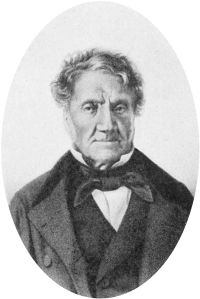 Aimé Bonpland,
Personal Narrative of Travels to the Equinoctial Regions of America…
“ The same effects which the mariner observes on approaching a new land present themselves to the traveller on the borders of the Llano. The horizon began to enlarge in some part and the vault of heaven seemed no longer to rest at an equal distance on the grass-covered soil. A llanero, or inhabitant of the Llanos, is happy only when, as expressed in the simple phraseology of the country, he can see everywhere well around him. What appears to European eyes a covered country, slightly undulated by a few scattered hills, is to him a rugged region bristled with mountains. ”
Aimé Bonpland,
Personal Narrative of Travels to the Equinoctial Regions of America…
“ The two extremities of the three Llanos which communicate by land-straits, the Llanos of the Lower Orinoco, the Amazon, and the Rio de la Plata or of Buenos Ayres, are steppes covered with gramina, while the intermediary Llano (that of the Amazon) is a thick forest. With respect to the two land-straits forming bands directed from north to south (from the Apure to Caqueta across the Provincia de los Llanos, and the sources of the Mamori to Rio Pilcomayo, across the province of Mocos and Chiquitos) they are bare and grassy steppes like the plains of Caracas and Buenos Ayres. ”
Anne Cary Maudslay, A Glimpse at Guatemala (1899)
“ The people of the house were kind and attentive and gave us such food as they had, but could not accommodate us with a room, nor could Gorgonio find food enough for the mules. As soon as the sun sank low in the west we set out again to cross the waterless plain, the Llano de la Fragua, a journey best made by night, for the track is even more shadeless than that we had just traversed, and the arid ground supports little vegetation but cacti and euphorbiae and scrubby prickly bushes, which vie with one another in ugliness. ”
Ramón Páez, Travels and adventures in South and Central America…
“ Shortly after leaving San Pablo, we had a spirited{141} chase after a herd of wild pigs. There were upwards of twenty browsing on the borders of a pond, and in an instant the whole plain—in such repose a few moments before—resounded with the cries and clatter of our horsemen in eager pursuit of this delicious game of the Llanos. Many of the men being provided with lances, they had no difficulty in despatching most of those whose fate threw them in the way of the remorseless cavaliers. ”
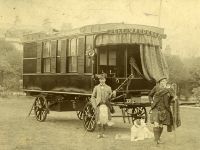 Gordon Stables,
The naval cadet: A story of adventures on land and sea
(1898)
“ So quiet is it then on some portions of the Llanos, that you can hear the sound of the human voice in ordinary conversation full two hundred yards away, while if you wander long here, so great is the strain on one's nerves that the slightest sound will make one start—a tiny snake rustling among the grass, a breaking reed, or lizard nibbling at a stalk of couch. ”
 William Henry Giles Kingston,
The Western World
“ Sterile as the Llanos appear during the dry season, numerous cattle-farms exist, scattered widely over large portions. The Llaneros, as the inhabitants are called—descendants of the white settlers, with an admixture of Indians and blacks—are a hardy, bold race, living almost entirely on horseback, engaged in watching over their herds, and in battling with the spotted jaguar, the savage cayman, the huge boa and anaconda, and occasionally the fierce natives of the surrounding deserts. ”
 Charles Darwin,
Journal of Researches
(1860)
“ The uniformity of a forest soon becomes very wearisome. This west coast makes me remember with pleasure the free, unbounded plains of Patagonia; yet, with the true spirit of contradiction, I cannot forget how sublime is the silence of the forest. The Llanos are the most fertile and thickly peopled parts of the country; as they possess the immense advantage of being nearly free from trees. ”
Various, The Atlantic Monthly, Volume 03…
“ The dwellers in this region have a character no less distinctive than that of the Plains themselves. At long intervals, sometimes scores of miles apart, their habitations are established; but their home is the saddle. Innumerable herds of cattle and of horses turn to account the pasturage of the rich savanna; and the true Llanero exists only as guardian or proprietor of these savage hosts. He is as much at home in this trackless expanse of rank vegetation as the mariner navigating a familiar sea. There are no roads in the Llanos ”
Sir Richard Henry Bonnycastle, Spanish America, Vol. 2 (of 2)
“ The great valley or plain of the Orinoco bounds the Cordillera to the south, and far from possessing those elevated lands which characterise the southern portion of the New World, Nature has here spread the country into immense flats, or savannahs, known by the name of Los Llanos (the Plains) .In these plains innumerable herds of cattle are fed, attended by the slaves or servants of the owners, who reside in the towns and villages. These people, living entirely in the desert, have become little better than so many wandering savages ”