“ They remain awake only long enough to give Hamersley’s wound such dressing as the circumstances permit, and then both sink into slumber.With the young prairie merchant it is neither deep nor profound. Horrid visions float before his rapt senses—scenes of red carnage—causing him ever and anon to awake with a start, once or twice with a cry that wakes his companion.Otherwise Walt Wilder would have slept as soundly as if reposing on the couch of a log cabin a thousand miles removed from any scene of danger. It is no new thing for him to go to sleep with the yell of savages sounding in his ears. ”
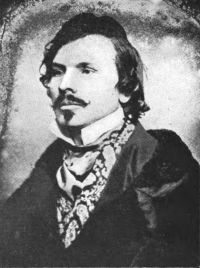
Mayne Reid
Summary
The Lone Ranche by Mayne Reid is a frontier novel set in the rugged expanse of New Mexico, focusing on tensions between settlers, indigenous peoples, and the unforgiving natural world. Characters such as Hamersley, Walt Wilder, and Uraga face dangerous situations, ranging from confrontations with Apache warriors to the stark splendor of the Llano Estacado.
Themes of endurance, devotion, and the struggle between society and the wild take center stage, highlighted by striking portrayals of prairie scenery and the harsh truths of life on the frontier. The story emphasizes human perseverance in the face of danger, depicting the untamed land as both a sanctuary and an unyielding foe.
Quotes from The Lone Ranche (Mayne Reid)
“ But for a half-score men lying dead along the earth, their warm blood welling from wounds where bullets have passed through their bodies, the gory drops here and there like dew bedecking the blades of grass, or in fuller stream settling down into the sand—but for this, the too real evidence of death, one who entered the camp of Uraga as the Mexican Colonel is riding out of it might fancy himself spectator of a pantomime during the scene of transformation. In the stage spectacle, not quicker or more contrasting could be the change. ”
“ It is the Llano Estacado.Drawing nearer, they get under the shadow of its beetling bluffs.They see that these are rugged, with promontories projecting far out over the plain, forming what Spanish Americans, in their expressive phraseology, call ceja.Into an embayment between two of the out-stretching spurs Barbato conducts them.Joyously they ride into it, like ships long storm-tossed entering a haven of safety; for at the inner end of the concavity there is a cleft in the precipitous wall, reaching from base to summit, out of which issues a stream whose waters are sweet! ”
