“ On his side, Uraga has several motives for not letting his subordinate into the knowledge of all his complicated schemes; among them one springing from a moral peculiarity. He is of a strangely-constituted nature, secretive to the last degree—a quality or habit in which he prides himself. It is his delight to practice it whenever the opportunity offers; just as the thief and detective officer take pleasure in their respective callings beyond the mere prize to be derived from their exercise. ”
Uraga
Definition and stakes
Quotes about “Uraga”
Captain F. Brinkley, Japan: Its History, Arts, and Literature (1902)
“ So many rumours of the advent of foreigners had proved delusive in the past that the Americans' announcement of an intention to return scarcely seemed a serious menace. When, therefore, Commodore Perry did really reappear off Uraga in the spring of 1854, consternation fell upon the Shōgun's ministers. They issued orders to the feudatories throughout the Empire to prepare for war, and they sent officials to Uraga to hold the intruders there. If only the Americans could be prevented from entering Yedo Bay, the situation might be saved. ”
“ It is the corporal squad sent back by Uraga to bring on the truant traitor.Of their errand the Rangers know nought, and nothing care. Enough that three of their hated foemen are in their hands, their hostility intensified by the events of the hour.No more fuel is needed to fire them up. Their vengeance demands a victim, and three have offered ready to hand.As they ride back to the road, they leave behind them a tableau, telling of a spectacle just passed—one having a frightful finale. From a large limb of the live oak, extending horizontally, hang three men, the Mexican lancers. ”
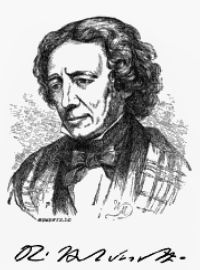
Richard Hildreth,
Hildreth's "Japan as It Was and Is"…
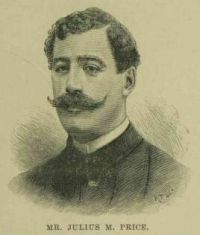
“ In spite of the solicitude of the Japanese officers, who came again on board, the whole bight between the promontory of Uraga and another north of it was carefully surveyed. At the head a river was found. The shores were studded with villages, whose inhabitants offered to the surveying party cold water, and peaches from their gardens. To the place where the steamers lay the name was given of “American anchorage.” ”
Julius M. Price,
From the Arctic Ocean to the Yellow Sea
(1892)
“ Of course there are poor, wretchedly poor, people in Ourga, who live, or, rather, manage to exist, in the most awful hovels. But still, during the whole month I spent in the sacred city, I was never once pestered by a beggar; indeed, I never saw one. Ourga, in this respect, offered an agreeable contrast to most of the Siberian towns I was in, where one could never leave one’s hotel or lodgings without finding quite a little crowd of them lying in wait. ”
Georg Ebers,
Uarda : a Romance of Ancient Egypt…
“ The people threw themselves on the champion in a frenzy of rage, but he felt a sudden warlike impulse surging up in him, which he had never felt before. With one wrench he pulled out the heavy wooden pole, which supported the awning which the old paraschites had put up for his sick grandchild; he swung it round his head, as if it were a reed, driving back the crowd, while he called to Uarda to keep close to him."He who touches the child is a dead man!" he cried. "Shame on you!— falling on a feeble old man and a helpless child in the middle of a holy festival!" ”
Georg Ebers,
Uarda : a Romance of Ancient Egypt…
“ Listen to what I, old Hekt, am telling you. The king's life is threatened, his and his children's; I purpose to save them, and I ask no reward but this- that he should have my body embalmed and interred at Thebes. Swear to me that you will require this of him when you have saved him.""In God's name what is happening?" cried Uarda. "Swear that you will provide for my burial," said the old woman."I swear it!" cried the girl. "But for God's sake—""Katuti, Paaker, and Nemu are gone to set fire to the palace when Rameses is sleeping, in three places. Do you hear, Kaschta! ”
Georg Ebers,
Uarda : a Romance of Ancient Egypt…
“ Ani asked for Bent-Anat's hand, and she—now that I love you, Uarda, I understand what ails her. Away with deceit! I will tell you no more lies, Uarda. I am no page of honor to Bent-Anat; I am her brother, and king Rameses' own son. Do not cover your face with your hands, Uarda, for if I had not seen your mother's jewel, and if I were not only a prince, but Horus himself, the son of Isis, I must have loved you, and would not have given you up. But now other things have to be done besides lingering with you; now I will show you that I am a man, now that Pentaur is to be saved. ”
Georg Ebers,
Uarda : a Romance of Ancient Egypt…
“ Uarda, open your eyes, Uarda! When the sun rises we praise the Gods. Open your eyes! how thankful, how joyful I shall be if those two suns only rise again."Bent-Anat smiled, and drew her brother away from the heavily-breathing girl, for a leech came into the tent to say that a warm medicated bath had been prepared and was ready for Uarda. The princess ordered her waiting-women to help lift the senseless girl, and was preparing to follow her when a message from her father required her presence in his tent. ”
Georg Ebers,
Uarda : a Romance of Ancient Egypt…
“ When the prince entered the court of the hut, Uarda was not to be seen, but he soon heard her voice singing out through the open door. She came out into the air, for the dog barked furiously at Rameri. When she saw the prince, she started, and said:"You are here already again, and yet I warned you. My grandmother in there is the wife of a paraschites.""I am not come to visit her," retorted the prince, "but you only; and you do not belong to them, of that I am convinced. No roses grow in the desert." ”
Georg Ebers,
Uarda : a Romance of Ancient Egypt…
“ The fairest memory of your life must surely be that of the sweet child whose face, as you once confessed to me, first opened your soul to the sense of beauty, and whom with your own hands you snatched from death at the cost of your own life. You know Uarda has found her own relatives and is happy, and she is very grateful to her preserver, and would like to see him once more before she goes far away with her grandfather. ”
Georg Ebers,
Uarda : a Romance of Ancient Egypt…
“ The leeches had treated Uarda with judgment, for under the influence of the bath she recovered her senses; when she had been dressed again in fresh garments and refreshed by the essences and medicines which they gave her to inhale and to drink, she was led back into Nefert's tent, where Mena, who had never before seen her, was astonished at her peculiar and touching beauty."She is very like my Danaid princess," he said to his wife; "only she is younger and much prettier than she."Little Scherau came in to pay his respects to her, and she was delighted to see the boy ”
Georg Ebers,
Uarda : a Romance of Ancient Egypt…
“ She comes of a good stock, that I am certain; for Uarda is the very living image of her mother, and as soon as she was born, she looked like the child of a great man. You smile, you idiot! Why thousands of infants have been in my hands, and if one was brought to me wrapped in rags I could tell if its parents were noble or base-born. The shape of the foot shows it—and other marks. Uarda may stay where she is, and I will help you. If anything new occurs let me know."CHAPTER XXI. When Nemu, riding on an ass this time, reached home, he found neither his mistress nor Nefert within. ”
Harry De Windt,
From Pekin to Calais by Land
“ The population of Ourga, which is estimated at about 40,000, fluctuates a good deal. This is owing in a great measure to the nomad disposition of the inhabitants, who are here to-day and gone to-morrow, taking not only their goods and chattels, but also their house with them. With the exception of the Kootookta’s palace, an imposing edifice of Tibetan architecture, all white, gold and vermilion, like an ornament off the top of a twelfth-cake, there are but three brick houses in the place, residences of Russian tea-merchants, of whom, when we passed, there were seven residing in Ourga. ”
Georg Ebers,
Uarda : a Romance of Ancient Egypt…
“ Pentaur is a complete man, and I will be one too. But you shall be the rose-garland to grace me. Men who can be compared to flowers disgust me!"The prince rose, and offered Uarda his hand."You have a strong hand," said the girl. "You will be a noble man, and work for good and great ends; only look, my fingers are quite red with being held so tightly. But they too are not quite useless. They have never done anything very hard certainly, but what they tend flourishes, and grandmother says they are 'lucky.' Look at the lovely lilies and the pomegrenate bush in that corner. ”
Georg Ebers,
Uarda : a Romance of Ancient Egypt…
“ Uarda entreated."Let me stay a little while," said Rameri. "Sit down here by me on the bench in front of the house. The hedge shelters us, and besides this valley is now deserted, and there are no passers by.""We are doing what is not right," said Uarda. "If it were right we should not want to hide ourselves.""Do you call that wrong which the priests perform in the Holy of Holies?" asked the prince. "And yet it is concealed from all eyes.""How you can argue!" laughed Uarda. "That shows you can write, and are one of his disciples.""His, his!" exclaimed Rameri. "You mean Pentaur. ”
Georg Ebers,
Uarda : a Romance of Ancient Egypt…
“ A year after the burning of the pavilion at Pelusium Rameri sailed to the land of the Danaids, was married to Uarda, and then remained in his wife’s native country, where, after the death of her grandfather, he ruled over many islands of the Mediterranean and became the founder of a great and famous race. Uarda’s name was long held in tender remembrance by their subjects, for having grown up in misery she understood the secret of alleviating sorrow and relieving want, and of doing good and giving happiness without humiliating those she benefitted. ”
Georg Ebers,
Uarda : a Romance of Ancient Egypt…
“ Uarda knew the origin of her mistress's deep grief, and revered her for it, as if it were something sacred. Often she would speak of Pentaur and of his father, and always in such a manner that the princess could not guess that she knew of their love.When the prisoners were passing Bent-Anat's tent, she was sitting within with Nefert, and talking, as had become habitual in the hours of dusk, of her father, of Mena, Rameri, and Pentaur."He is still alive," asserted Nefert. "My mother, you see, says that no one knows with certainty what became of him. ”
Harry De Windt,
From Pekin to Calais by Land
“ A more picturesquely situated one can scarcely be imagined than Ourga, in the midst of a fertile green plain watered by the blue waters of the Tola, and surrounded by an amphitheatre of undulating wooded hills, conspicuous among them being the “Sacred Mountain,” with its dark fir-trees and little temples, where the buddhist hermits, tired of the pomps and vanities of the world, retire to spend their last days mortifying the flesh and turning prayer-wheels. ”
Georg Ebers,
Uarda : a Romance of Ancient Egypt…
“ Nefert was almost fainting with fear and excitement. The two servants, who had kept near them, knit their hands together, and thus carried her in advance of the princess. Not one of them spoke a word, not even Rameri, who could not forget Uarda, and the look of gratitude she bid sent after him. Once only Bent-Anat said:"The hovel is burnt down. Where will the poor souls sleep to-night?"When the valley was clear, the officer entered the yard, and found there, besides Uarda and the witch Hekt, the poet, and Nebsecht, who was engaged in tending the wounded. ”
Harry De Windt,
From Pekin to Calais by Land
“ The chief products of Ourga appeared to be beggars and dogs. The latter are exceptionally large and ferocious, so much so that Europeans always ride when obliged to go into Ourga. On foot one stands a very fair chance of being torn to pieces by the huge, savage brutes, who do not, however, harm or take any notice of the natives. The beggars fairly swarm——loathsome, abject wretches, many of them covered with sores, and quite naked. Wet or dry, hot or cold, they live in the open, subsisting on alms, or whatever offal they can pick up. We saw two or three lying dead by the roadway. ”
Georg Ebers,
Uarda : a Romance of Ancient Egypt…
“ For hours he had been alone with her, for her father and grandmother could no longer stop away from their occupations. The former must go to escort prisoners of war to Hermonthis, and the old woman, since her granddaughter had been old enough to undertake the small duties of the household, had been one of the wailing-women, who, with hair all dishevelled, accompanied the corpse on its way to the grave, weeping, and lamenting, and casting Nile-mud on their forehead and breast. Uarda still lay, when the sun was sinking, in front of the hut. ”
Georg Ebers,
Uarda : a Romance of Ancient Egypt…
“ It was on the way thither that Uarda had prepared the princess for the meeting she might expect at the hunter's cottage, and we have seen how and where the princess found the poet.Hand in hand they wandered together along the mountain path till they came to a spot shaded by a projection of the rock, Pentaur pulled some moss to make a seat, they reclined on it side by side, and there opened their hearts, and told each other of their love and of their sufferings, their wanderings and escapes. ”
Georg Ebers,
Uarda : a Romance of Ancient Egypt…
“ At last the king signed to the interpreter; Uarda was asked to tell all she knew of her mother, and when she said that she had come a captive to Thebes with an infant that had soon after died, that her father had bought her and had loved her in spite of her being dumb, the prince's conviction became certainty; he acknowledged Uarda as his grandchild, and Praxilla clasped her in her arms.Then he told Mena that it was now twenty years since his son-in-law had been killed, and his daughter Xanthe, whom Uarda exactly resembled, had been carried into captivity. ”
“ It is said that almost half the population of Urga are lamas. Certainly there are thousands upon thousands of them, swarming everywhere, in the market-town as well as in their own temple-topped sections, sometimes on horseback, more often plodding through the slovenly streets in their ponderous boots. Their round clipped heads, in contrast to the long cues of laymen, are often bare in any weather. It is visually evident, without asking questions, that they wear no trousers under their long quilted robes, which are similar to those of the marriageable men, yet easily distinguishable from them. ”
Georg Ebers,
Uarda : a Romance of Ancient Egypt…
“ And with these words Uarda began to cry silently. A nameless anxiety for the paraschites seized Nebsecht, and it struck him to the heart that he had demanded a human life in return for the mere fulfilment of a duty. He knew the law well enough, and knew that the old man would be compelled without respite or delay to empty the cup of poison if he were found guilty of the theft of a human heart. ”
Georg Ebers,
Uarda : a Romance of Ancient Egypt…
“ Paaker had listened motionless to the old woman, and siezed the flask eagerly, as if bidding defiance to some adversary; he put it in his money bag, threw a few more rings at the feet of the witch, and once more hastily demanded a bowl of Nile-water. “Is my lord in such a hurry?” muttered the old woman, once more going into the cave. “He asks if I know him? him certainly I do? but the darling? who can it be hereabouts? perhaps little Uarda at the paraschites yonder. She is pretty enough; but she is lying on a mat, run over and dying. ”
Roy Chapman Andrews,
Across Mongolian Plains
“ Far up in northern Mongolia, where the forests stretch in an unbroken line to the Siberian frontier, lies Urga, the Sacred City of the Living Buddha. The world has other sacred cities, but none like this. It is a relic of medieval times overlaid with a veneer of twentieth-century civilization; a city of violent contrasts and glaring anachronisms. Motor cars pass camel caravans fresh from the vast, lone spaces of the Gobi Desert; holy lamas, in robes of flaming red or brilliant yellow, walk side by side with black-gowned priests ”
Roy Chapman Andrews,
Across Mongolian Plains
“ Not only are the prayer wheels found about the temples, but they line the streets, and no visiting Mongol need be deprived of trying the virtue of a new device without going to a place of worship. He can give a whirl or two to half a dozen within a hundred yards of where he buys his tea or sells his sheep.On every hand there is constant evidence that Urga is a sacred city. It never can be forgotten even for a moment. The golden roofs of scores of temples give back the sunlight, and the moaning chant of praying lamas is always in the air. ”