Ulaanbaatar

Definition and stakes

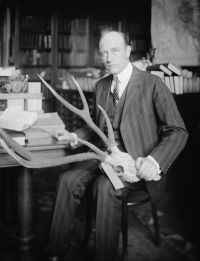
Portrait of Roy Chapman Andrews Roy Chapman Andrews,  Across Mongolian Plains

“ Far up in northern Mongolia, where the forests stretch in an unbroken line to the Siberian frontier, lies Urga, the Sacred City of the Living Buddha. The world has other sacred cities, but none like this. It is a relic of medieval times overlaid with a veneer of twentieth-century civilization; a city of violent contrasts and glaring anachronisms. Motor cars pass camel caravans fresh from the vast, lone spaces of the Gobi Desert; holy lamas, in robes of flaming red or brilliant yellow, walk side by side with black-gowned priests ”
Source: Gutenberg

Portrait of Roy Chapman Andrews Roy Chapman Andrews,  Across Mongolian Plains

“ Three great races have met in Urga and each carries on, in this far corner of Mongolia, its own customs and way of life. The Mongol yurt has remained unchanged; the Chinese shop, with its wooden counter and blue-gowned - 64 - inmates, is pure Chinese; and the ornate cottages proclaim themselves to be only Russian.
But on the street my wife and I could never forget that we were in Mongolia. We never tired of wandering through the narrow alleys, with their tiny native shops, or of watching the ever-changing crowds.
”
Source: Gutenberg

Portrait of Roy Chapman Andrews Roy Chapman Andrews,  Across Mongolian Plains

“ Until a few years ago, when motor cars first made their way across the seven hundred miles of plains, the only access from the south was by camel caravan, and the - 67 - monotonous trip offered little inducement to casual travelers. The Russians came to Urga from the north and, until the recent war, their influence was paramount along the border. They were by no means anxious to have other foreigners exploit Mongolia, and they wished especially to keep the country as a buffer-state between themselves and China. ”
Source: Gutenberg

Get perspective with Kwize: daily news enlightened by great literature