“ The soft morning breeze breathed in through the windows and as Pecos glimpsed the row of horses tied to the hitching rack he filled his lungs deep with the sweet air, and sighed. The invalid who has been confined to his room longs vaguely for the open air, but to the strong man of action, shut up for months in a close cell, the outer world seems like a dream of paradise and he sees a new heaven in the skies. ”
Pecos
Definition and stakes
The theme of “Pecos” has been addressed by authors such as Adolph Francis Alphonse Bandelier, Dane Coolidge, Edgar Beecher Bronson, Willa Cather and active 16th century Pedro de Castañeda de Nájera. It is often associated with terms like pueblo, peccary, Rio, river and Juan.
Quotes about “Pecos”
Edward Sylvester Ellis, In the Pecos Country
“ Before him stretched the sloping valley of the Rio Pecos. Glancing to the right, he could just catch the glimmer of the river as it flowed by in the moonlight, the banks being low and not wooded, while looking straight up the valley, his vision was bounded only by darkness itself. Carefully running his eye over the ground, he was confident that the slyest and most stealthy Indian that ever lived could not approach within a hundred feet of him without detection. “And the minute I'm certain its a red-skin, that minute I'll let him have it,” he added, instinctively grasping his rifle. ”
 G. A. Henty,
Redskin and Cow-Boy: A Tale of the Western Plains
G. A. Henty,
Redskin and Cow-Boy: A Tale of the Western Plains
“ You will get plenty of water to-night, Hugh. The Pecos is a good big river. I believe the animals smell it already. Look how hard they are pulling. The drivers crack their whips and shout as usual, but the beasts are doing their best without that. We have been very lucky that we have had no sand-storms or anything to delay us and confuse us as to the track. Waal, we are over the worst of the journey now; except the Guadalupe Pass there ain't much trouble between the Pecos and El Paso. Once there we are on the Rio Grande all the way up to Santa Fé. ”
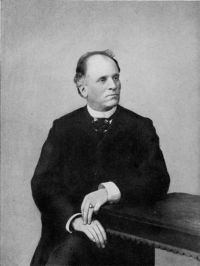 Adolph Francis Alphonse Bandelier,
Historical Introduction to Studies Among the Sedentary Indians of New Mexico…
Adolph Francis Alphonse Bandelier,
Historical Introduction to Studies Among the Sedentary Indians of New Mexico…
“ I therefore returned to Baughl's, and thence to Santa Fé, with the firm determination to revisit Pecos at a future day, and then do what I was compelled reluctantly to leave undone this time. Should, in the mean time, some archæologist explore the same locality, correct my errors, and unravel the mysteries hovering about the place, I heartily wish him as much pleasure and quiet enjoyment as I have had during my ten days' work, in which the dream of a life has at last begun its realization. ”
David Lavender, De Soto, Coronado, Cabrillo: Explorers of the Northern Mystery
“ The ruins of Pecos Pueblo and Spanish missions of the 17th- and 18th-centuries crown a small ridge overlooking the Pecos Valley in upper New Mexico. At the time of the Coronado entrada, the pueblo was a giant apartment house, several stories high, with a central plaza, 600 rooms, and many kivas—home to 2,000 souls. The village prospered because it commanded the trade path between Pueblo farmers of the Rio Grande and buffalo hunters of the Plains. Pecos was a crossroads of commerce and culture, and its people grew adept at trade and war. ”
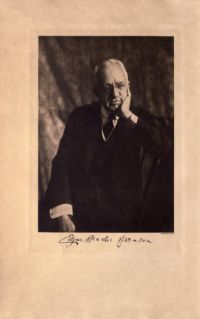 Edgar Beecher Bronson,
The Red-Blooded Heroes of the Frontier
Edgar Beecher Bronson,
The Red-Blooded Heroes of the Frontier
“ Come at last within fifteen miles of the Pecos, even the leaders, the strongest of the herd, are staggering along with dull eyes and drooping heads, apparently ready to fall in their tracks. Suddenly the whole appearance of the cattle changes; heads are eagerly raised, ears pricked up, eyes brighten; the leaders step briskly forward and break into a trot. Cow-hunters say they smell the water. ”
active 16th century Pedro de Castañeda de Nájera, Spanish Explorers in the Southern United States…
“ Pecos became the seat of an important Franciscan mission early in the seventeenth century, but it began to decline after the revolt of 1680-1692, and in 1838 the half-dozen survivors removed to Jemez, where one of them still (1906) lives. Cicuye is the Isleta, or Tigua, name for Pecos, while "Pecos" itself is the Keresan, or Queres, appellation, with the Spanish-English plural. The ruins of the town are plainly visible from the Santa Fé Railway. ”
Adolph Francis Alphonse Bandelier,
Historical Introduction to Studies Among the Sedentary Indians of New Mexico…
“ But there is not the least vestige of former human dwellings, so far as I could see: the top of the mesa of Pecos is, and was, a wilderness. It may have been the hunting-grounds of the tribe even in winter, but as for their exchanging their large pueblo at the bottom for a residence on the top it is very much as if the good people of New York City should spend Christmas week on the Catskill Range, or the Bostonians take winter quarters on Mount Monadnock. We followed the crest of the mesa for nearly four miles, ascending two of its highest tops. They are steep, denuded, and craggy. ”
J. A. Dacus, Life and adventures of Frank and Jesse James…
“ In this retreat they were free from the intrusion of prying neighbors, and the inquisitiveness of passing travellers. It was and is a lovely place. There are few traces of the presence of man in that wilderness land. The Pecos flows miles away from their place through a valley full of natural beauties. But the region is lonely—so lonely! There are only trails occasionally followed by a band of predatory Lipans, or traversed by marauding parties of Comanches and Kickapoos, on raids to the Mexican border through that vast region. ”
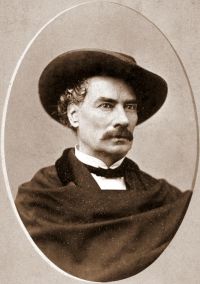 John Carey Cremony,
Life among the Apaches
(1868)
John Carey Cremony,
Life among the Apaches
(1868)
“ Having reached a point where the bank of the Pecos descended gradually toward the stream—a very rare occurrence in that river—they wheeled to the right, and having reached the water, formed line, the right toward the south, while the prophet, dismounting from his horse, entered the stream, about knee deep, and commenced a series of incantations, the warriors preserving profound silence. Having performed the rite of ablution upon his own person and arms, he proceeded to the warrior at the southernmost end of the line, and received from him the weapons he had used in the fight above mentioned. ”
Adolph Francis Alphonse Bandelier,
Historical Introduction to Studies Among the Sedentary Indians of New Mexico…
“ It is about 800 m.—2,620 ft.—from the foot of the mesa, in a belt of fine large pine timber, very high, and gives glimpses of splendid views over the valley of Pecos to the Sierras beyond. Climate fine, but nights very cold. The buildings are as yet nearly all temporary; it is more a camp than a place as is it now. I spent ten very happy days here, from the 28th of August to the 6th of September,—or rather nights, since the days were, with two exceptions (5th and 6th of September, when I visited Pecos town and explored the high mesa) , devoted to the study of the ruins. ”
“ A man's a dam' fool to steal a thousand dollars' worth of cattle and only git eighty dollars for it."Three days later, riding by a trail that led ever to the east, Pecos came upon a narrow valley filled with cottonwoods and wild walnuts and echoing to the music of running water. A fine brook, flowing down from the brushy heights of the Peaks, leaped and tumbled over the bowlders and disappeared through a narrow cleft below, where the two black walls drew together until they seemed almost to block the cañon. ”
David Lavender, De Soto, Coronado, Cabrillo: Explorers of the Northern Mystery
“ Shortly after reaching the plains east of the Pecos River, Alvarado’s explorers found themselves in the middle of a vast herd of buffalo. Lancing the huge beasts from a running horse and afterwards dining on the tender, roasted meat of their humps made for high living, but the sport was soon forgotten in a greater excitement. The Turk said he knew where there was gold. In Quivira. And even more in Harahey. This ancient pueblo kiva at Pecos is one of two restored kivas in the park. At center is the firepit and stone draft deflector. ”
Adolph Francis Alphonse Bandelier,
Historical Introduction to Studies Among the Sedentary Indians of New Mexico…
“ The positive assertion that the winter pueblo of the Pecos tribe was about 2,000 feet higher than the great ruins on the mesilla—that these ruins themselves were but their summer houses—was very startling. It appeared incredible that the Indians should have left their comfortable quarters in the coldest season to look for shelter in the highest and coldest places of the whole region. ”
Adolph Francis Alphonse Bandelier,
Historical Introduction to Studies Among the Sedentary Indians of New Mexico…
“ It can be nothing else than Pecos, whose aboriginal Indian name, in the Jemez language, is "Âgin," whereas Pecos is the "Paego" of the Qq'uêres idiom. There is no other Indian pueblo answering to its description and geographical location as given by the chroniclers of Coronado. The fact that "when the army quitted Cicuyé top. 21 go to Quivira, we entered the mountains, which it was necessary to cross to reach the plains, and on the fourth day we arrived at a great river, very deep, which passes also near Cicuyé," [58] does not at all militate against it. ”
Adolph Francis Alphonse Bandelier,
Historical Introduction to Studies Among the Sedentary Indians of New Mexico…
“ I feel, therefore, justified in assuming it to have been the manufactured ware of a people distinct from the Pecos tribe or the pueblo Indians of New Mexico in general, and their predecessors in point of time. This pottery, however, is frequently met with among the cliff dwellings of the Rio Mancos and in Utah. ”
Clarence Edward Mulford, Bar-20 (1907)
“ It was an incident of the Cattle Trail, that most unique and stupendous of all modern migrations, and its founders must have been inspired with a malicious desire to perpetrate a crime against geography, or else they reveled in a perverse cussedness, for within a mile on every side lay broad prairies, and two miles to the east flowed the indolent waters of the Rio Pecos itself. ”
Adolph Francis Alphonse Bandelier,
Historical Introduction to Studies Among the Sedentary Indians of New Mexico…
“ The Rio Pecos is crossed just beyond Bernal, and thence on he speeds towards the west and north: to the left, the towering Mesa de Pecos, darkp. 39 pines clambering up its steep sides; to the right, the broad valley, scooped out, so to say, between the mesa and the Tecolote ridge. It is dotted with green patches and black clusters of cedar and pine shooting out of the red and rocky soil. Scarcely a house is visible, for the casitas of adobe and wood nestle mostly in sheltered nooks. Beyond Baughl's, the ruins first strike his view ”
Mody C. Boatright, Tall tales from Texas (1934)
“ I don’t know jest what it is, but they ain’t the same.“And they ain’t but mighty few real cowmen any more. Now, take the big mogul of this outfit. Good feller, always pays wages every month—which is more than some of the old-timers could do. But he ain’t no [Pg 70] cowman. Sets up all day at a big desk in town—has a secretary, stenographer, and the like. Why, if Pecos Bill had a-done a thing like that, he would of been so ashamed of his self, he would of jest naturally laid down and died.”“Who is this Pecos Bill I’ve heard you mention?” asked Lanky. ”
 Willa Cather,
Death comes for the archbishop
(1927)
Willa Cather,
Death comes for the archbishop
(1927)
“ Of course there were other explanations, credited by many good people in Santa Fé. Pecos had more than its share of dark legends,—perhaps that was because it had been too tempting to white men, and had had more than its share of history. It was said that this people had from time immemorial kept a ceremonial fire burning in some cave in the mountain, a fire that had never been allowed to go out, and had never been revealed to white men. The story was that the service of this fire sapped the strength of the young men appointed to serve it,—always the best of the tribe. ”
Adolph Francis Alphonse Bandelier,
The Gilded Man (El Dorado) and other pictures of the Spanish occupancy of America
“ The tribe of Pecos has not yet died out. When the inhabitants in 1840, reduced by a hundred years’ hostilities with the Comanches and by illness to five families, fled to their tribe-relatives at Jemez, their immediate extinction was considered inevitable. Instead of that they have increased, and numbered twenty-eight persons in 1885. They live with their kindred, and participate equally with them in the governmental affairs of Jemez. ”
Adolph Francis Alphonse Bandelier,
Historical Introduction to Studies Among the Sedentary Indians of New Mexico…
“ Annotations to the history of Fray Géronimo Zarate Salmeron, in Documentos para la Historia de México, 3 series, vol. i. p. 99. [98] Called by the Spaniards Plaza de Pecos. It is a comparatively new place, the only church-book still in possession of Rev. Father Léon Mailluchet, the present priest, commences in 1862. Including the scattered casitas several miles around, its population is not over five hundred souls. It is situated in a narrow vale or hollow, not far west from the Rio Pecos itself, and has a modest but clean and tidy church, with a small belfry. All the houses are of adobe. ”
Josiah Gregg, Gregg's Commerce of the Prairies…
“ Each Pueblo generally had its particular uniform dress and its particular dance. The men of one village would sometimes disguise themselves as elks, with horns on their heads, moving on all-fours, and mimicking the animal they were attempting to personate. Others would appear in the garb of a turkey, with large heavy wings, and strut about in imitation of that bird. But the Pecos tribe, already reduced to seven men, always occasioned most diversion. ”
Adolph Francis Alphonse Bandelier,
Historical Introduction to Studies Among the Sedentary Indians of New Mexico…
“ But Antonio de Espejo, who, with fourteen soldiers, explored New Mexico in 1582 and 1583, visited Pecos. There can be no doubt but that the pueblos of the "Hubates"—two journeyings of six leagues to the east of the "Quires"—are the Pecos and the "Tamos," the Tanos. [153] Espejo is very liberal in his estimates: he gives to the "Hubates" five towns with 25,000 inhabitants, and to the "Tamos" even 40,000 souls. He says they had cotton cloth; he also says there was much good pine and cedar in their country, and that their houses were four and five stories high. ”
Adolph Francis Alphonse Bandelier,
Historical Introduction to Studies Among the Sedentary Indians of New Mexico…
“ After the victorious aborigines had returned from their pursuit of Otermin, dissensions arose among them, and intertribal warfare, in conformity with their pristine condition, set in. The Pecos, aided by the Queres, made a violent onslaught on the Tanos, compelling them to abandon San Cristóbal and San Lázaro. [168] This looks very much like an act of retaliation. During that time the Spaniards were not idle. In 1682, Governor Otermin penetrated as far as Cochiti, [169] but appears to have taken no notice of Pecos. ”
Adolph Francis Alphonse Bandelier,
Historical Introduction to Studies Among the Sedentary Indians of New Mexico…
“ The defensive constructions of the pueblos, as late as 1540, were the houses. The wall of Pecos is an exception. Castañeda says (i. cap. xiv. p. 80) : "As these villages have no streets, that all the houses are of the same height and common to all the inhabitants, these large houses must be captured first, because they are the points of defence." ”
Adolph Francis Alphonse Bandelier,
Historical Introduction to Studies Among the Sedentary Indians of New Mexico…
“ That the sacred fire had, originally, nothing at all to do with the Montezuma legend is amply proven by the earliest reports.It will also become interesting to ascertain in the future how many pueblos, and which, concede to Pecos the honor of being the birthplace of that famed individual, and how many, as is the case with other great folks in more civilized communities, claim the same honor for themselves. ”
Adolph Francis Alphonse Bandelier,
Historical Introduction to Studies Among the Sedentary Indians of New Mexico…
“ The other and more important one is, that Pecos was the most easterly pueblo in existence in 1540, and that even at that time it was quite alone.Castañeda says (p. 188) : "In order to understand how the country is inhabited in the centre of the mountains, we must remember that from Chichilticah, where they begin, there are eighty leagues; thence to Cicuyé, which is the last village, they reckon seventy leagues, and thirty from Cicuyé to the beginning of the plains."Juan Jaramillo, another eye-witness of "Coronado's march," intimates a similar fact. ”
Adolph Francis Alphonse Bandelier,
Historical Introduction to Studies Among the Sedentary Indians of New Mexico…
“ Mrs. Kozlowski informed me that copper rings (bracelets) were of very common occurrence among the ruins. Her statement was fully confirmed by Sr. Baca and others. She also spoke of "the heads of little idols" having been plentiful at one time. Gaspar Castaño de la Sosa, Memoria del Descubrimiento, etc., Documentos Inéditos, vol. xv. p. 244, speaking of a pueblo which is evidently Pecos, says: "Porque tiene muchos ídolos que atras nos olvidaba de declarar." ”
“ As next morning’s sun breaks over the Llano Estacado they descend its western slope into the valley of the Rio Pecos.Traversing its bottom, of no great breadth, they reach the crossing of the old Spanish trail, from Santa Fé to San Antonio de Bejar.Fording the stream, on its western bank, they discover signs which cause them to come to a halt, for some time perplexing them. Nothing more than the tracks of the troop they have been all the while pursuing, which entered the river on its left side. ”
Adolph Francis Alphonse Bandelier,
Historical Introduction to Studies Among the Sedentary Indians of New Mexico…
“ Not only did thep. 90 Pecos Indians live together, and build their houses together, but they raised their crops in one common field (though divided into individual or rather family plots, according to Ruiz) , irrigated from one common water source which gathered its contents of moisture from the inhabited surface of the pueblo grounds. "The lands," said Mariano Ruiz, "belong to the tribe, but each man can sell his own crops." ("Las tierras son del pueblo, pero cada uno puede vender sus cosechas.") It forcibly recalls the system of "distribution and tenure of lands" among the ancient Mexicans. ”
Related terms
Authors who wrote about “Pecos”
Adolph Francis Alphonse Bandelier Dane CoolidgeEdgar Beecher BronsonWilla Catheractive 16th century Pedro de Castañeda de NájeraEdward Sylvester EllisDavid LavenderMody C. BoatrightJosiah GreggG. A. HentyClarence Edward MulfordJohn Carey CremonyJ. A. Dacus
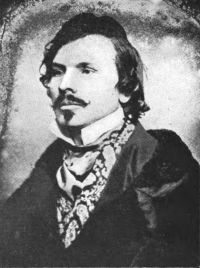 Mayne Reid
 Robert Thomas Hill
 William Henry Holmes
 Frederick R. Bechdolt
 Hubert Howe Bancroft