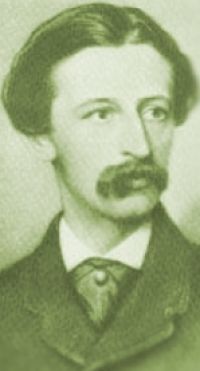
“ It is a tremendous undertaking for so young a creature, and where so perfect a model has been so long contemplated. I was frightened when I yesterday received information of it. Oh! I hope to God he will get well through it. Adieu, dear Muse.”Henry Siddons soon quitted the stage, married a Miss Murray, daughter of an actor, and herself an actress, and in 1808 became manager of the Edinburgh Theatre. ”
Margaret Siddons
Definition and stakes
Quotes about “Margaret Siddons”
“ She looked the novice of St. Clare to perfection. In the spring she made her way northwards to keep her engagement with the Edinburgh manager, and on Saturday, 22nd May, 1784, she appeared on the stage of the Royalty Theatre, in Belvidera. The well-known impassibility of the Edinburgh audience affected Mrs. Siddons with an intolerable sense of depression.After some of her grandest outbursts of passion, to which no expression of applause had responded, exhausted and breathless, she would pant out in despair, under her breath, “Stupid people, stupid people!” ”
“ No reformation was ever yet accomplished by the flaccid-minded ones, and we must remember that many of the stories told of his vanity and meanness and her hardness and reserve, were circulated by their enemies on and off the stage, because of their very rigidity and morality. In spite, however, of some passing clouds, never was there a career so [4] admired, a personality so adored in public life, as that of Mrs. Siddons. Whenever she appeared, enthusiastic applause rang through the house, not only on account of her pre-eminent genius, but because of her untarnished private character. ”
“ The circumstance is not alluded to either by Campbell or Boaden, but is so interwoven with Mrs. Siddons’s existence, and so colours her mode of thought at the time, that it can hardly be passed over.Mrs. Siddons met Katherine Galindo, author of the libel, at the theatre in Dublin. She was a subordinate actress, and her husband a fencing-master. It is difficult to understand how she can have become so intimate, except that her own perfect sincerity and openness led her to bestow confidence on a variety of persons, many of them not in any way [212] worthy of it. ”
Leslie Stephen,
Dictionary of National Biography…
(1897)
“ She is described as a large woman with a squint. A volume is in existence, ‘Poems on Miscellaneous Subjects, by Ann Curtis, Sister of Mrs. Siddons,’ London, 1783, 8vo, printed for the author. It was dedicated to the Duchess of Devonshire, and is now very scarce. Mrs. Siddons's greatest parts were Isabella in Garrick's version of Southerne's ‘Fatal Marriage,’ Lady Macbeth, Zara in ‘Mourning Bride,’ Elvira, Constance, Queen Katharine, Belvidera, and Lady Randolph. ”
“ Henry Bate’s favourable report of her powers, she made her first appearance at Drury Lane. The Golden Gates of the Temple of Fame were thrown open. The young priestess had but to enter, one would have thought, and light the sacred flame; but genius is not to be bound by expediency or opportunity.It was in 1775, the year when Garrick gave up the management, that Mrs. Siddons appeared on the boards of Drury Lane. She had reached the highest point of her ambition—she was to act with the greatest actor of his time before a dramatic audience rendered fastidious and critical by great traditions. ”
“ I dare not trust myself further. Oh! that you were here, that I might talk to you of [198] her death-bed—in dignity of mind and pious resignation far surpassing the imagination of Rousseau and Richardson in their Heloïse and Clarissa Harlowe; for hers was, I believe, from the immediate inspiration of the Divinity.”Troubles now began to fall thick and heavy. Mr. Siddons, actuated by a morbid jealousy of his wife’s energy and success, entered into a connection with Sadler’s Wells Theatre without consulting her, or even taking her into his confidence. ”
“ Conventionality and hardness replaced the old spontaneity and pathos; the action of the arms was more pronounced, the voice was unduly raised, and the deficiency in beauty and charm was supplied by energy and rant. Mrs. Siddons was only two years older than her brother, but her physical and mental gifts had deteriorated much more rapidly. The fact of the sister’s dramatic power having been a natural gift, and his the result of industry and hard work, made hers fail more completely with waning strength. ”
“ The nightly stimulus, the mental habit of studying for a certain object, the production of evanescent emotions and transitory effects, must have a deteriorating effect on the noblest disposition. Shrewd Miss Berry, in her Journal, dated February 24th, 1811, mentions a visit she paid at Westbourne. “Mrs. Siddons received me, as she always does, in a manner that flattered my internal vanity, for she has the germ of a superior nature in her, though burnt up by the long-continued brand of popular applause”; and Fanny Kemble writes: “What a price my Aunt Siddons has paid for her great celebrity! ”
“ Siddons’s genius and beauty. He painted her and John Kemble in every dress and every pose. He was engaged subsequently to two of her daughters, first one and then the other. He proposed to the eldest daughter, Sarah; was accepted; but, before long, became miserable and dejected, and at last confessed to Mrs. Siddons that he [137] had mistaken his feelings—that her younger daughter, and not the elder, was the object of his affection. Fanny Kemble says:—Sarah gave up her lover, and he became engaged to the second, Maria. ”
Frank Frankfort Moore, The Impudent Comedian, & Others
“ On enquiring in a whisper and with a confidential smirk for Mrs. Siddons, he learned from the maid servant that the lady was in her room, and that Mr. Siddons had not returned from his morning visit to the theatre. The servant stated, however, that Mrs. Siddons had given the strictest orders to admit no one into her presence. “Ah, discreet as one might have expected,” murmured Dionysius. “She does not mean to run the chance of disappointing me. Which is her parlour, child?” “It's the first front, yer honour,” said the girl; “but, Lord save yer honour, she'd murther me if I let ye go up. ”
“ The wretched woman was stung to the quick by the withdrawal of her engagement at Covent Garden, and although Mrs. Siddons advanced a thousand pounds to the husband to buy a share in a provincial theatre, and showed them much kindness, the jealous and infuriated wife published in pamphlet form a wild and libellous attack on the great actress, to which she added the letters that had passed between them in their days of intimacy. ”
“ She was said to be lame, which prevented her going on the stage. In 1783, the year of her great triumph in London, the young actress had the pleasure of reading in all the papers the following advertisement. Under the guise of charity it is easy to see the motive that prompted it, and shows the envy and malignity that pursued her during her career. Donations in favour of Mrs. Curtis, youngest Sister of Mrs. Siddons.A private individual, whose humanity is far more extensive than her means, having taken the case of the unfortunate Mrs. ”
“ In studying the annals of genius, it is interesting to observe how circumstances working from within force it on and bring it to completion, how circumstances working from without mould it into form, tempering the fine metal until it is supple and adaptable, but breaking the inferior metal by the sheer weight of their inexorable pressure.Had Mrs. Siddons remained the brilliant, beautiful girl, with life undimmed by clouds, without experience of the bitterness and sorrow of life, she never could have acted Lady Macbeth. ”
“ The audience certainly gave three rounds of applause, in recognition of her personal character, when Young Norval asked:But did my sire surpass the rest of menAs thou excellest all of woman kind? But this was a poor substitute for the breathless thrill, the agony of emotion, with which she shook her audience in the old days.Unfortunately for us and them, players are not immortal. Health, strength, beauty, voice, fail them, and without these adventitious aids genius is of no avail on the stage. Any loss of reputation to an actress like Mrs. Siddons was a loss to the world ”
“ Garrick was at this time employed in mounting an abridgment by Colman of Ben Jonson’s Epicœne, and trusting, we conclude, to the statement of his friend Mr. Bate, that the débutante had “a very good breeches-figure,” he selected her for the heroine’s part. The result was a failure. Critics complained of “the confusion, when Mrs. Siddons, disguised in the piece as a woman, revealed herself at the end as a boy.” The Morning Post, edited by Parson Bate, was the only paper that spoke in favour of the attempt. ”
“ The death of her daughter Maria was the first serious grief Mrs. Siddons had known. We have touched on Lawrence the painter’s proposal to her, and the transference of his affection, after a short engagement, to her sister Sarah. Mrs. Siddons did everything she could to soften the blow to the poor deserted girl. We find her writing in desperation to her old friend Tate Wilkinson:—“My plans for the summer are so arranged that I have no chance of the pleasure of seeing you. ”
“ Thus the ingredients of terror, ambition, and wifely and maternal love, were the uncomplex emotions at first impressed on Mrs. Siddons’s brain by the study of the part; and those were the predominating influences by which she swayed her audience to the last day she acted it.Many are the records that we have of this great performance—all the world has heard of the Lady Macbeth of Mrs. Siddons—but, alas! how insufficient are they to give us an idea of the wondrous reality. ”
“ Besides all the disabilities of advancing age, that terrible fear of being supplanted was ever before her eyes. Mrs. Jordan had some years before snatched the laurels from her brow in Rosalind; now rumours were wafted across the Channel of a young and lovely actress, Miss O’Neill, who had taken all hearts captive as Juliet (a part Mrs. Siddons could never personate satisfactorily) ; the matchless beauty of form of the young aspirant, her sensibility and tenderness were the theme of every tongue. ”
“ The Kembles, seeing the attachment was serious, at last gave their consent, and in her nineteenth year Sarah Kemble became Mrs. Siddons.The marriage took place at Trinity Church, Coventry, November 26th, 1773, and on the 4th of October following, the first child, Henry, was born, at Wolverhampton.Mr. Siddons was just the man to fascinate a young and high-spirited girl. Good-looking, calm, sedate, even-tempered, not over-burdened with brain-power, and not too much will of his own. One might apply to him what Johnson said of Sheridan’s father, “He is not a bad man, no, Sir ”
Dr. Doran, "Their Majesties' Servants." Annals of the English Stage…
“ She was a just and spirited actress; a more perfectly good speaker than her more elegant, more fascinating contemporary. Mrs. Siddons has all the pathos of Mrs. Cibber, with [289] a thousand times more variety in its exertion, and she has the justness of Mrs. Pritchard, while only Garrick's countenance could vie with her's in those endless shades of meaning which almost make her charming voice superfluous, while the fine proportion and majesty of her form, and the beauty of her face, eclipse the remembrance of all her consummate predecessors. ”
“ It must be brought down into the regions of ordinary life, and the only way to accomplish this is to transcribe her actual words and expressions written without thought of publication. We must therefore ask our readers to forgive us for quoting so many of her letters in full. When we attempt to shorten or interpolate, all their easy charm and freshness seems to evaporate.Mr. Percy Fitzgerald, in his Lives of the Kembles, has incorporated Mrs. Siddons’s history with that of her brother, John Kemble, and written by far the best biography yet done of the great actress. ”
“ Lord Robert Bertie was so fond of listening and admiring her declamation, that Lady Mary had to beg of him to desist, and “not encourage the girl to go on the stage.” Young Greatheed told Miss Wynn later on that he had often heard Mrs. Siddons read Macbeth when she was his mother’s maid.Lady Mary confessed years afterwards to “Conversation” Sharp, that so queenly was the bearing of the young girl, even at that early age, that she always felt an irresistible inclination to rise from her chair when her maid came to attend her. ”
William Hazlitt, The Collected Works of William Hazlitt…
“ Siddons’s noble form seemed to be only the natural mould and receptacle. Her nature seemed always above the circumstances with which she had to struggle: her soul to be greater than the passion labouring in her breast. ”
Leslie Stephen,
Dictionary of National Biography…
(1897)
“ Her husband, William Siddons, died on 11 March 1808 at Bath, where, on account of failing health, he had long dwelt. He was a handsome man, and an actor of some versatility but little talent, who finally abandoned the stage. He is said to have been a good judge of acting, and to have given his wife serviceable advice. They had for some years lived apart without apparently a formal separation. She spoke of Siddons to the last with a certain amount of regard and even of affection, visited him in the winter before his death, and after it took place interrupted her performances for a fortnight. ”
Mrs. Jameson,
Visits and Sketches at Home and Abroad…
“ Siddons, that she was a "mere actress," as it was usually said of Garrick, that he was a "mere player;"—the most admirable and versatile actor that ever existed; but still the mere player;—nothing more—nothing better. He does not appear to have had a tincture of that high gentlemanly feeling, that native elevation of character, and general literary taste which strike us in John Kemble and his brother Charles; nor any thing of the splendid imagination, the enthusiasm of art, the personal grace and grandeur, which threw such a glory around Mrs. Siddons. ”
J. C. Snaith, The principal girl (1912)
“ It is unkind to make comparisons, but tea and cake in Bedford Gardens, thought Mr. Philip, is a far more interesting function than a four-course luncheon farther west. And yet the young man had by no means a great appetite just now. It was the crisis of his fate. Had Mary told Grandmamma? And what would Grandmamma say, if told she had been? For men and gods these were all-important questions.Certainly, the old thing in the real lace that had been worn by Siddons was very grande dame indeed. ”
“ In the last scenes of the play, when the unfortunate heroine, destitute and starving, exclaims in an agony of suffering, “I have not tasted bread for three days,” a little voice was heard, broken by sobs, exclaiming, “Madam, madam! do take my orange, if you please,” [264] and the audience and the actress beheld, in one of the stage boxes, a little girl holding her out an orange.A lady, now alive, recalls to mind, when she was very young, being taken to pay a visit to “the great Mrs. Siddons.” ”
Mrs. Jameson,
Visits and Sketches at Home and Abroad…
“ Siddons, with all her graces of form and feature, her magnificence of deportment, her deep-toned, measured voice, and impressive enunciation, was in reality a softened reflection of her more stern, stately, majestic mother, whose genuine loftiness of spirit and of bearing, whose rare beauty, and imperious despotism of character, have often been described to me as absolutely awful,—even her children trembled in her presence. "All the Kembles," said Sir Thomas Lawrence, "have historical faces;" and for several generations their minds seem to have been cast in a poetical mould. ”