“ Scarcely was the crown placed on his head, when his own capital, Munich, fell into the hands of Maria Theresa. Her husband had succeeded in Bohemia, with the gallant Khevenhüller’s assistance, in winning the Hungarians to him and cutting off the enemy’s forces there from those which remained in Austria, and thus began a campaign that meant destruction to the audacious foe. In Bavaria the Austrians carried all before them, and Maria Theresa’s victorious banner was soon waving over all that province. ”
Maria Theresa of Austria
Definition and stakes
Maria Theresa of Austria (1717–1780) was the only female ruler of the Habsburg monarchy, steering her realm through the chaos of the War of Austrian Succession and introducing extensive reforms to modernize her territories. Historians such as W. O. von Horn underscore her military tenacity, while Frederic Ogg focuses on her role in shifting Habsburg lands from medieval to contemporary governance.
John S. C. Abbott depicts her as a practical leader who managed power and reform effectively, ensuring Austria’s stability. Although she lost Silesia to Prussia, her legacy remains that of a transformative sovereign who redefined her empire’s administrative and social structure.
Quotes about “Maria Theresa of Austria”
1911 Encyclopædia Britannica, Volume 17… (1911)
“ Her intellectual honesty was as perfect as Frederick’s own, and she was as incapable as he was of endeavouring to blind herself to the quality of her own acts. No ruler was ever more loyal to a conception of duty. Maria Theresa considered herself first and foremost as the heiress of the rights of the house of Austria. Therefore, when her inheritance was assailed at the beginning of her reign, she fought for it with every weapon an honest woman could employ, and for years she cherished the hope of recovering the lost province of Silesia, conquered by Frederick. ”
“ Maria Theresa, Archduchess of Austria, Queen of Hungary and Bohemia, and Empress of Germany, was the daughter of Charles VI of Austria and Elizabeth Christina of Brunswick-Wolfenbüttel. After the death of Archduke Leopold, her only brother, she became sole heiress of the Austrian dominions in 1724, married Francis Stephen of Lorraine in 1736, came to the throne in 1740, her husband being declared co-regent. She died in 1780. Of her sixteen children, ten reached maturity. Her sons were Joseph II, who succeeded his father as Holy Roman Emperor in 1765 ”
Related terms
Authors who wrote about “Maria Theresa of Austria”
W. O. von Horn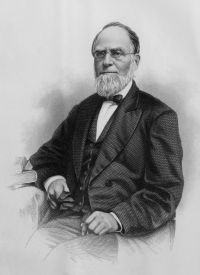 John S. C. AbbottL. MühlbachCarl Küchler
 Lajos KossuthVariousJ. N. LarnedJohn Lord
 Alexandre Dumas
 Lydia Maria Child
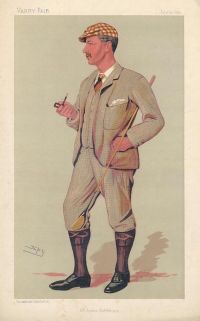 Horace G. Hutchinson
 Frederic Austin OggEarl of Archibald Philip Primrose RoseberyStanley A. Cook, John H. A. Hart and Israel Abrahams
 Leslie StephenMme. Du HaussetCharles Duke YongeJames Grant
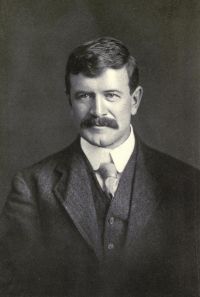 Stephen Leacock
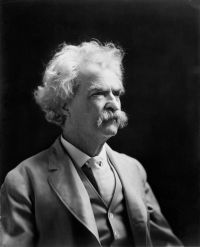 Mark Twain
John S. C. AbbottL. MühlbachCarl KüchlerLajos KossuthVariousJ. N. LarnedJohn LordAlexandre DumasLydia Maria ChildHorace G. HutchinsonFrederic Austin OggEarl of Archibald Philip Primrose RoseberyStanley A. Cook, John H. A. Hart and Israel AbrahamsLeslie StephenMme. Du HaussetCharles Duke YongeJames GrantStephen LeacockMark Twain