“ A lover of good living, he wanted happy faces around him. He confined his rigorous discipline to the time of action; in camp he authorized a freedom from restriction which was a new departure in the life of Roman soldiers. What a contrast between the old bands of Marius, valiant, it is true, but who marched under the lictor's whip, and the spontaneous zeal of Antony's troops, who were ready to suffer and to die for their leader! ”
Marius Antony
Definition and stakes
Quotes about “Marius Antony”
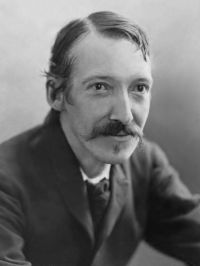
Robert Louis Stevenson,
Virginibus Puerisque and Other Papers
(1881)
“ Poor Antony was in love, and no mistake. That lay figure Marius, in Les Misérables, is also a genuine case in his own way, and worth observation. A good many of George Sand's people are thoroughly in love; and so are a good many of George Meredith's. Altogether, there is plenty to read on the subject. If the root of the matter be in him, and if he has the requisite chords to set in vibration, a young man may occasionally enter, with the key of art, into that land of Beulah which is upon the borders of Heaven and within sight of the City of Love. ”
Mark Antony Lower,
The Curiosities of Heraldry
“ Vix ea nostra voco.” [Pg 293] “The glory of ancestors,” says Caius Marius, “casts a light indeed upon their posterity, but it only serves to show what the descendants are. It alike exhibits to full view their degeneracy and their worth.”“Boast not the titles of your ancestours, Brave youths! They’re their possessions, none of yours; When your own virtues equall’d have their names, ’Twill be but fair to lean upon their fames, For they are strong supporters; but, till then, The greatest are but growing gentlemen.” ”
Victor Hugo,
Les Misérables — Volume 3, Book Fifth…
“ During all these trials he had felt himself encouraged and even uplifted, at times, by a secret force that he possessed within himself. The soul aids the body, and at certain moments, raises it. It is the only bird which bears up its own cage.Besides his father's name, another name was graven in Marius' heart, the name of Thenardier. Marius, with his grave and enthusiastic nature, surrounded with a sort of aureole the man to whom, in his thoughts, he owed his father's life,--that intrepid sergeant who had saved the colonel amid the bullets and the cannon-balls of Waterloo. ”
A Select Collection of Old English Plays…
“ The death of Anthony is thus related in North's Plutarch, "Life of Marius"—"But he (Marius) sent Annius one of his captaines thither ... and when they were come to the house which the drawer had brought them to, Annius taried beneath at the doore, and the souldiers went up the staiers into the chamber, and finding Anthonie there, they began to encourage one another to kill him, not one of them having the heart to lay hands upon him. ”
Victor Hugo,
Les Misérables, v. 3/5: Marius
“ What! this man was Thénardier, the landlord of Montfermeil, whom he had so long and so vainly sought! He found him now, and in what a state! His father's savior was a bandit! This man, to whom Marius burned to devote himself, was a monster! The liberator of Colonel Pontmercy was on the point of committing a crime whose outline Marius could not yet see very distinctly, but which resembled an assassination! And on whom? Great Heaven, what a fatality; what a bitter mockery of fate! His father commanded him from his tomb to do all in his power for Thénardier. ”
Elizabeth Rundle Charles,
Attila and His Conquerors: A Story of the Days of St…
“ When they returned to the Aventine from the solemn obsequies of the Shepherd and Father of Rome, Marius said to Ethne—“Thou hast never been perplexed by anything that seemed doubtful in the great Bishop’s life; not about his contest with Hilary of Arles, nor even about his forbidding the ordination of slaves.”“Why should I?” she said; “Leo never claimed to be anything in himself. Has he not taught us [310] all to say day by day in our prayers, that ‘we can do nothing good without God’? ”
Irvah Lester Winter,
Public Speaking: Principles and Practice
“ ANONYMOUS A Roman, an orator, and a triumvir, a conqueror when all Rome seemed armed against him only to have his glory "false played" by a woman "unto an enemy's triumph,"—such is Shakespeare's story of Mark Antony. Passion alternates with passion, purpose with purpose, good with evil, and strength with weakness, until his whole nature seems changed, and we find the same and yet another man.In "Julius Cęsar" Antony is seen at his best. He is the one triumphant figure of the play. Cęsar falls. Brutus and Cassius are in turn victorious and defeated, but Antony is everywhere a conqueror. ”
Elizabeth Rundle Charles,
Attila and His Conquerors: A Story of the Days of St…
“ And Marius said to Ethne—“How can I leave thee, who hast made earth dear to me and heaven real? who hast given me back faith in God and hope in man?”“Thou art not leaving me,” Ethne replied. “We are in one path, in the steps of the pitiful, [188] redeeming Lord. Thou wilt not despair of the slaves, however degraded, or of the Huns, however savage, for His sake.”“For His sake and thine,” he replied, “for the sacred memory of thy captivity, and the dear first vision of thee beside the poor dying boy. Thou feelest then, beloved, that we are beginning our life together now?” ”
Elizabeth Rundle Charles,
Attila and His Conquerors: A Story of the Days of St…
“ Those were, moreover, to Ethne, months of much happy learning of many things. Still in many ways a child of the wilderness, it was a constant joy to her to learn through Marius the secrets of his ancient world. And above all, she delighted, with ever-increasing wonder and joy, in drinking with him of what to her, lover of all fountains, was the new and perennial fountain of “the Testaments of God.”“Freedom, law, life: order, beauty, truth: everything is there,” she would say. “My own people at home cannot indeed taste of all the riches of your learning. ”
C. Bryson Taylor, Nicanor - Teller of Tales : A Story of Roman Britain
“ Marius exclaimed. "I am not hurting thee!""Let the girl go, lord!" said a voice behind them. Marius turned his head, to see a figure bearing down upon them, lean and tall, with a shock of black hair and angry eyes. Varia, turning at the same instant in Marius's grasp, saw the man, and cried:"Make him to let me go! He hath tried to make me tell thy name—do not thou tell it!""So!" Marius exclaimed in triumph, catching the clew. "Thou art the man—thou!" His tone held wrath and amazed disgust.The slave stood his ground. ”
Walter Pater,
Marius the Epicurean — Volume 1
“ The centre of a group of princely children, in the same apartment with Aurelius, amid all the refined intimacies of a modern home, sat the empress Faustina, warming her hands over a fire. With her long fingers lighted up red by the glowing coals of the brazier Marius looked close upon the most beautiful woman in the world, who was also the great paradox of the age, among her boys and girls. ”
Walter Pater,
Marius the Epicurean — Volume 2
“ A wonderful order, actually in possession of human life!—grown inextricably through and through it; penetrating into its laws, its very language, its mere habits of decorum, in a thousand half-conscious ways; yet still felt to be, in part, an unfulfilled ideal; and, as such, awakening hope, and an aim, identical with the one only consistent aspiration of mankind! In the apprehension of that, just then, Marius seemed to have joined company once more with his own old self; to have overtaken on the road the pilgrim who had come to Rome, with absolute sincerity, on the search for perfection. ”
Walter Pater,
Marius the Epicurean — Volume 1
“ To the dead, in fact, was conceded in such places a somewhat closer neighbourhood to the old homes they were thought still to protect, than is usual with us, or was usual in Rome itself—a closeness which the living welcomed, so diverse are the ways of our human sentiment, and in which the more wealthy, at least in the country, might indulge themselves. All this Marius followed with a devout interest, sincerely touched and awed by his mother’s sorrow. ”
Victor Hugo,
Les Misérables — Volume 3, Book Eighth…
“ Marius reeled in utter horror, the very ruffians shuddered, hardly a muscle of the old man's face contracted, and while the red-hot iron sank into the smoking wound, impassive and almost august, he fixed on Thenardier his beautiful glance, in which there was no hatred, and where suffering vanished in serene majesty.With grand and lofty natures, the revolts of the flesh and the senses when subjected to physical suffering cause the soul to spring forth, and make it appear on the brow, just as rebellions among the soldiery force the captain to show himself. ”
Walter Pater,
Marius the Epicurean — Volume 2
“ That intelligent seriousness about life, the absence of which had ever seemed to remove those who lacked it into some strange species wholly alien from himself, accumulating all the lessons of his experience since those first days at White-nights, was as it were translated here, as if in designed congruity with his favourite precepts of the power of physical vision, into an actual picture. If the true value of souls is in proportion to what they can admire, Marius was just then an acceptable soul. ”
Victor Hugo,
Les Misérables, v. 3/5: Marius
“ Run after him, my aunt. What the deuce shall I write to the old lady?"At this moment the leg of a black trouser appeared against the window-pane of the coupé."Can it be Marius?" the Lieutenant said.It was Marius. A little peasant girl was offering flowers to the passengers, and crying, "Bouquets for your ladies." Marius went up to her, and bought the finest flowers in her basket."By Jove!" said Théodule, as he leaped out of the coupé, "the affair is growing piquant. Who the deuce is he going to carry those flowers to? She must be a deucedly pretty woman to deserve so handsome a bouquet. ”
Walter Pater,
Marius the Epicurean — Volume 1
“ With what a fresh, primeval poetry was daily existence here impressed—all the details of the threshing-floor and the vineyard; the common farm-life even; the great bakers’ fires aglow upon the road in the evening. In the presence of all this Marius felt for a moment like those old, early, unconscious poets, who created the famous Greek myths of Dionysus, and the Great Mother, out of the imagery of the wine-press and the ploughshare. ”
Victor Hugo,
Les Misérables, v. 3/5: Marius
“ He began living again more than ever in solitude, crushed, giving way to his internal agony, walking up and down like a wolf caught in a trap, everywhere seeking the absent one, and brutalized by love.Another time he had a meeting which produced a strange effect upon him. In the little streets adjoining the Boulevard des Invalides he passed a man dressed like a workman, and wearing a deep-peaked cap, under which white locks peered out. Marius was struck by the beauty of this white hair, and looked at the man, who was walking slowly, and as if absorbed in painful meditation. ”
Victor Hugo,
Les Misérables, v. 3/5: Marius
“ It is rare for a profound reverie not to spring up wherever this flame falls; all purity and all candor are blended in this heavenly and fatal beam, which possesses, more than the best-managed ogles of coquettes, the magic power of suddenly causing that dangerous flower, full of perfume and poison, called love, suddenly to expand in the soul.On returning to his garret in the evening, Marius took a glance at his clothes, and perceived for the first time that he had been guilty of the extraordinary impropriety and stupidity of walking in the Luxembourg in his "every-day dress;" ”
Walter Pater,
Marius the Epicurean — Volume 1
“ That old, half-pleading petulance, unamiable, yet, as it might seem, only needing conditions of life a little happier than they had actually been, to become refinement of affection, a delicate grace in its demand on the sympathy of others, had changed in those moments of full intelligence to a clinging and tremulous gentleness, as he lay—“on the very threshold of death”—with a sharply contracted hand in the hand of Marius, to his almost surprised joy, winning him now to an absolutely self-forgetful devotion. ”
Victor Hugo,
Les Misérables, v. 3/5: Marius
“ When he left the hands of Aunt Gillenormand, his grandfather intrusted him to a worthy professor of the finest classical innocence. This young mind, just expanding, passed from a prude to a pedant. Marius spent some years at college, and then entered the law-school; he was royalist, fanatic, and austere. He loved but little his grandfather, whose gayety and cynicism ruffled him, and he was gloomy as regarded his father. In other respects, he was an ardent yet cold, noble, generous, proud, religious, and exalted youth; worthy almost to harshness, and fierce almost to savageness. ”
Walter Pater,
Marius the Epicurean — Volume 1
“ The rich man, interested in the promise of the fair child born on his estate, had sent him to school. The meanness and dejection, nevertheless, of that unoccupied old age defined the leading memory of Flavian, revived sometimes, after this first confidence, with a burst of angry tears amid the sunshine. But nature had had her economy in nursing the strength of that one natural affection; for, save his half-selfish care for Marius, it was the single, really generous part, the one piety, in the lad’s character. In him Marius saw the spirit of unbelief, achieved as if at one step. ”
Walter Pater,
Marius the Epicurean — Volume 1
“ Some of these, indeed, by reason of their Greek simplicity and grace, themselves shone out like spaces of a purer, early light, amid the splendours of the Roman manufacture. Though he looked, thought Marius, like a man who did not sleep enough, he was abounding and bright to-day, after one of those pitiless headaches, which since boyhood had been the “thorn in his side,” challenging the pretensions of his philosophy to fortify one in humble endurances. ”
Victor Hugo,
Les Misérables, v. 3/5: Marius
“ The three "chimney-sweeps" had rushed upon him, and at the same time Mother Thénardier seized him by the hair. At the noise which ensued the other bandits ran in from the passage, and the old man on the bed, who seemed the worse for liquor, came up tottering with a road-mender's hammer in his hand. One of the sweeps, whose blackened face the candle lit up, and in whom Marius recognized, in spite of the blackening, Panchaud alias Printanier alias Bigrenaille, raised above M. Leblanc's head a species of life-preserver, made of two lumps of lead at the ends of an iron bar. ”
Victor Hugo,
Les Misérables, v. 3/5: Marius
“ He would say at times, though not at all bitterly, "Men are so constituted that in a drawing-room you may have mud everywhere except on your boots. In order to give you a proper reception only one irreproachable thing is expected from you—is it your conscience? No, your boots."All passions, saving those of the heart, are dissipated in reverie. The political fever of Marius had vanished, and the revolution of 1830 had aided in this, by satisfying and calming him. ”
Walter Pater,
Marius the Epicurean — Volume 1
“ There was a new sort of pleading in the misty eyes, just because they took such unsteady note of him, which made Marius feel as if guilty; anticipating thus a form of self-reproach with which even the tenderest ministrant may be sometimes surprised, when, at death, affectionate labour suddenly ceasing leaves room for the suspicion of some failure of love perhaps, at one or another minute point in it. Marius almost longed to take his share in the suffering, that he might understand so the better how to relieve it. ”
Walter Pater,
Marius the Epicurean — Volume 1
“ The old sculptors of the great procession on the frieze of the Parthenon at Athens, have delineated the placid heads of the victims led in it to sacrifice, with a perfect feeling for animals in forcible contrast with any indifference as to their sufferings. It was this contrast that distracted Marius now in the blessing of his fields, and qualified his devout absorption upon the scrupulous fulfilment of all the details of the ceremonial, as the procession approached the altars. ”
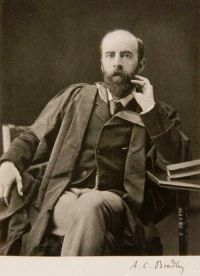
A. C. Bradley,
Oxford Lectures on Poetry
“ Like Richard II., he sees his own fall with the eyes of a poet, but a poet much greater than the young Shakespeare, who could never have written Antony’s marvellous speech about the sunset clouds. But we listen to Antony, as we do not to Richard, with entire sympathy, partly because he is never unmanly, partly because he himself is sympathetic and longs for sympathy.The first of living soldiers, an able politician, a most persuasive orator, Antony nevertheless was not born to rule the world. He enjoys being a great man, but he has not the love of rule for rule’s sake. ”