Marius the Epicurean

Definition and stakes

Randolph Faries,  Ancient Rome in the English novel… (1923)

“ Marius the Epicurean simply portrays the life of Rome, as it appeared to a young Roman who lived only to seek the highest good in esthetic experience. It clearly shows that life governed by an esthetic ideal, could and did exist in the days of Marcus Aurelius, just as it can and does exist today.
In Marius the Epicurean, Pater, as the author, shows himself to be more a true Hellenist than any writer appears to be in any novel of Roman life written before Pater’s work,—though his truly Greek appreciation of the beautiful is in no way inconsistent with Christianity.
”
Source: Gutenberg

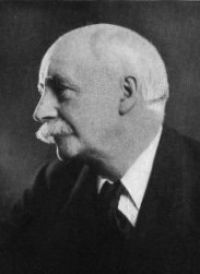
Portrait of Walter Pater Walter Pater,  Marius the Epicurean — Volume 1

“ To Marius, at a later time, he counted for as it were an epitome of the whole pagan world, the depth of its corruption, and its perfection of form. And still, in his mobility, his animation, in his eager capacity for various life, he was so real an object, after that visionary idealism of the villa. His voice, his glance, were like the breaking in of the solid world upon one, amid the flimsy fictions of a dream. A shadow, handling all things as shadows, had felt a sudden real and poignant heat in them. ”
Source: Gutenberg

Portrait of Walter Pater Walter Pater,  Marius the Epicurean — Volume 1

“ The centre of a group of princely children, in the same apartment with Aurelius, amid all the refined intimacies of a modern home, sat the empress Faustina, warming her hands over a fire. With her long fingers lighted up red by the glowing coals of the brazier Marius looked close upon the most beautiful woman in the world, who was also the great paradox of the age, among her boys and girls. ”
Source: Gutenberg

Get perspective with Kwize: daily news enlightened by great literature