Mashona people

Definition and stakes

Harry Collingwood,  Through Veld and Forest: An African Story

“ He described the Mashona as being a very fine race of people, almost if not quite equal in physique to the Zulus, but of a much more suspicious and unreliable character than the latter, and apparently exceedingly averse to the intrusion of strangers. Nevertheless, upon stating the nature of his mission, he had been passed on from kraal to kraal until finally he had arrived at Gwanda, the Place (or town) of King Lomalindela, which, it appeared, was situated among a rather curious group of mountains, five days’ march from the river. ”
Source: Gutenberg

1911 Encyclopædia Britannica (1911)

“ Most of them became subject to the Matabele, but although they suffered severely from their attacks, the Mashona preserved a certain national unity. In 1890 the Mashona came under British protection (see Rhodesia) . They are in general a peaceful, mild-mannered people, industrious and successful farmers, skilful potters, and weavers of bark cloth.
The crafts, however, in which they excel are the smelting and forging of iron and wood-carving. They are also great hunters; and they are very fond of music, the most usual instrument being the “piano” with iron keys.
”
Source: Wikisource

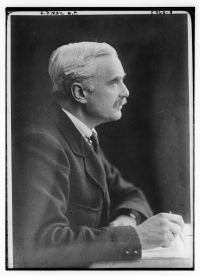
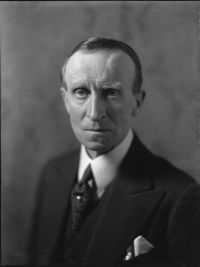
Portrait of John Buchan John Buchan,  The African Colony: Studies in the Reconstruction

“ The Makalanga, or Children of the Sun, whom Barreto fought, were in the line of succession from the Phœnicians, as the Mashonas are their representatives to-day. In Mashona pottery we can still trace the decorations, which are found on the walls of the Zimbabwes: the people have something Semitic in their features, as compared with other Bantu tribes; they know something of gold-working, a little of astronomy, and in their industries and beliefs have a higher culture than their neighbours. ”
Source: Gutenberg

Get perspective with Kwize: daily news enlightened by great literature