Maximilian I of Austria

Definition and stakes

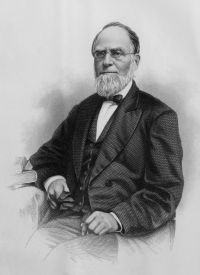
Portrait of John S. C. Abbott John S. C. Abbott The Empire of Austria; Its Rise and Present Power

Ladislaus relinquished all claim to the Austrian territories, and paid a large sum of money as indemnity for the war.
Thus Austria again comes into independent existence, to watch amidst the tumult and strife of Europe for opportunities to enlarge her territories and increase her power. Maximilian was a prince, energetic and brave, who would not allow any opportunity to escape him. In those dark days of violence and of blood, every petty quarrel was settled by the sword. All over Germany the clash of steel against steel was ever resounding.
Source: Gutenberg

Various Encyclopaedia Britannica, 11th Edition…

Soon after his election as king of the Romans in 1486, Maximilian attacked the Hungarians, and in 1490 he had driven them from Austria, and recovered his hereditary lands. In the same year he made an arrangement with his kinsman, Sigismund of Tirol, by which he brought this county under his rule, and when the emperor Frederick died in 1493, Maximilian united the whole of the Austrian lands under his sway.
Source: Gutenberg

The New Student's Reference Work (1914)

Maximilian ended the feuds of his nobles, improved the courts, and divided the empire into six (afterward into ten) circles, each ruled by a governor. He also encouraged the Universities of Vienna and Ingoldstadt in learning and arts generally. He was well-educated, skilled in all bodily exercises, chivalrous and genial; so that he has been called the first knight of his age. Maximilian died emperor of the Holy Roman Empire, at Wels in Upper Austria, Jan.
Source: Wikisource

Get perspective with Kwize: daily news enlightened by great literature