“ In 1825 they ceded their lands on the Missouri to the Government, retaining a reservation on the Kaw, where they were constantly subjected to attacks from the Pawnee and other tribes, through which large numbers of their warriors were slain. In 1846 they again ceded their lands and received a new reservation on Neosho river in Kansas. This was soon overrun by settlers, when another reservation was assigned to them in Indian Territory, near the Osage country. By 1890 their population was reduced to 214. ”
Missouri River tribes
Definition and stakes
The theme of “Missouri River tribes” has been addressed by authors such as Henry Rowe Schoolcraft, Jr. Joseph Smith, Edwin Thompson Denig, Edwin James and Alexander Majors. It is often associated with terms like Sioux, people, indigenous, peoples and Mississippi.
Quotes about “Missouri River tribes”
The Backwoodsman; Or, Life on the Indian Frontier
“ The Blackfeet are pursued by nearly all the other Indian tribes when they venture south, and in former years, when they prowled about the present state of Missouri, they were hunted by the first settlers there like wild beasts. The power of these Indians is very considerable, and their number is probably the largest of all the numerous tribes of natives. They live between the sources of the Missouri and Yellow-stone River, tolerate no other tribe there, and are warlike and cruel to their conquered foes. ”
 Fredrika Bremer,
The Homes of the New World
(1853)
“ It is said that the Government is intending shortly to purchase the whole of this country; and that the Indian tribes are willing to treat, and to withdraw themselves to the other side of the Missouri river, to the steppland of Nebraska and the Rocky Mountains. These Indian tribes have already become so degraded by their intercourse with the whites, that they value money and brandy higher than their native soil, and are ready, like Esau, to sell their birthright for a mess of pottage. ”
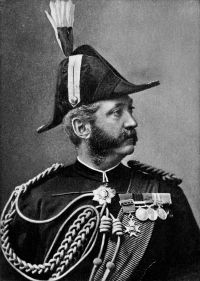 Sir William Francis Butler,
The Great Lone Land
“ Having spoken in detail of the Indian tribes inhabiting the line of fertile country lying between Red River and the Rocky Mountains, it only remains for me to allude to the Blackfeet with the confederate tribes of Blood, Lurcees and Peagins. These tribes inhabit the great plains lying between the Red Deer River and the Missouri, a vast tract of country which, with few exceptions, is treeless, and sandy--a portion of the true American desert, which extends from the fertile belt of the Saskatchewan to the borders of Texas. ”
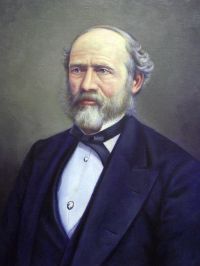 Lewis Henry Morgan,
Ancient Society
“ A people thus extending themselves along a river in a prairie country might separate, first into three tribes, and afterwards into eight, and the organization of each subdivision remain complete. Division was neither a shock, nor an appreciated calamity; but a separation into parts by natural expansion over a larger area, followed by a complete segmentation. The uppermost tribe on the Missouri were the Punkas at the mouth of the Niobrara river, and the lowermost the Quappas at the mouth of the Arkansas on the Mississippi, with an interval of near fifteen hundred miles between them. ”
Oregon Historical Society, Oregon Historical Quarterly (1909)
“ Red River Settlement is the most favorable situation in the Indian Territory east of the Rocky Mountains for a military depot, and large levies of troops might be there raised from the half caste population and the neighboring Indian tribes, who, when properly disciplined, would form such a force as would overcome many, and greatly harass all, the United States settlements on the Missouri. ”
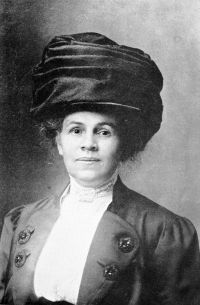 Eva Emery Dye,
The Conquest: The True Story of Lewis and Clark
(1902)
“ Charles county alone, and every cabin was stockaded. The five stockades at Boone's Lick met frequent assaults. Black Hawk was there, the trusted lieutenant of Tecumseh. The whole frontier became alarmed. Then Manuel Lisa came down the river. "The British are sending wampum to the Sioux. All the Missouri nations are urged to join the confederacy." In fact, the Prophet with his mystery fire was visiting all the northwest tribes, even the Blackfeet. Ten thousand Indians promised to follow him back. ”
Glenn D. Bradley, The Story of the Pony Express
“ Situated at a distance of nearly two thousand miles from the Missouri river which was then the nation's western frontier, this intervening space comprised trackless plains, almost impenetrable ranges of snow-capped mountains, and parched alkali deserts. And besides these barriers of nature which lay between the West coast and the settled eastern half of the country, there were many fierce tribes of savages who were usually on the alert to oppose the movements of the white race through their dominions. ”
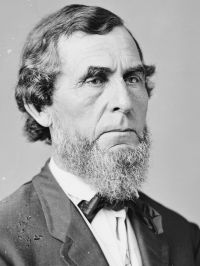 Columbus Delano,
Report of the Secretary of the Interior
(1872)
“ In the country now occupied by the majority of the tribes of the Dacotah nation, bordering on the Missouri Elver, and by the Rees, Mandans, Gros-Ventres, River Crows, and Assiniboines, near the same river, there is but little land that is available for agriculture, on account of the great dryness of the summers and the intense cold of the winters. ”
James Monroe, State of the Union Addresses
“ Our relations with the Indian tribes within our limits have not been materially changed during the year. The hostile disposition evinced by certain tribes on the Missouri during the last year still continues, and has extended in some degree to those on the Upper Mississippi and the Upper Lakes. Several parties of our citizens have been plundered and murdered by those tribes. ”
 John Wesley Powell,
Indian Linguistic Families of America…
“ After their passage of the Missouri they were conquered by the Grand Pawnee, Tapage, and Republican tribes, with whom they have remained to this day. De L’Isle25 gives twelve Panimaha villages on the Missouri River north of the Pani villages on the Kansas River.Southern group.—This includes the Caddo, Wichita, Kichai, and other tribes or villages which were formerly in Texas, Louisiana, Arkansas, and Indian Territory. ”
 Francis Amasa Walker,
The Indian Question
“ Many tribes are already as fully subject to all the debasing influences of contact with the whites as they could be if dispersed among the body of citizens; while yet they are without any of the advantages popularly attributed to citizenship.It requires no deep knowledge of human nature, and no very extensive review of Congressional legislation, to assure us that many and powerful interests will oppose themselves to a re-adjustment of the Indian tribes between the Missouri and the Pacific, under the policy of seclusion and non-intercourse. ”
Edwin Thompson Denig, Indian Tribes of the Upper Missouri
“ As has been frequently stated, there are no large mounds perceived on the upper Missouri, the work of Indians, as have been discovered in some of the western States, but were it an object or custom to bury the dead in that manner we believe there is energy and power sufficient among any of these tribes to accomplish a work of the kind, even with the rude tools they have, in a loose soil, free of rock, and in the summer season. ”
Kimball Webster, The gold seekers of '49 (1917)
“ Much trouble is also anticipated by many from some of the western tribes of Indians, who are said to be hostile to the whites. The Mormons who settled near the California trail, in the Great Lake valley, in 1847, are also much feared by a large number of those from Missouri. ”
Francis Amasa Walker,
The Indian Question
“ This last consideration we have urged, not on behalf of the Indians, but in the interest of the present white communities beyond the Missouri, to whom such a dispersion of the tribes would be a far greater burden than the maintenance of the reservation system in its integrity could possibly be, and in the interest of a score of States of the Union yet to be formed out of that territory. Surely it is not in such cement that we wish to have the foundations of our future society laid. ”
Edwin Thompson Denig, Indian Tribes of the Upper Missouri
“ The principal is that no deputation of prairie tribes could be taken as the general voice, and even then would not think themselves treated with on fair grounds—would agree to any and everything and afterwards say they were forced to do it. Large bodies of whites in the interior and on treaty grounds would necessarily be very expensive, and are inexpedient, as pointed out, though the support of a great many Indians would be very little. ”
 Henry Rowe Schoolcraft,
The American Indians
“ That the tribes west of the Missouri, and beyond the pale of the ordinary influence of civilization, should retain some shocking customs, which, if ever prevalent among the more favoured tribes east of the Mississippi and the Alleghenies, have long disappeared, may be readily conceived. ”
Various, Popular Science Monthly (1908)
“ With the vicissitudes of war and the lapse of thousands of years, those who remained on the east side of the Alleghany Mountains were permanently separated from those who migrated, and the western tribes expanded rapidly over the western plains of the Missouri, becoming powerful and a scourge to their neighbors, "the Iroquois of the West," as they have been termed not inaptly. ”
Sir William Francis Butler,
The Great Lone Land
“ The "Moka-manus" (the Big-knives) , the white men, have pushed up the great Missouri River into the heart of the Blackfeet country, the fire-canoes have forced their way along the muddy waters, and behind them a long chain of armed posts have arisen to hold in check the wild roving races of Dakota and the Montana. It is a useless struggle that which these Indians wage against their latest and most deadly enemy, but nevertheless it is one in which the sympathy of any brave heart must lie on the side of the savage. ”
Edwin James, James's Account of S. H. Long's Expedition…
“ Some of the men of this band have larger and finer teeth than we remember to have seen heretofore among savages. In the general structure of their features, and the complexion of their skins, they resemble the Missouri tribes, being of a clearer and brighter red than many of the eastern Indians. In stature and in symmetry, and elegance of form, they are inferior to the Otoes, Pawnees, and to most of the Missouri Indians who reside in permanent villages. ”
Edwin Thompson Denig, Indian Tribes of the Upper Missouri
“ They have no name for America, neither do they know of its extent, for the most part believing that the lands occupied by themselves and the surrounding tribes compose the greatest part of the world, and certainly contain the greatest reputed number of people. It vexes and grieves them to be told of large tracts of land elsewhere, and they do not or will not believe the whites to be as human as they are. ”
Tyrone Power, Impressions of America During the Years 1833…
“ It is known to you that some of the Western tribes of Indians, roaming through the extensive prairies west of Arkansas and Missouri, particularly the Camanches and Kiowas, have, for some years, interrupted the peace of that quarter, by predatory attacks upon our citizens, and upon the indigenous and emigrant Indians whom we are under obligations to protect. ”
 George Q. Cannon,
The Life of Joseph Smith, the Prophet
“ Another charge of great magnitude is brought against our friends in the west—of "keeping up a constant communication with the Indian tribes on our frontier, with declaring, even from the pulpit, that the Indians are a part of God's chosen people, and are destined, by heaven, to inherit this land, in common with themselves." We know of nothing, under the present aspect of our Indian relations, calculated to rouse the fears of the people of the upper Missouri, more than a combination or influence of this nature ”
Edward Sylvester Ellis, Camp-fire and Wigwam
“ Did they intend to kill them with rifle, tomahawk, or knife? Or would they be taken away captives? Did the red men belong to the Osage tribe of Indians, or was theirs some fiercer or milder totem from a distant part of the country?It is a fact that among many of the early settlements in Missouri and other Western States, the warriors who were occasionally encountered in the forests, or who fired from the cover of the trees, belonged to tribes whose hunting-grounds were many leagues away. They were not Shawanoe, Huron, Pottawatomie, Osage, Miami, Delaware, Illinois, Kickapoo, or Winnebago. ”
Henry Rowe Schoolcraft,
Personal Memoirs of a Residence of Thirty Years with the Indian Tribes on the American Frontiers
“ There is but one way of escape for the Indians living in white communities, that is, to place them, at once, under the protection, and subject to the penalties of our criminal and civil codes.3d. Renewed and confirmatory accounts are published at St. Louis, of the desolating effects of the small-pox among the Indian tribes on the Missouri. In addition to the tribes mentioned in the first accounts as having suffered, the Upsarokees, or Crows, have been dreadfully afflicted. The various bands of the Pie-gans, Blood Indians, and Blackfeet, have lost great numbers. ”
 Alexander Majors,
Seventy Years on the Frontier
“ It looks to one like myself that has known them for so many years, that before they are civilized they will become almost exterminated; that is to say that civilized life does not agree with them, and they die from causes and conditions that such life compels them to exist under, and in my opinion the day will come when there will be few, if any, in the near future, left of the tribes that were known to belong to the territory west of the Mississippi River and extending to the Pacific Coast. There was often among the wildest tribes of America many good traits. ”
 Stephen Johnson Field,
Eastern Band of the Cherokee Indians v…
“ When that portion of North America which is now embraced within the limits of the United States east of the Mississippi was discovered, it was occupied by different tribes or bands of Indians. These people were destitute of the primary arts of civilization, and, with a few exceptions, had no permanent buildings, occupying only huts and tents. Their lands were cultivated in small patches, and generally by women. ”
Elias Johnson, Legends, Traditions, and Laws of the Iroquois…
“ In consideration of the above cession and relinquishment on the part of the tribes of the New York Indians, and in order to manifest the deep interest of the United States in the future peace and prosperity of the New York Indians, the United States agree to set apart the following tract of country, situated directly west of the State of Missouri, as a permanent home for the New York Indians now residing in the State of New York, or in Wisconsin, or elsewhere in the United States, who have no permanent homes ”
Henry Rowe Schoolcraft,
Narrative of an Expedition Through the Upper Mississippi to Itasca Lake…
“ Events growing out of the political condition of the Indian tribes on the head waters of the Mississippi, call for the continued interposition of the friendly influence of the government on that remote part of our north-western frontier. It has been long known that desperate and deep-rooted feuds continue to harass the tribes whose local position brings them into frequent contact. These contests operate to divert their attention from hunting, and to abstract their minds from objects essential to their well-being. They embarrass every effort to better their condition. ”
Lindesay Brine, Travels Amongst American Indians…
“ Other reports of a similar character were made by men who had lived with tribes occupying lands near the southern parts of the Mississippi valley. It has also been noticed that Indians having fair hair and blue eyes, were living with the Mandans in their settlements near the Missouri. ”
William J. Brennan, Jr., Mississippi Band of Choctaw Indians v…
“ Calvin Isaac, Tribal Chief of the Mississippi Band of Choctaw Indians and representative of the National Tribal Chairmen's Association, testified as follows:"Culturally, the chances of Indian survival are significantly reduced if our children, the only real means for the transmission of the tribal heritage, are to be raised in non-Indian homes and denied exposure to the ways of their People. Furthermore, these practices seriously undercut the tribes' ability to continue as self-governing communities. ”
Edwin Thompson Denig, Indian Tribes of the Upper Missouri
“ A large territory with much game might induce portions of other tribes not having these advantages to migrate, make peace with the residing nation, and perhaps increase in a greater ratio than they otherwise would have done, but the language would remain the same, neither would it produce a separate tribe, but only a portion of the tribe who migrated.The Gros Ventres of the Prairie were once Arapaho and lived on the Arkansas. They have for a century past resided with the Blackfeet, yet have preserved their own language. ”
Lewis Henry Morgan,
Ancient Society
“ The Dakotas, consisting at the present time of some twelve independent tribes, have allowed the gentile organization to fall into decadence. It seems substantially certain that they once possessed it because their nearest congeners, the Missouri tribes, are now thus organized. They have societies named after animals analogous to gentes, but the latter are now wanting. Carver, who was among them in 1767, remarks that “every separate body of Indians is divided into bands or tribes; which band or tribe forms a little community with the nation to which it belongs. ”
Related terms
Authors who wrote about “Missouri River tribes”
Henry Rowe SchoolcraftJr. Joseph SmithEdwin Thompson DenigEdwin JamesAlexander MajorsFrederic L. PaxsonKimball WebsterGeorge CatlinEdward GoodbirdEdmund FlaggEva Emery Dye Abraham LincolnOregon Historical Society
 W. W. Phelps
 Mark TwainLewis Henry MorganVariousJames Monroe
 William HowittFrancis Amasa Walker
